Visual Description
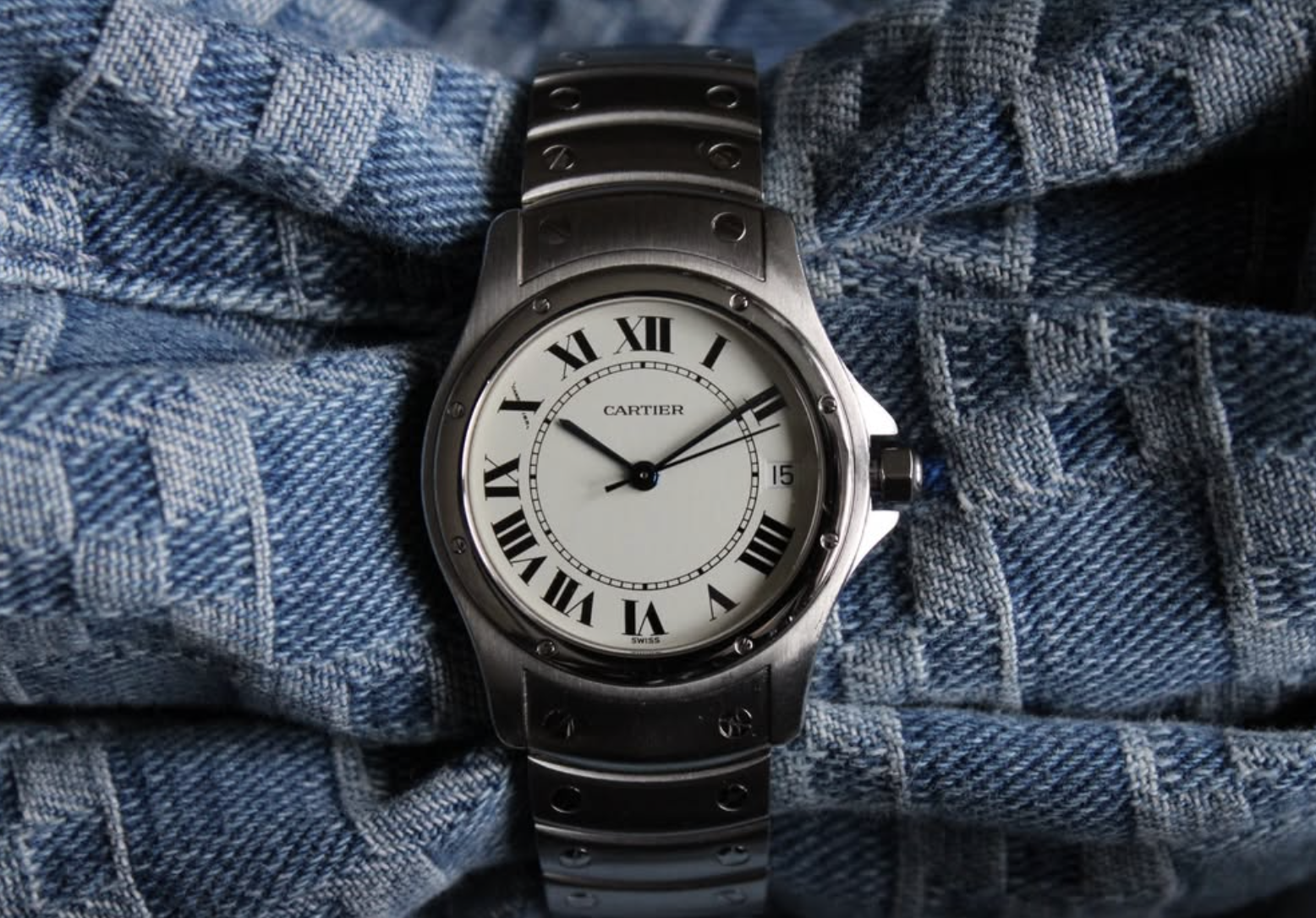
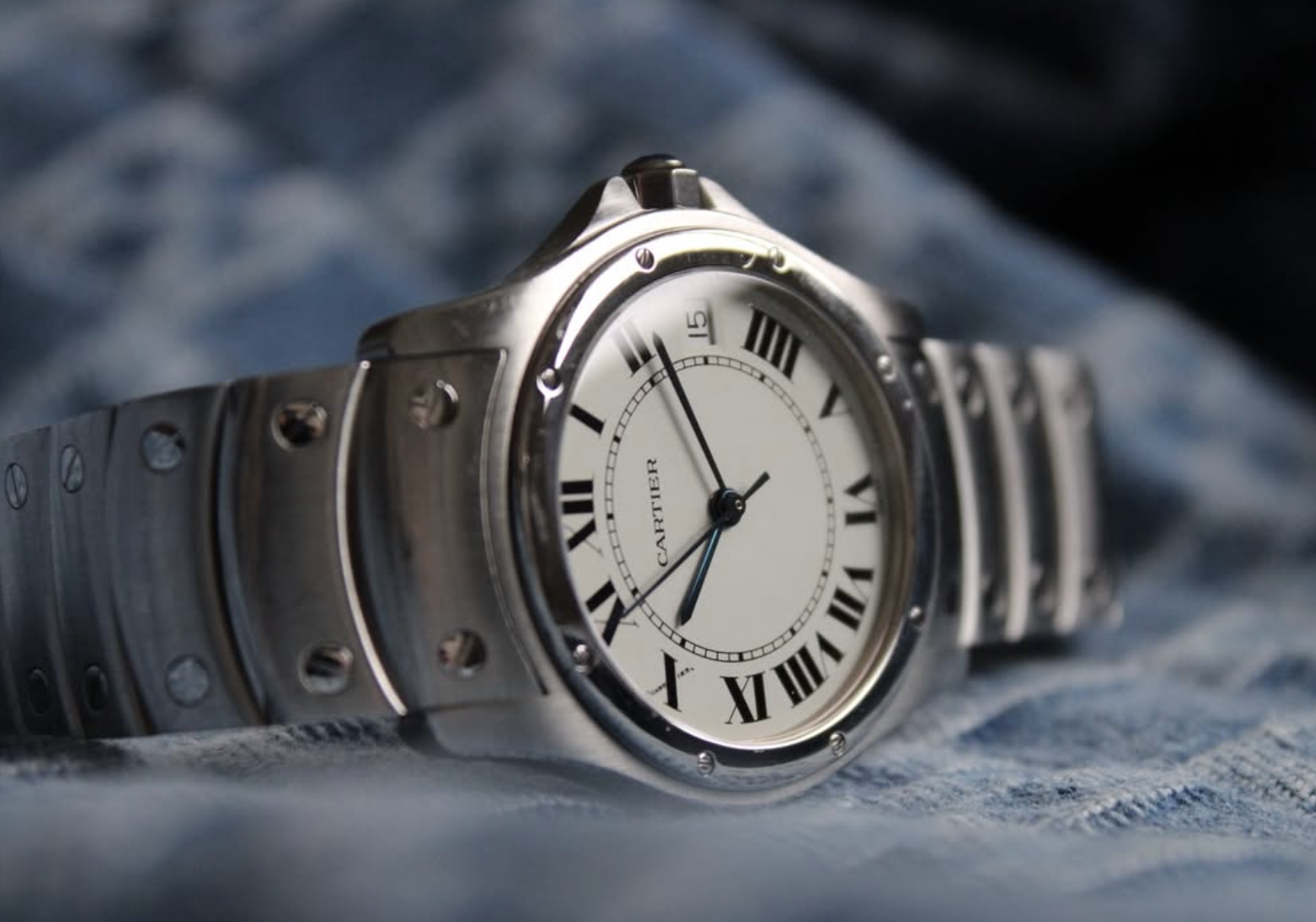
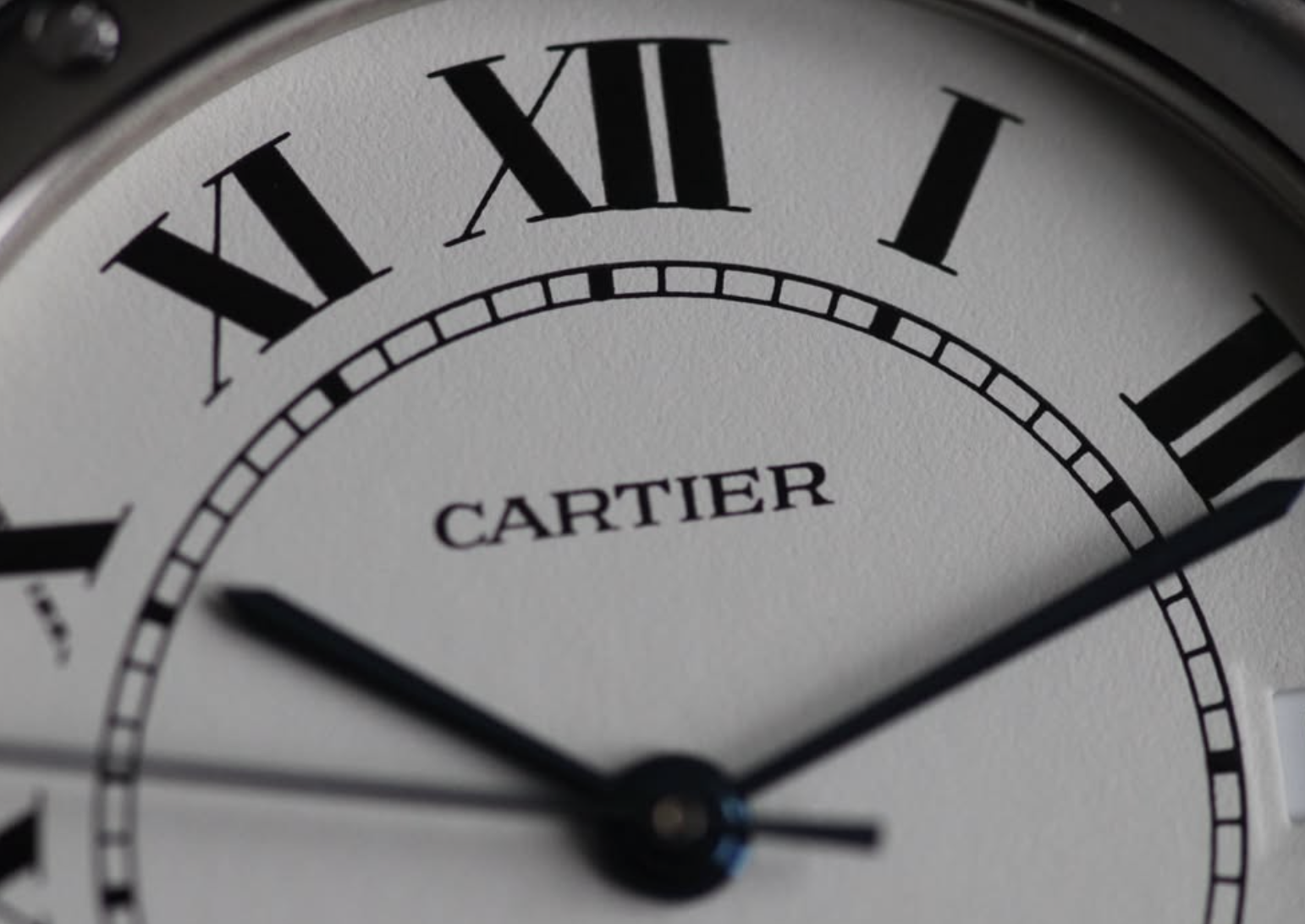
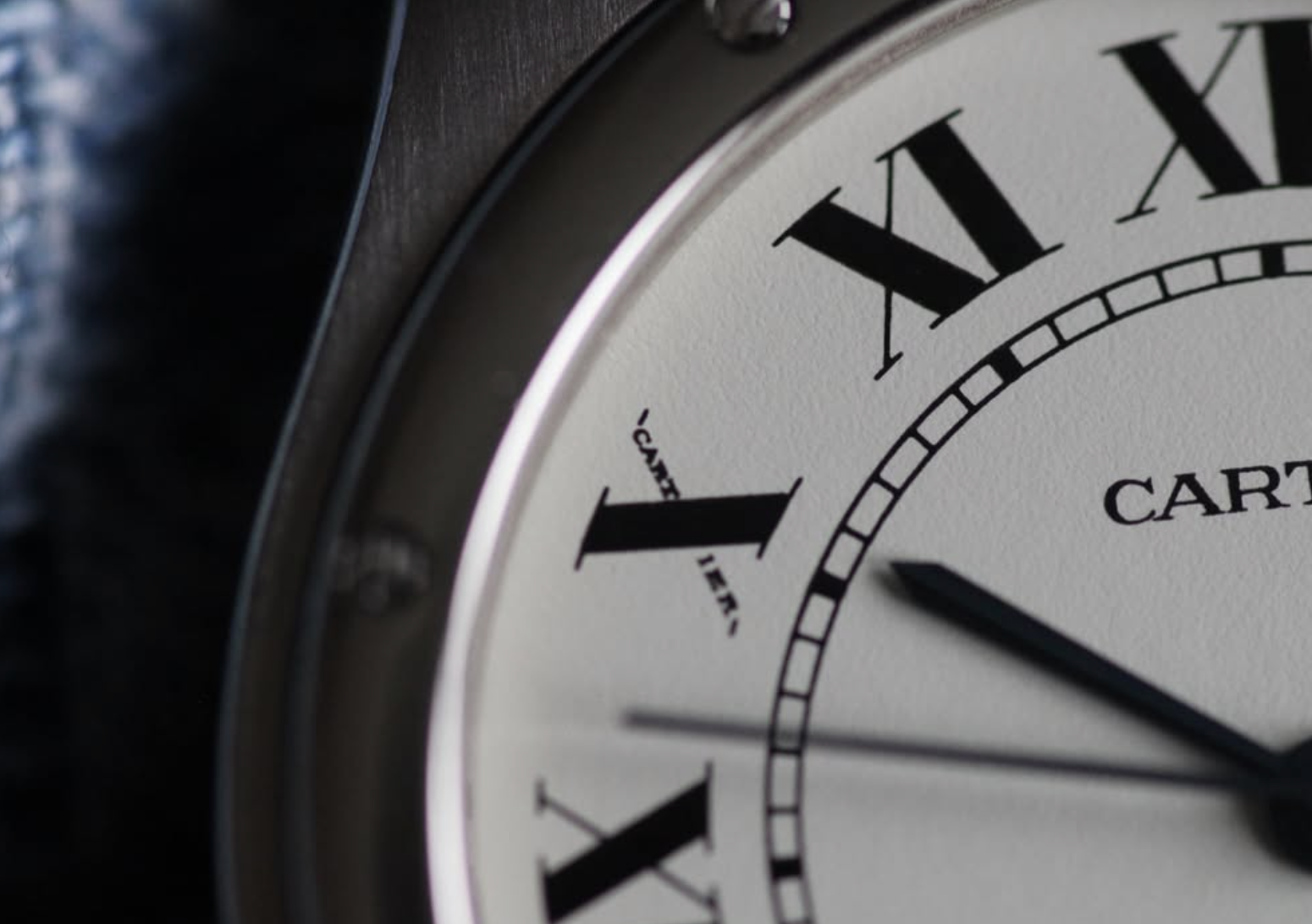
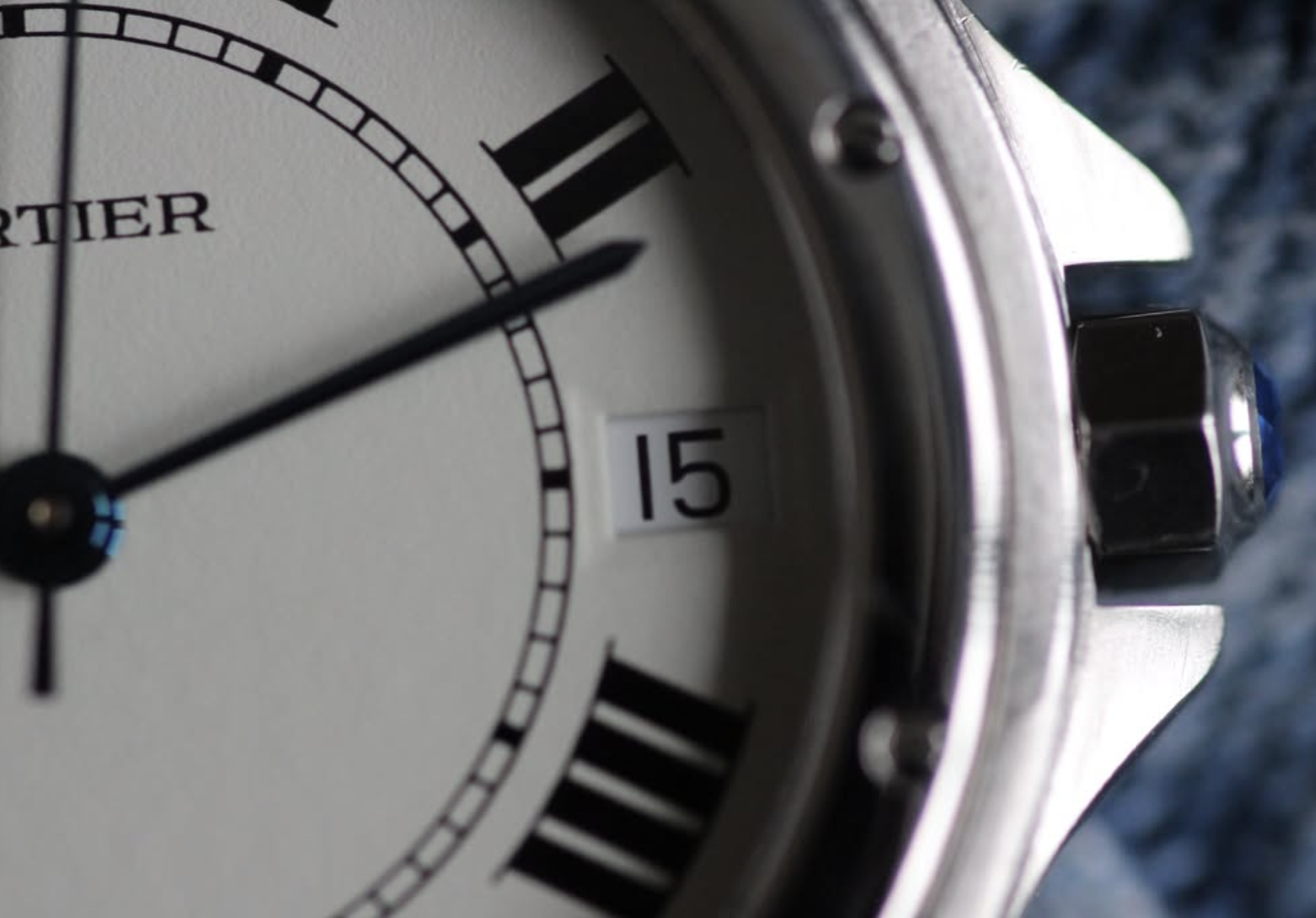
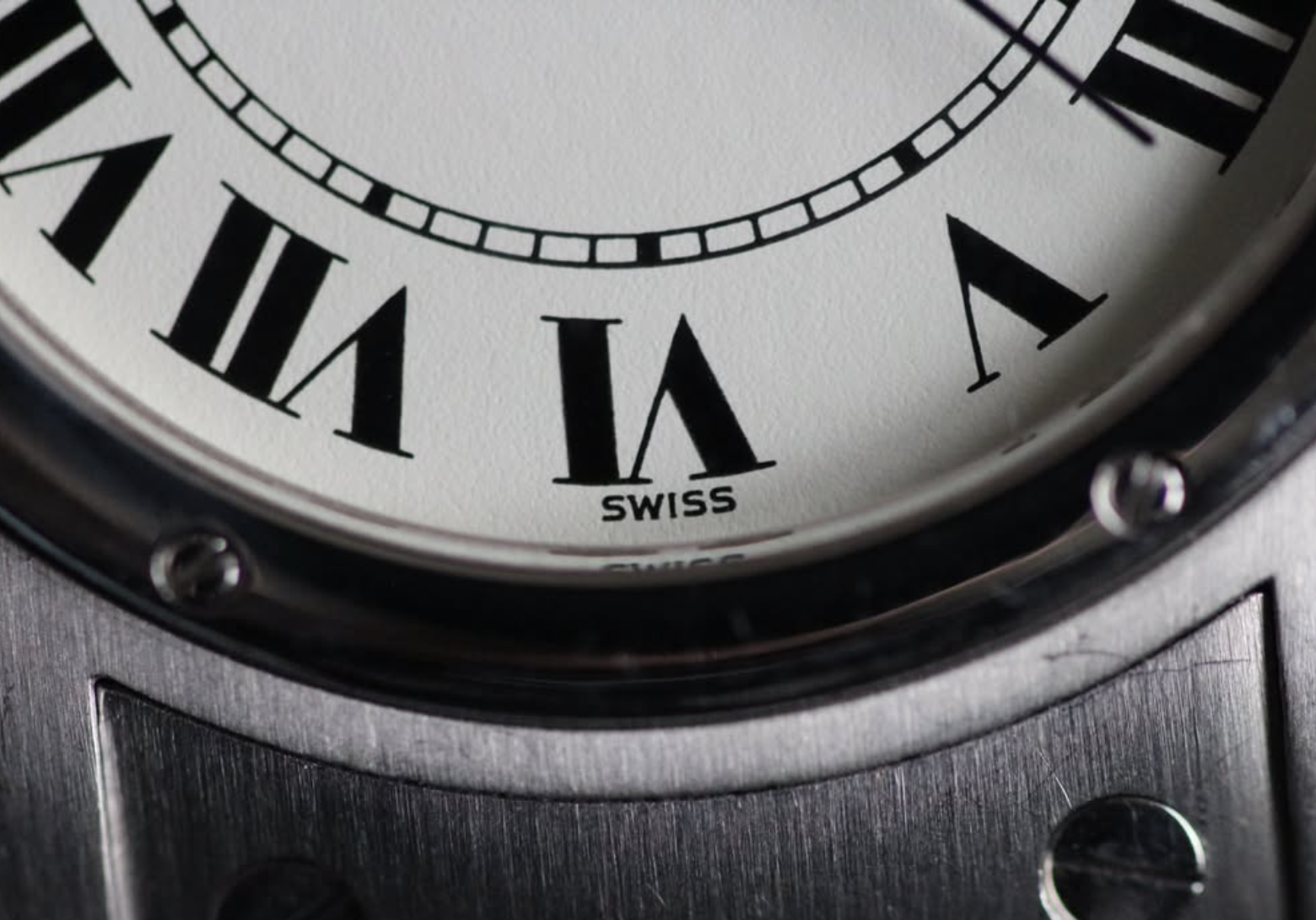
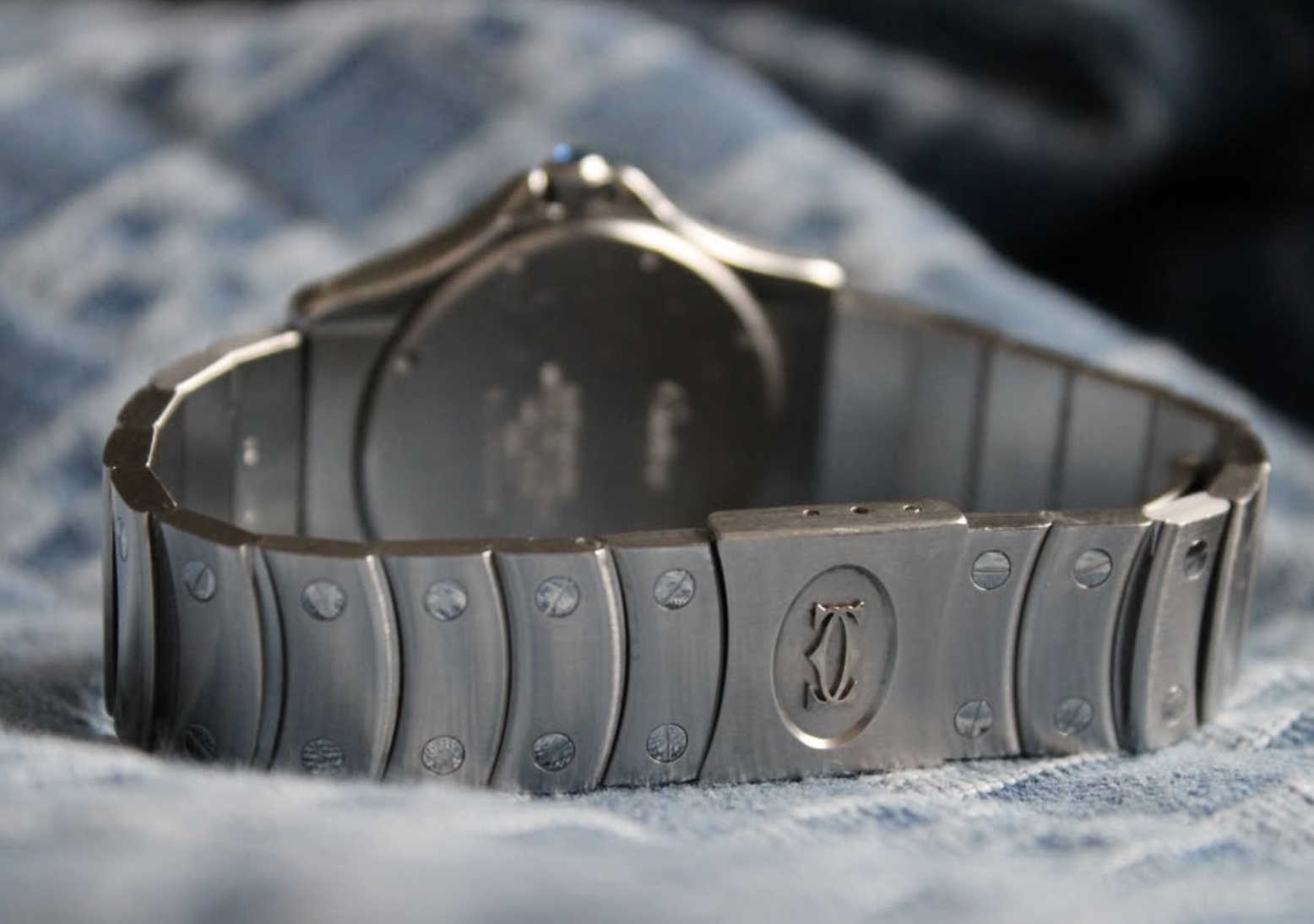
The Ref. 1920-1 is the Santos Ronde in steel—uncompromised, legible, built for actual wrist time. The brushed stainless steel case and matching integrated bracelet read as cohesive and purposeful; there is no visual pretense here, no material mixing. The white dial maintains the Santos family aesthetic with black Roman numerals and a date window at 3 o'clock, but in all-steel trim, the watch feels more overtly sporty than its two-tone sibling. The exposed bezel screws remain—four of them, perfectly aligned, serving as visual anchors for a case that might otherwise be anonymous. The deployment clasp is hidden (integrated into the bracelet end links rather than visible) compared to some earlier Santos bracelets, reflecting a refinement in Cartier's manufacturing approach during the 1990s. The swordpoint hands carry lume for nighttime legibility, a practical detail that speaks to the watch's actual use case. At 33mm, the Ref. 1920-1 feels neither diminished nor oversized; it simply fits.
Reference Significance
The Ref. 1920-1 is the Santos Ronde stripped to essentials—the most accessible entry point to the model, and in many ways the most honest expression of the design. While precious-metal versions carry the brand's luxury positioning, the all-steel Santos Ronde was Cartier's statement that the round case worked on pure design merit, not because of material prestige. The Cartier Cal. 049 movement (built on the reliable ETA 2892-2) offered genuine horological credibility: a COSC-quality automatic with a reasonably long power reserve and straightforward maintenance. The production span (1990–2001) places the Ref. 1920-1 squarely in the sweet spot of Cartier's modern manufacturing era—past the experimental phase, before modern serialization made tracking individual watches trivially easy. In the secondary market, all-steel Santos Ronde examples are notably scarcer than two-tone versions, likely because they were less prestigious to purchase new and therefore bought in smaller volumes. This scarcity creates a quiet advantage for the discerning collector.
Historical Context
Cartier's decision to produce an all-steel Santos Ronde speaks to the brand's confidence in the model during the mid-1990s. The early 1990s had been a watershed for Cartier sports watches: the Pasha was stabilizing, the Tank Française was about to launch, and the Santos family had diversified into the Galbée (curved, easier-wearing alternative) and the Ronde (round case for those resistant to geometry). By extending the Ronde to all-steel, Cartier was essentially saying: the round Santos works at every price point. The hidden deployment clasp (compared to fold-over designs on earlier pieces) reflects manufacturing refinements—the clasp mechanism had become more reliable, so branding it via visibility was no longer necessary. The Cal. 049 movement was Cartier's standard automatic caliber for mid-range sports watches throughout the 1990s, paired with sapphire crystals and depth ratings suitable for actual water exposure. This was not a dress watch playing at durability; this was a sports watch that happened to be elegant.
What to Look For
The all-steel construction means the Ref. 1920-1 typically shows its age more visibly than precious-metal examples—scratches on the bracelet are endemic and largely cosmetic, but they're noticeable. The case should show consistent brushing direction; if the sides have been polished smooth while the top remains brushed, there's been amateur refinishing. The exposed bezel screws should all be original with matching slot patterns and head finish; replacement screws are available but represent a service event. The white dial is typically robust, but check the edges and the date window rim for crazing or deterioration—Cartier used quality lacquer, so age shows subtly. The sapphire crystal may have light scratches (inevitable on a sports watch), but avoid examples with major abrasions that obscure dial reading. The hidden deployment clasp on the bracelet should engage firmly without excessive tension; bracelet stretch is common on 1990s designs, addressable through link removal or professional adjustment. The movement should have been serviced at least once over 30 years (check for evidence of caseback opening), but the Cal. 049 is essentially bulletproof. All-steel Ref. 1920-1 examples in good condition typically command €2,500–3,500, with examples showing minimal bracelet wear reaching toward €4,000.