Visual Description
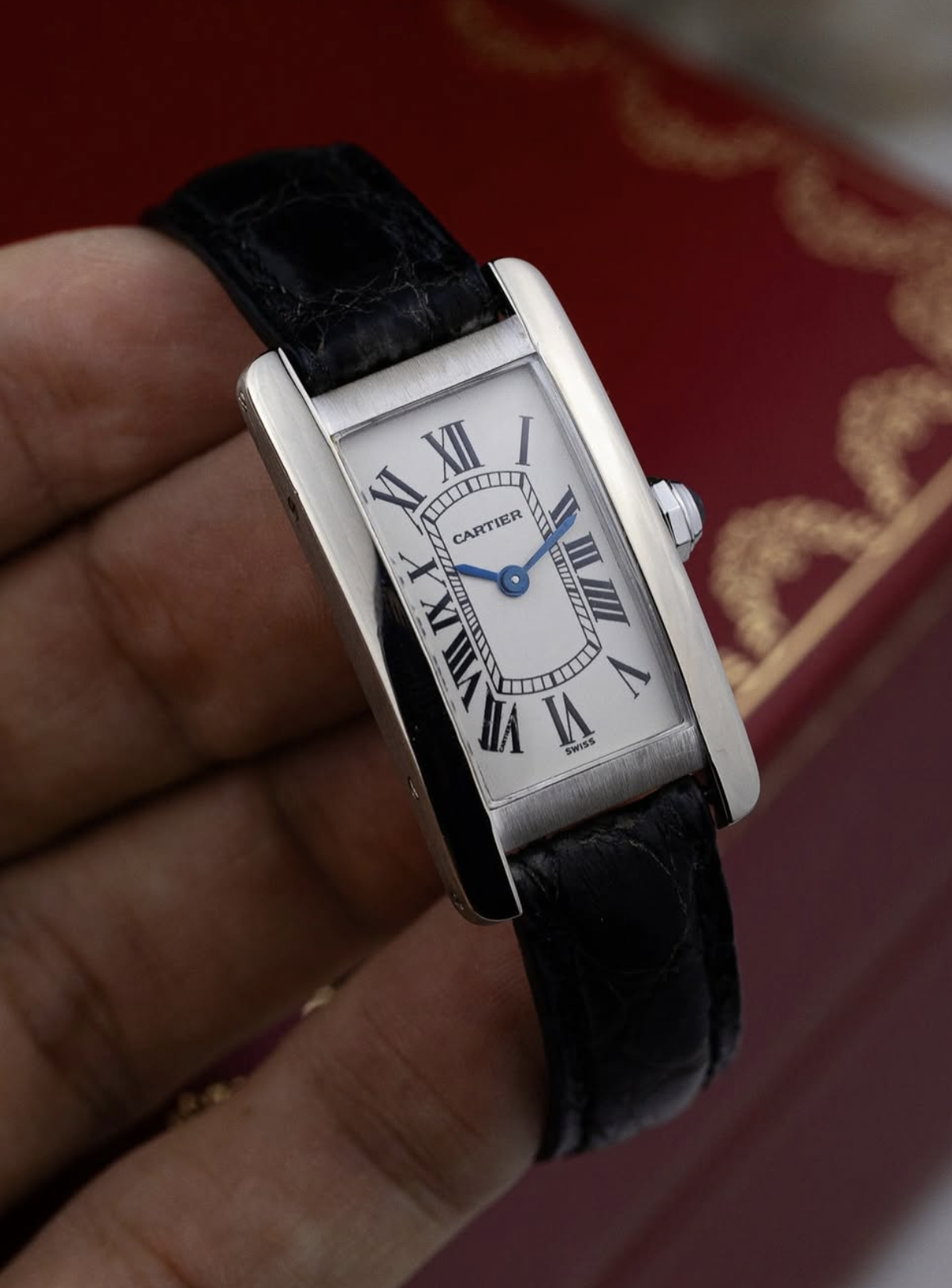
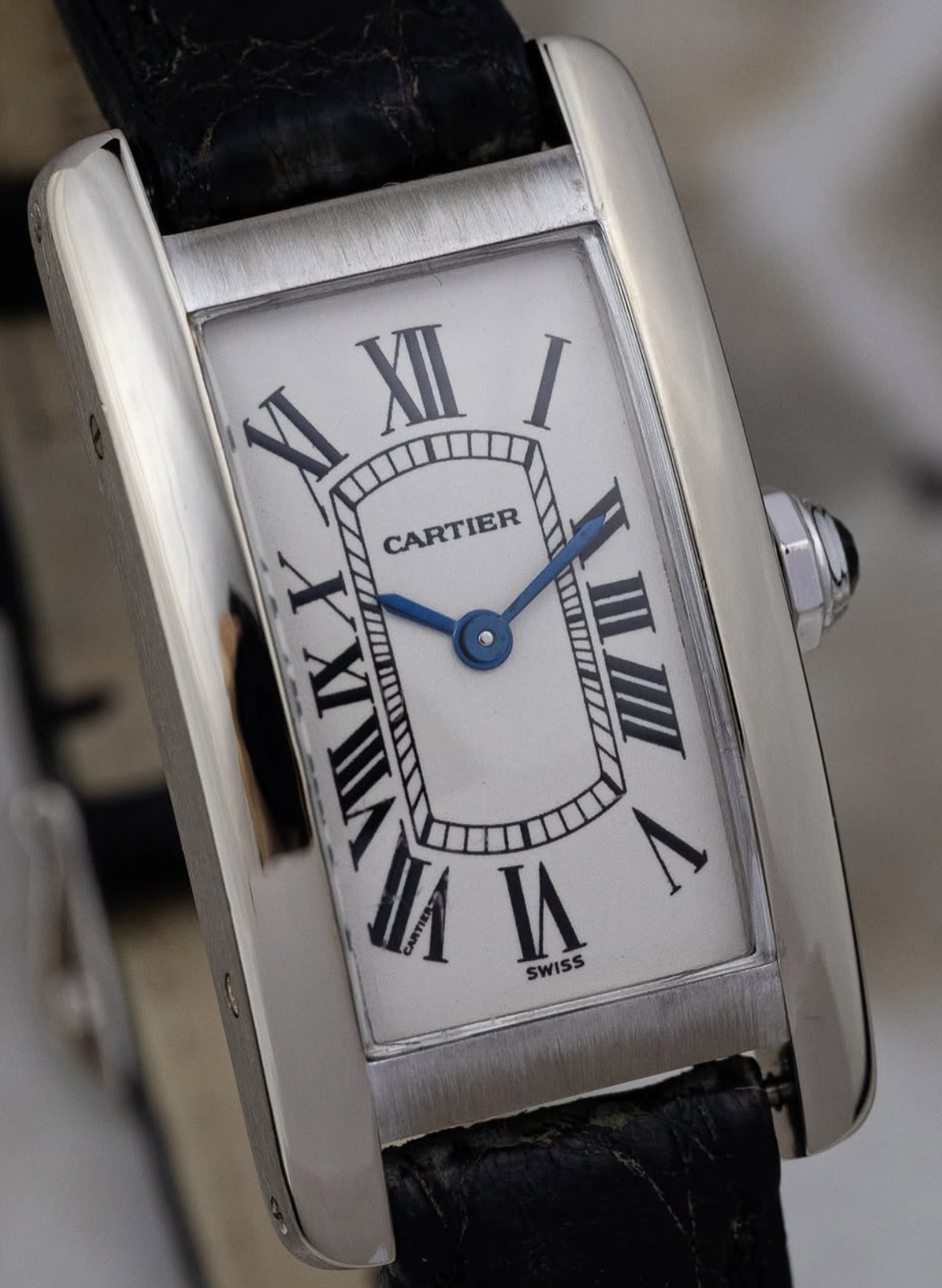
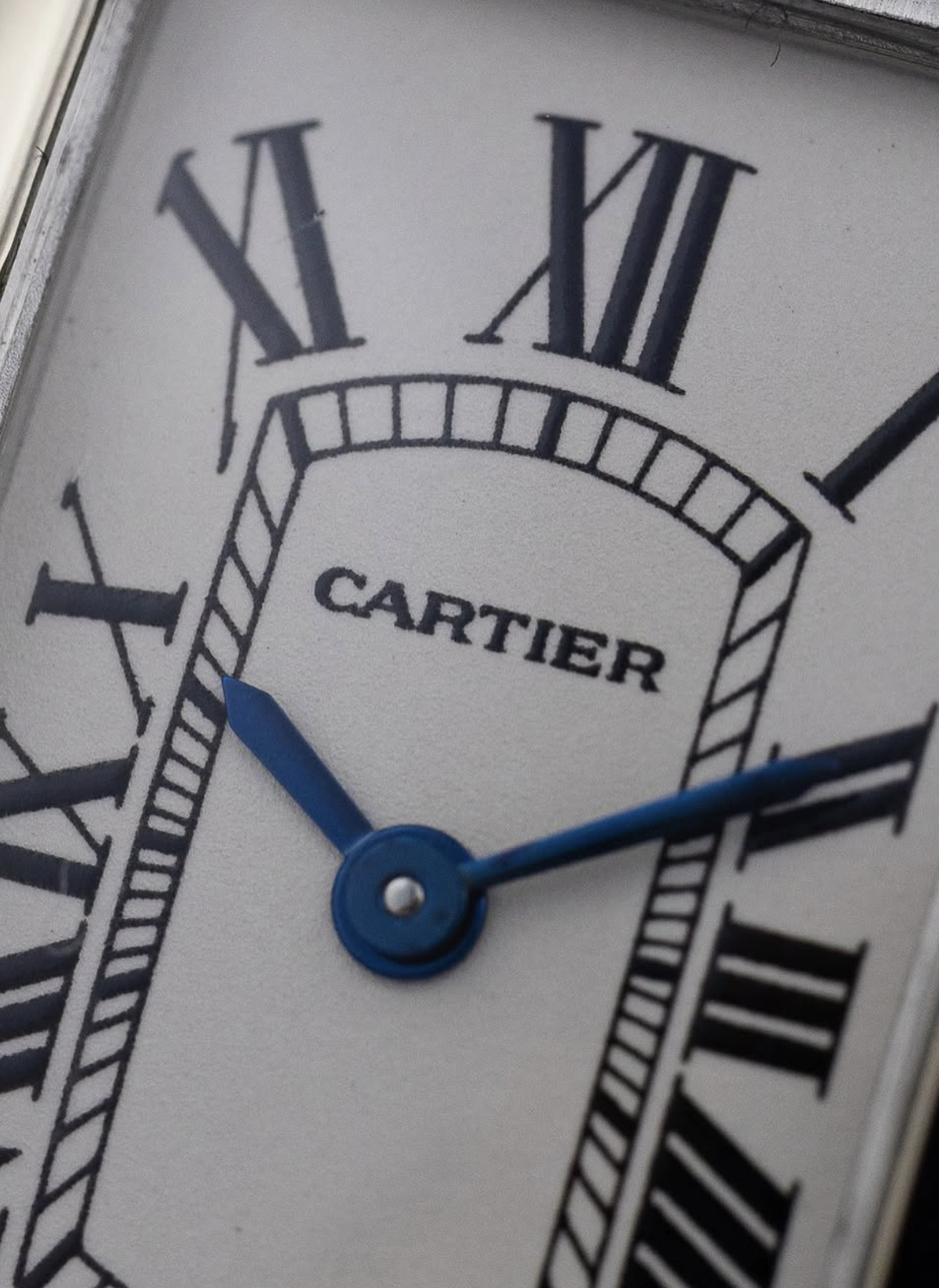
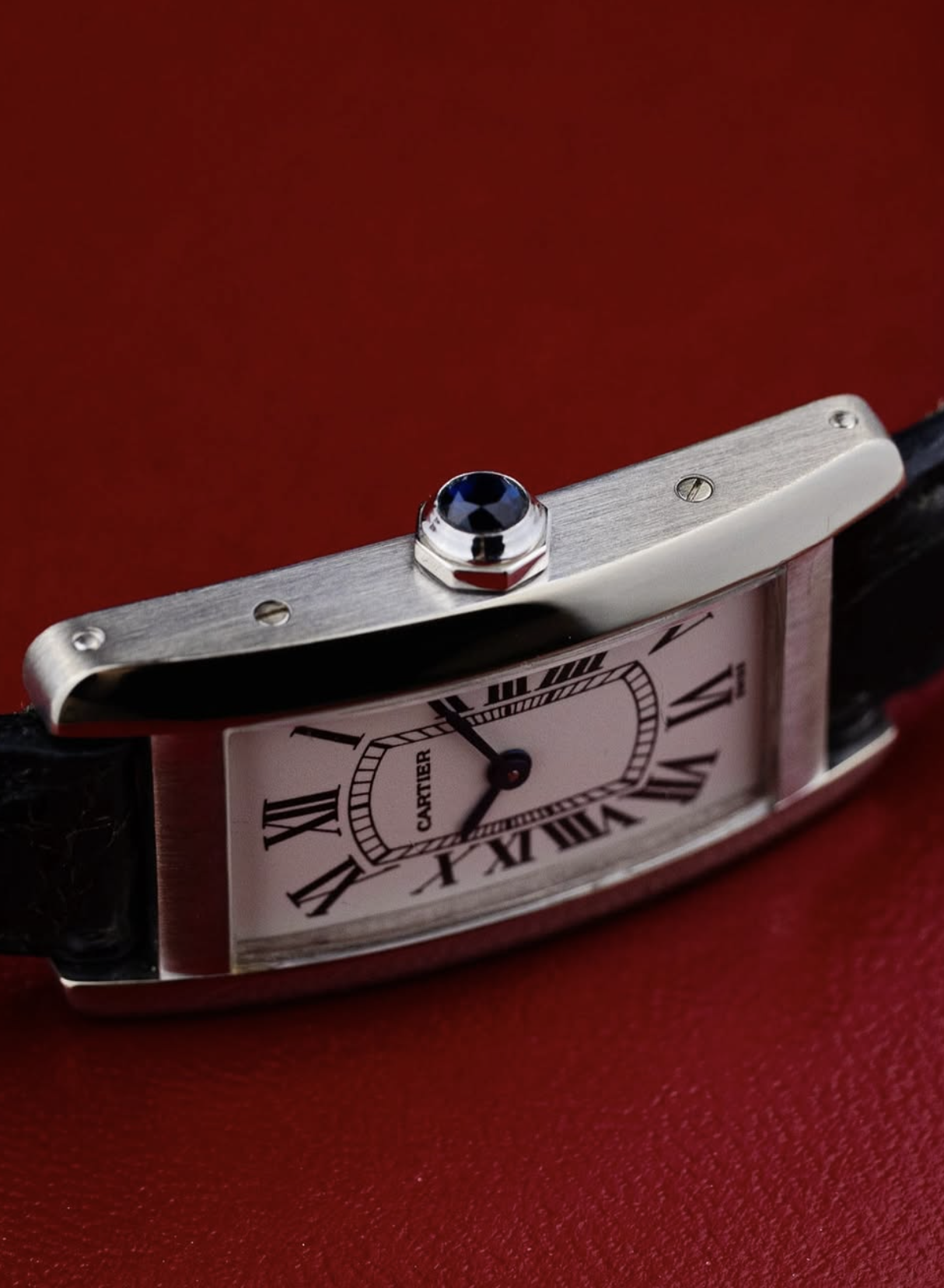
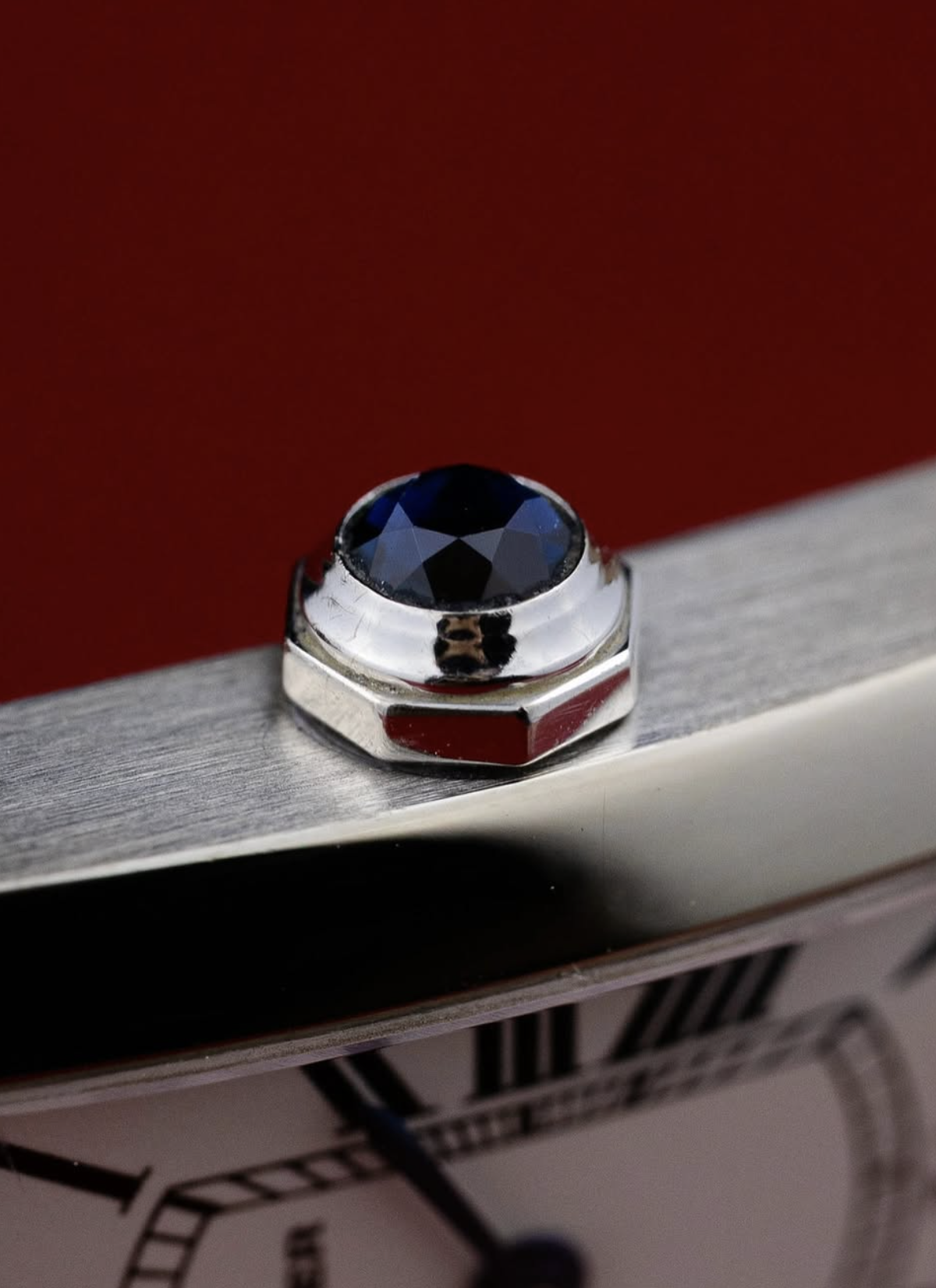
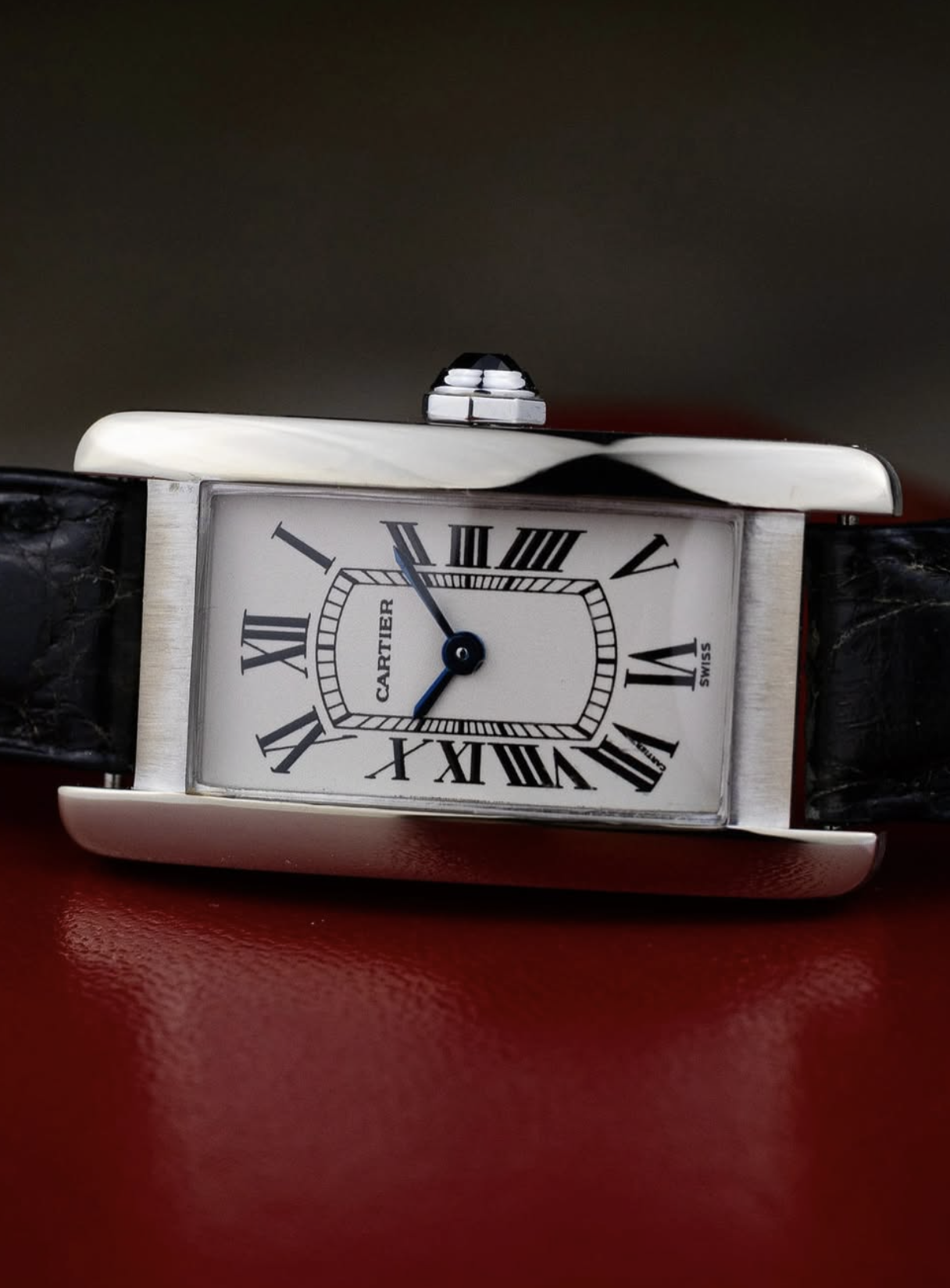
The Ref. 1713 presents the Tank Américaine in 18k white gold — a cooler, more understated expression than the yellow gold variants that dominated early production. The silvered dial carries black Roman numerals arranged along a railroad minute track, framed by wide white gold brancards that curve gently along their length. The blue cabochon-set crown, blued steel sword hands, and sapphire crystal complete the classic Cartier vocabulary. Viewed from the side, the defining curve of the Américaine case is immediately apparent — a subtle arc from top lug to bottom that distinguishes this reference from the flat-cased Tank Louis.
Reference Significance
The Ref. 1713 in white gold represents the Tank Américaine at its most refined. White gold was a deliberate choice for collectors who wanted the presence of a precious metal Tank without the overt warmth of yellow gold — a preference that anticipated the broader market shift toward white metals that would dominate the 2000s and 2010s. The quartz Cal. 157 movement keeps the case thin and the ownership experience uncomplicated, which aligns with the Américaine's positioning as a daily-wearable dress watch rather than a horological statement piece.
Among early Américaine references, the 1713 commands attention for its combination of material and proportion. The 19 × 35 mm case is generously sized for a 1990s Cartier without crossing into the oversized territory that characterized later men's luxury watches. For contemporary wrists, this is arguably the ideal vintage Tank Américaine size.
Historical Context
The 1713 was produced during the first decade of the Tank Américaine's existence, before the model's commercial expansion brought stainless steel variants, chronographs, and skeleton dials into the range. These early precious-metal-only references represent the Américaine as it was originally conceived: an elegant, refined reinterpretation of the Cintrée for a modern audience.
At auction, white gold Américaine references from this era appear less frequently than their yellow gold counterparts, which were produced in larger numbers. This relative scarcity, combined with growing collector interest in white gold vintage Cartier, has pushed values upward — particularly for examples with intact original dials and complete documentation.
What to Look For
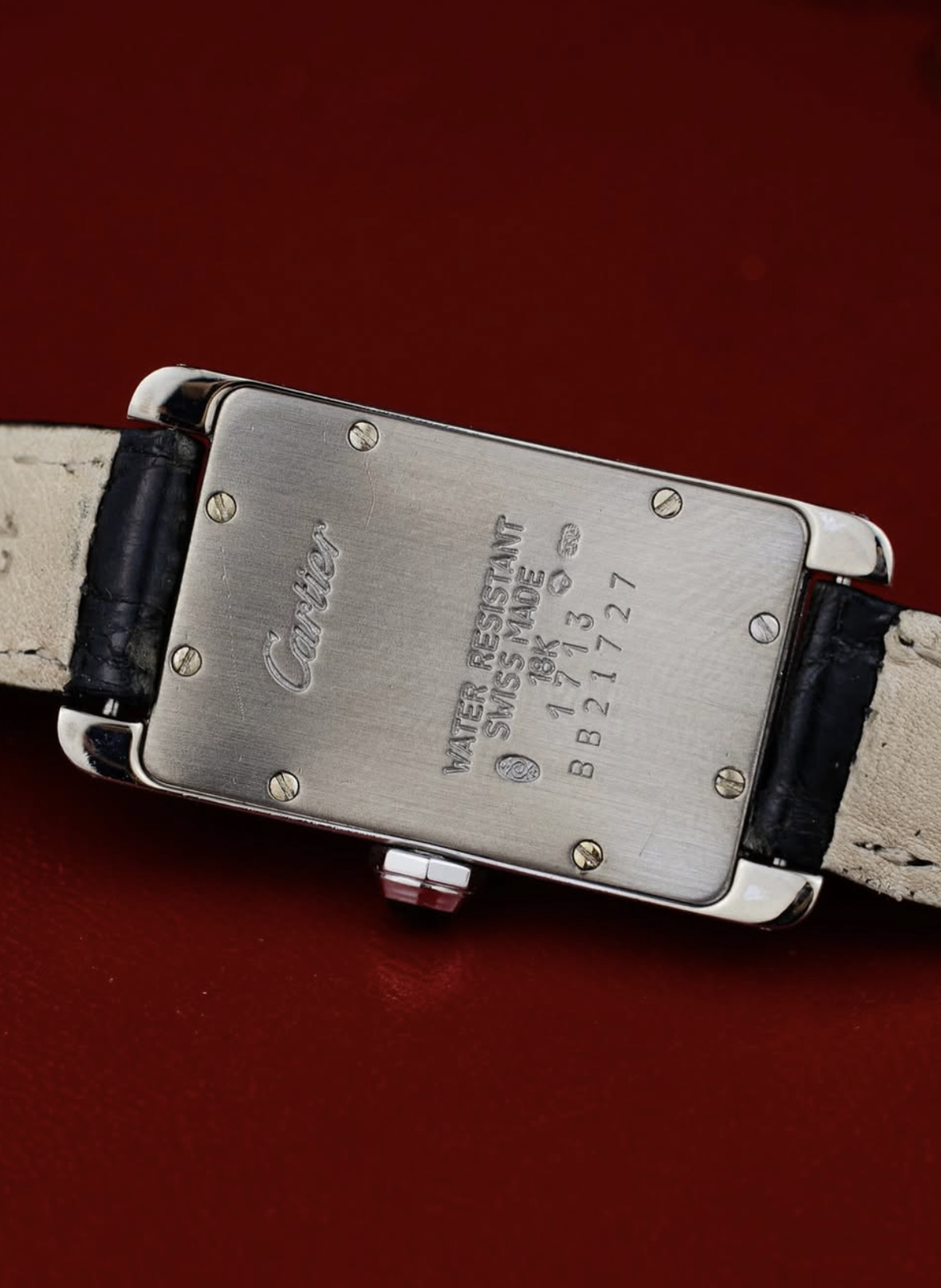
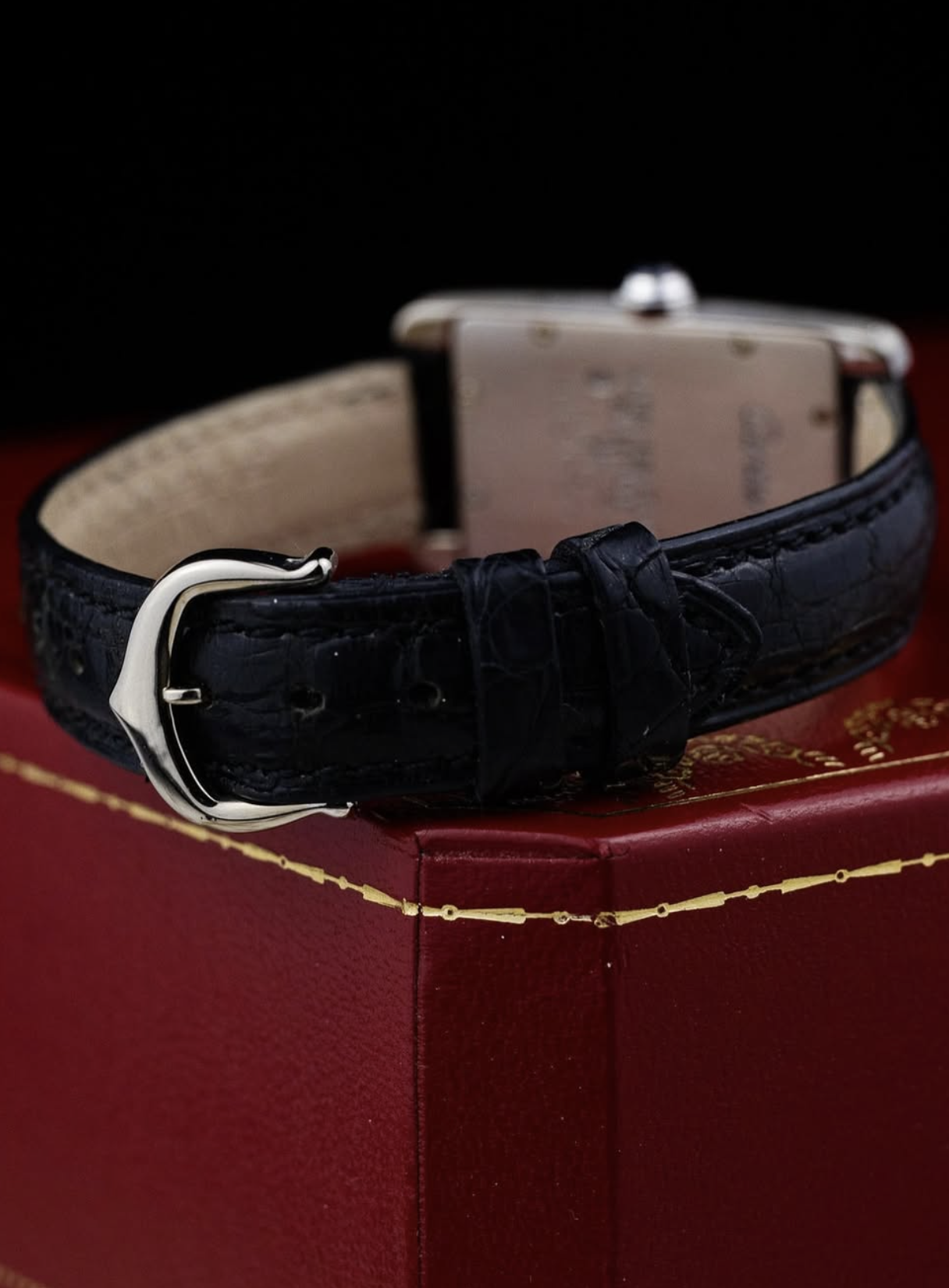
Authentication points include the eight-screw case back with Cartier engraving, the blue cabochon crown (sapphire or spinel), correct Roman numeral proportions relative to the railroad track, and the hidden Cartier signature within the VII numeral. The curved case profile should be smooth and uninterrupted — any flatness or irregularity in the brancards suggests case damage or non-original parts. The deployant clasp should be signed Cartier and match the case metal.