Visual Description
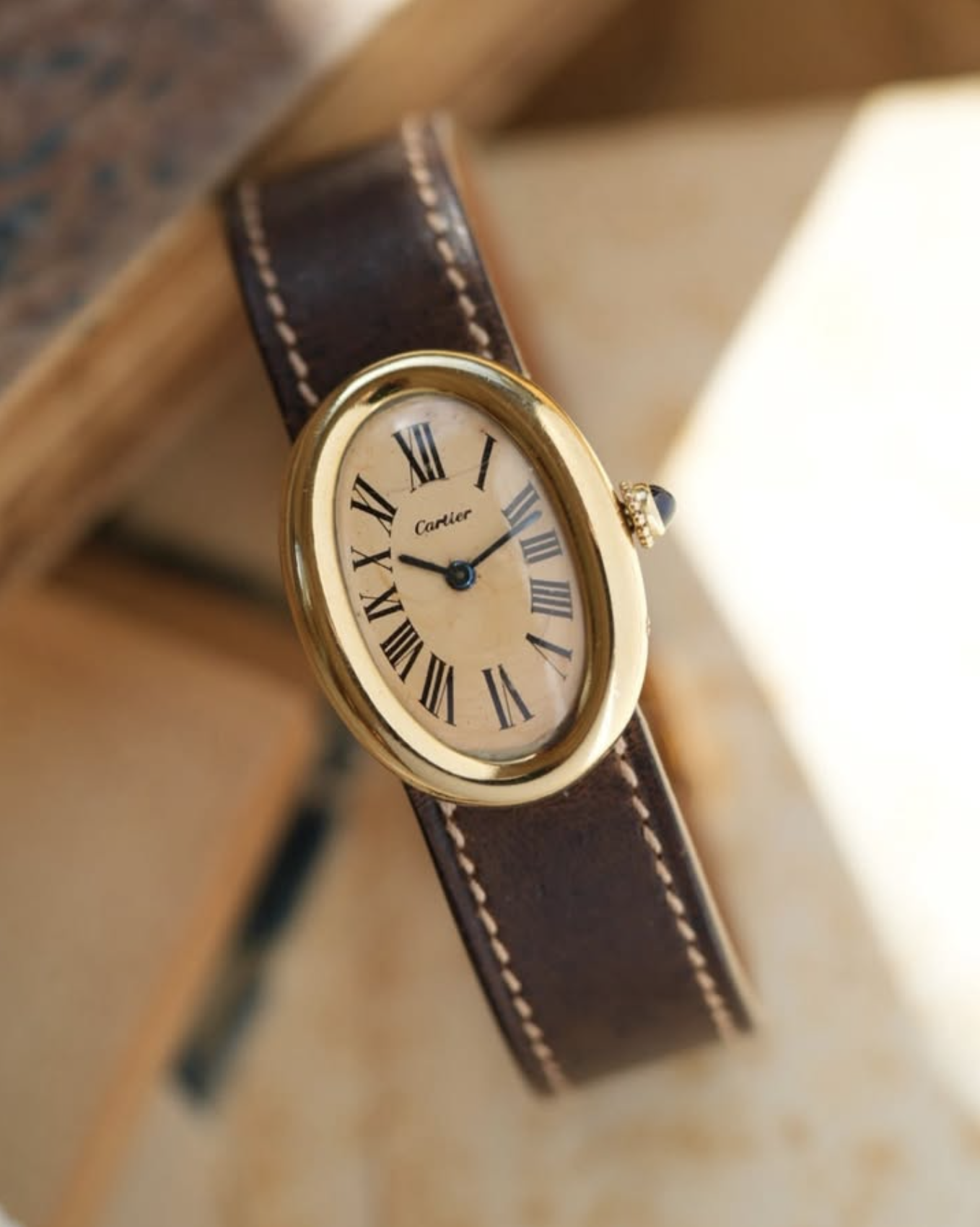
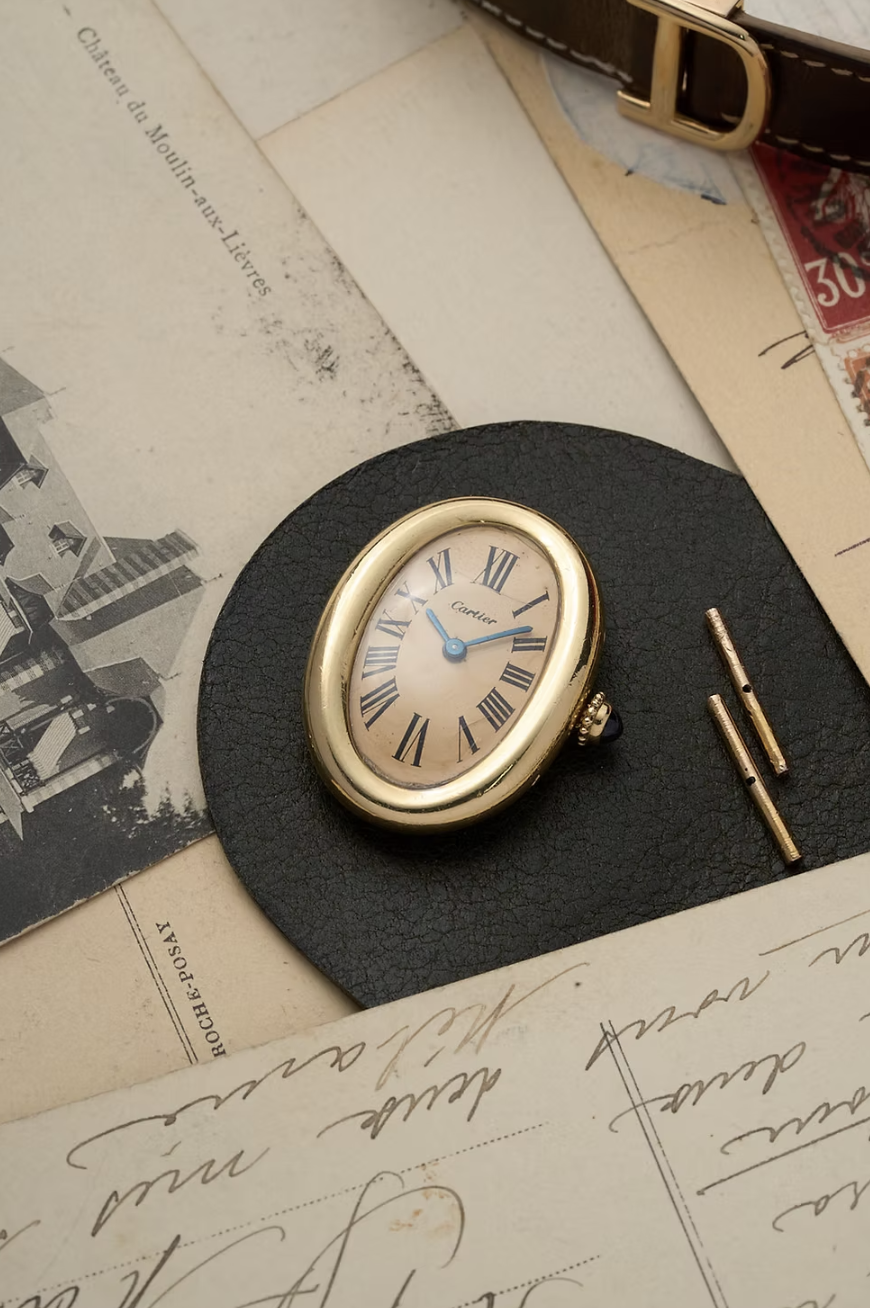
The Ref. 7672 presents as an understated luxury object. The case is a refined elongated oval, approximately 31 × 23 mm—generous for a women's watch of its era but still considerably smaller than the contemporary men's models. The case sides curve gently, and the lugs flow organically from the case body without sharp angles.
In 18k yellow gold, the case exhibits the particular warmth characteristic of Cartier's post-war pieces. The finish varies between examples: some feature highly polished surfaces, while others show a more restrained combination of polishing and brushing. The blue sapphire cabochon crown sits at 12 o'clock, its deep blue a signature Cartier detail that catches light with subtle intensity.
The dial is typically cream or pale silver, providing high contrast for readability. Roman numerals in black are positioned at cardinal points (XII, III, VI, IX), with dot markers at the intermediate hours. The sword hands—characteristic of Cartier women's watches—are blued steel, creating a visual harmony with the crown. A circular date window is absent; the dial is clean and uncluttered.
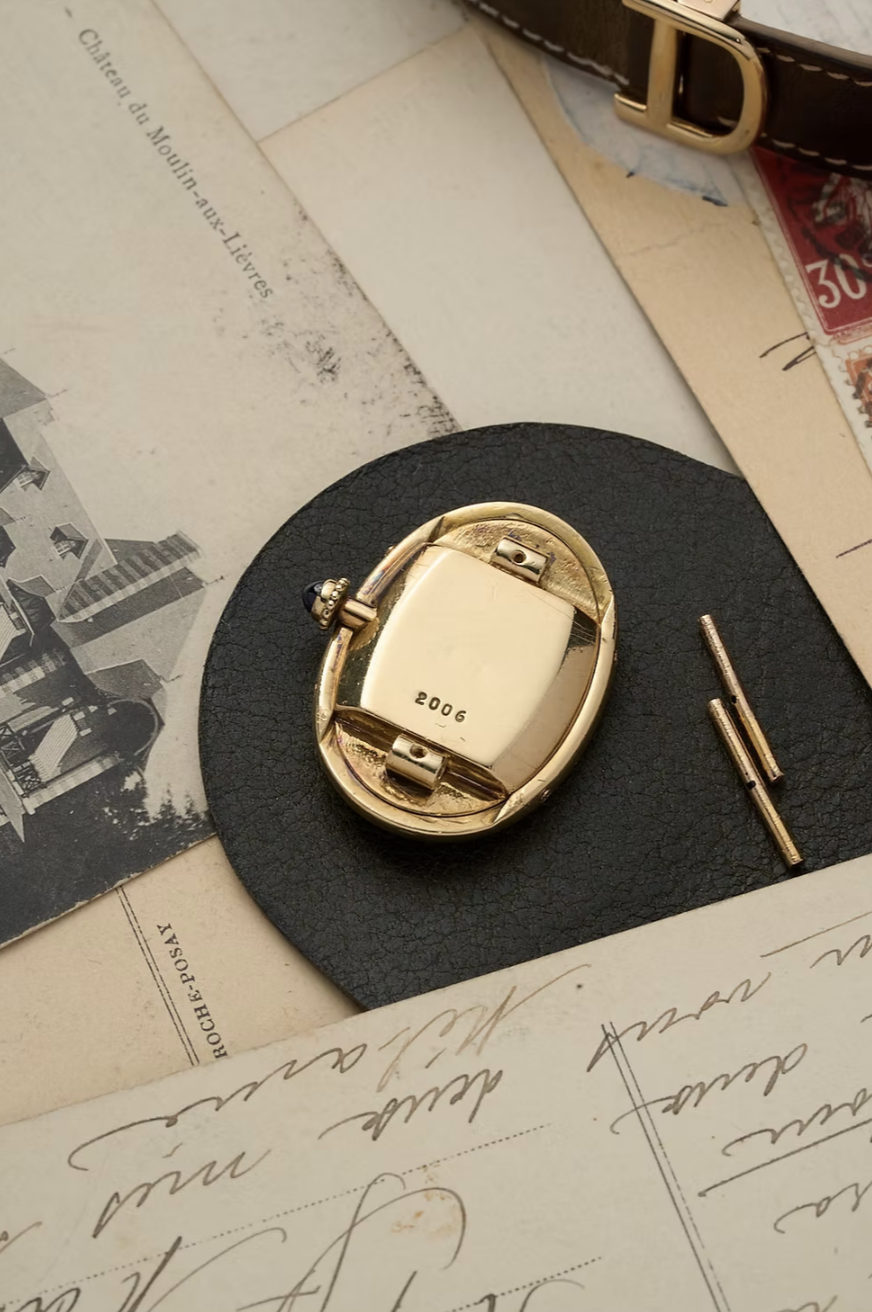
The caseback is typically engraved with "Cartier Paris" and may include movement information or serial details, though specifics vary by production year.
Reference Significance
Ref. 7672 represents the authoritative post-war interpretation of the Baignoire concept. It emerged during the late 1950s-early 1960s, a moment when Cartier was methodically reviving its historic designs with contemporary manufacturing standards.
This reference became the primary incarnation of the Baignoire during the 1960s and beyond. Unlike the original 1912 concept, which was a design statement within a historical moment, the Ref. 7672 was a deliberate restoration—a declaration that the elongated oval was worthy of continued production.
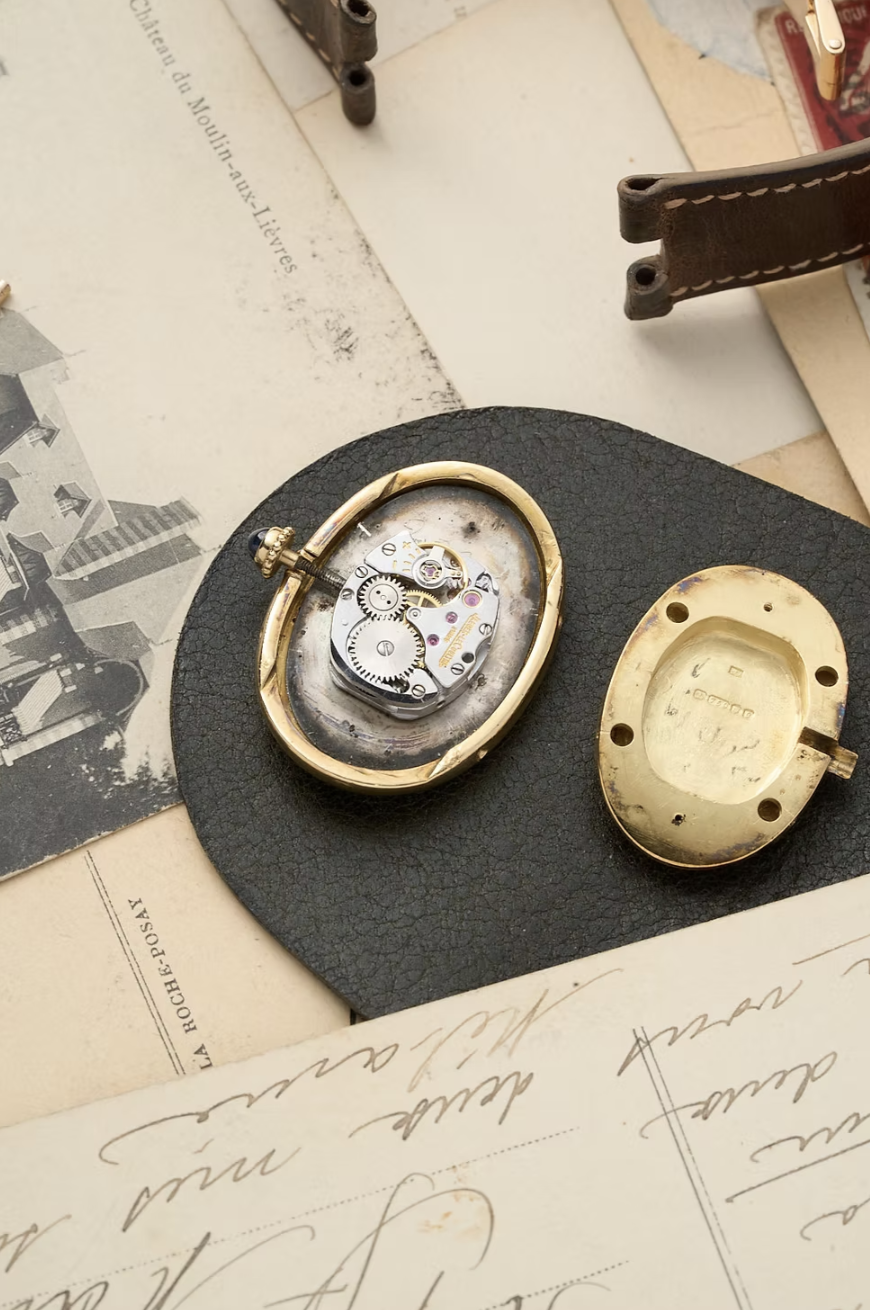
The presence of a JLC movement underlines Cartier's reliance on established Swiss horological expertise. Cartier did not manufacture movements in-house; instead, it selected and finished quality calibers from established partners. The JLC movement in the Ref. 7672 is straightforward and robust, designed for reliability rather than complexity.
Among serious Cartier collectors, the Ref. 7672 occupies a particular status: it is neither the original (1912) nor the radical (Allongée, c. 1969), but rather the refined middle ground. It represents Cartier's confidence in the design's longevity and its understanding of how to market women's watches to a discerning clientele.
Historical Context
The Ref. 7672 launched during a pivotal moment for Cartier's watch division. The house had survived World War II and the immediate post-war disruption. By the mid-1950s, production had stabilized, and the design archive had become a resource to be mined and reinterpreted.
The post-war-transition era (1946–1963) was characterized by a return to refined, classical forms. The aesthetic moved away from the Art Deco boldness of the 1920s–1930s toward a more restrained modernism. The Baignoire, with its elegant oval, fit this sensibility perfectly: it was recognizably Cartier, it was historically legitimate, and it was contemporary enough for the 1960s.
The women's watch market of this period was expanding but remained segmented. Luxury watches for women were expected to function as jewelry—they were worn as visible symbols of taste and status. The Ref. 7672, in 18k gold with a refined dial, was positioned at the higher end of this market. It was not a mass-market timepiece; it was an object for women who understood Cartier's heritage and could afford its pricing.
Notable among the known owners of the Ref. 7672 was Oona O'Neill Chaplin, widow of Charlie Chaplin. The sale of her Baignoire at Sotheby's in recent decades established a market price point and confirmed the reference's place within serious Cartier collecting.
What to Look For
Authenticity Markers:
- Cartier case engraving should be sharp and legible. Shallow or worn engraving may indicate refinishing or case work.
- The sapphire crown should be deep blue and securely set. Replaced crowns, while functional, are noticeably different and affect authenticity.
- The dial should bear "Cartier" in an arc near 12 o'clock and may include the reference number. Font and positioning vary slightly by production year.
Condition Assessment:
- The elongated oval case is prone to denting along its curves, particularly near the 3 and 9 o'clock positions. Examine the profile carefully for damage. Minor surface marks are expected; significant dents reduce value substantially.
- The mineral crystal may show scratches; this is cosmetic and does not affect function. Replacement is straightforward and inexpensive.
- The caseback should show minimal wear and retain legibility. Polishing the caseback is common and acceptable; however, re-engraving is considered restoration and should be disclosed.
Dial Preservation:
- Original cream or silver dials with crisp Roman numerals command significant premiums. Avoid watches with refinished dials, which appear uniformly perfect and lack the character of aged surfaces.
- The blued hands should retain their color and be original to the watch. Oxidized or faded hands suggest age; replacement hands are a form of restoration.
- Look for consistency across all dial elements. Mismatched numerals, hands, or crown finishes may indicate parts from different examples.
Movement Inspection:
- The movement should be a Jaeger-LeCoultre manual-wind caliber, typically marked with "JLC" or "Jaeger-LeCoultre" on the balance cock or other components.
- Original screws, springs, and components are preferable to replacements. A movement serviced by a reputable watchmaker will have documentation.
- Significant rust or damage to the movement affects restoration cost and, if severe, may render the watch economically unrepairable.
Market Considerations:
- Ref. 7672 examples typically range from $8,000–15,000 at auction, depending on condition, documentation, and provenance. Examples with exceptional provenance (previous ownership by notable individuals) command premiums.
- Watches with original boxes, papers, or service records are increasingly rare and add value.
- The gender of the original purchaser and subsequent ownership history can influence collectibility, though the contemporary market values authentic examples regardless of gender of the wearer.
The Ref. 7672 represents genuine Cartier watchmaking craftsmanship and historical significance. A well-preserved example with original dial, crown, and case condition is a sound acquisition for the collector seeking access to Cartier's women's watch heritage without the extreme rarity premium of the Allongée.