Visual Description
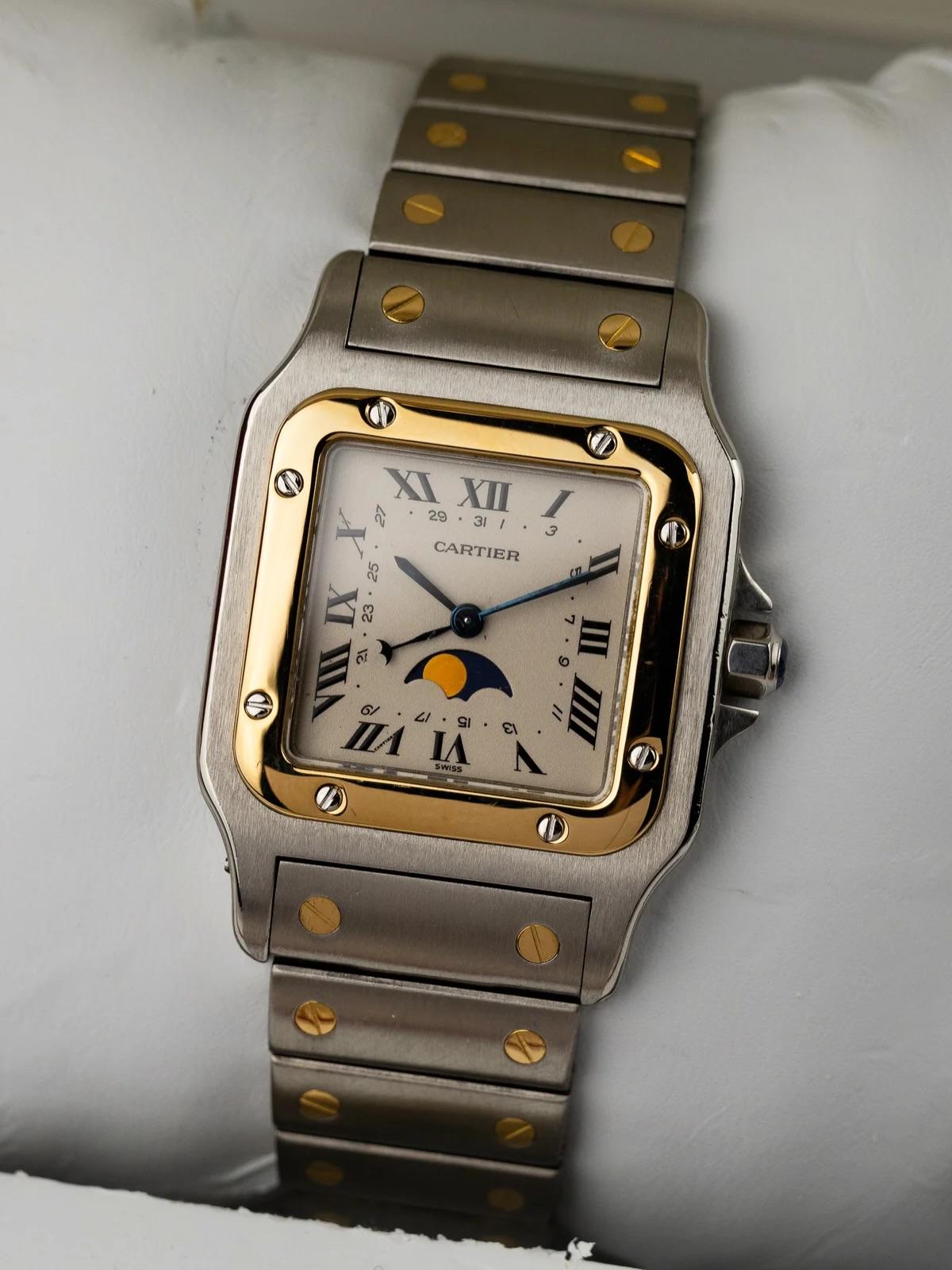
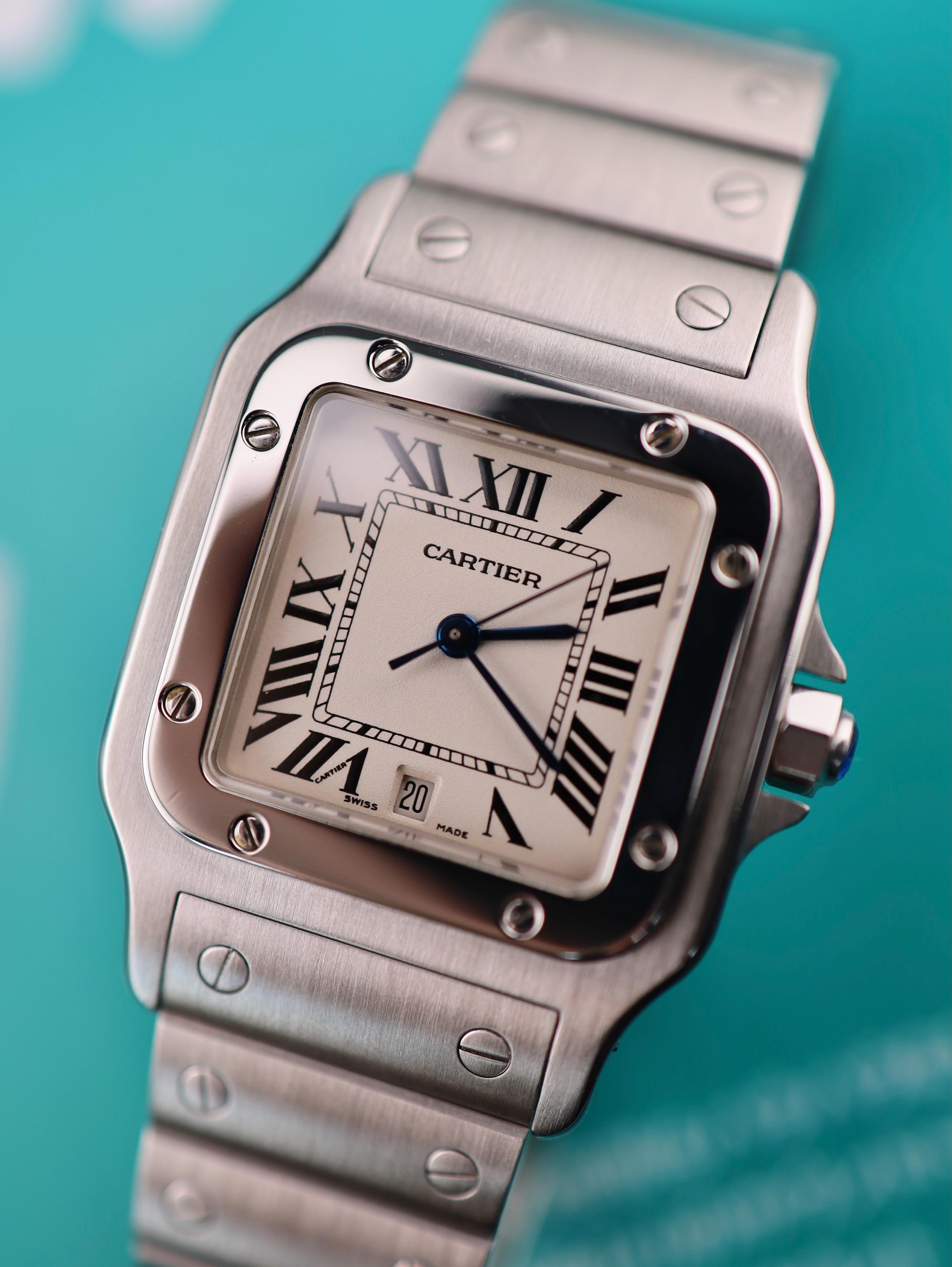
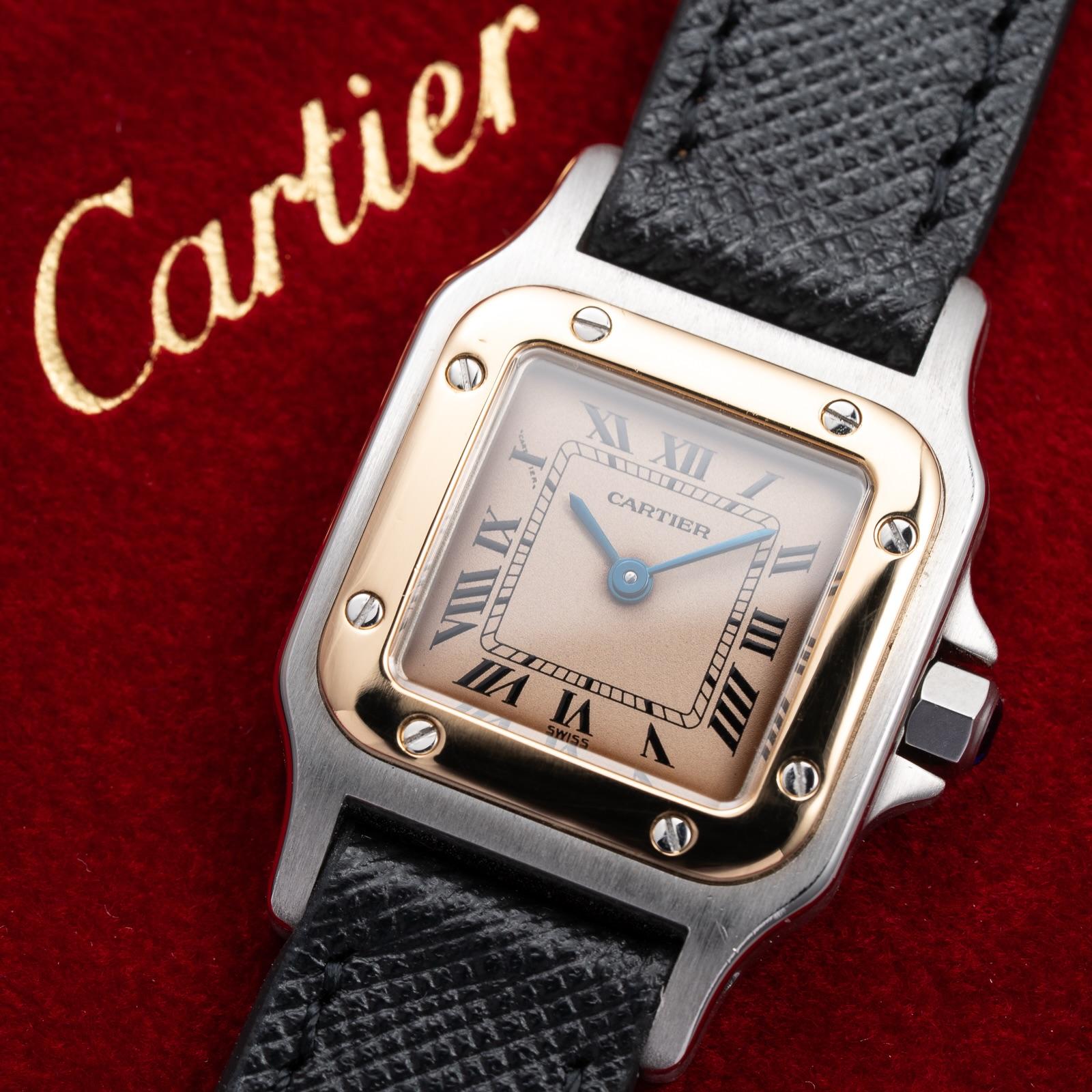
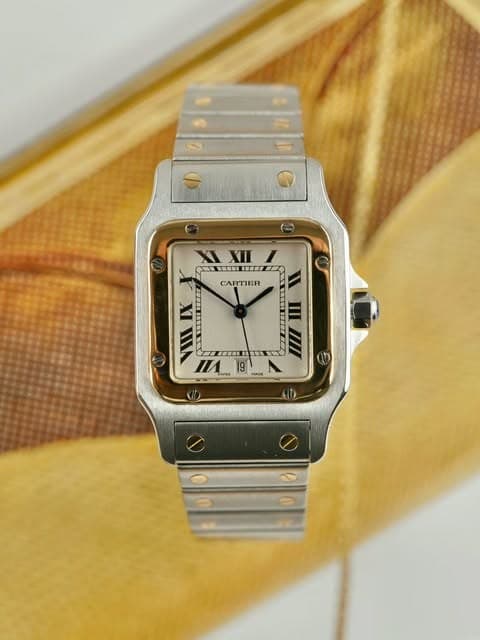
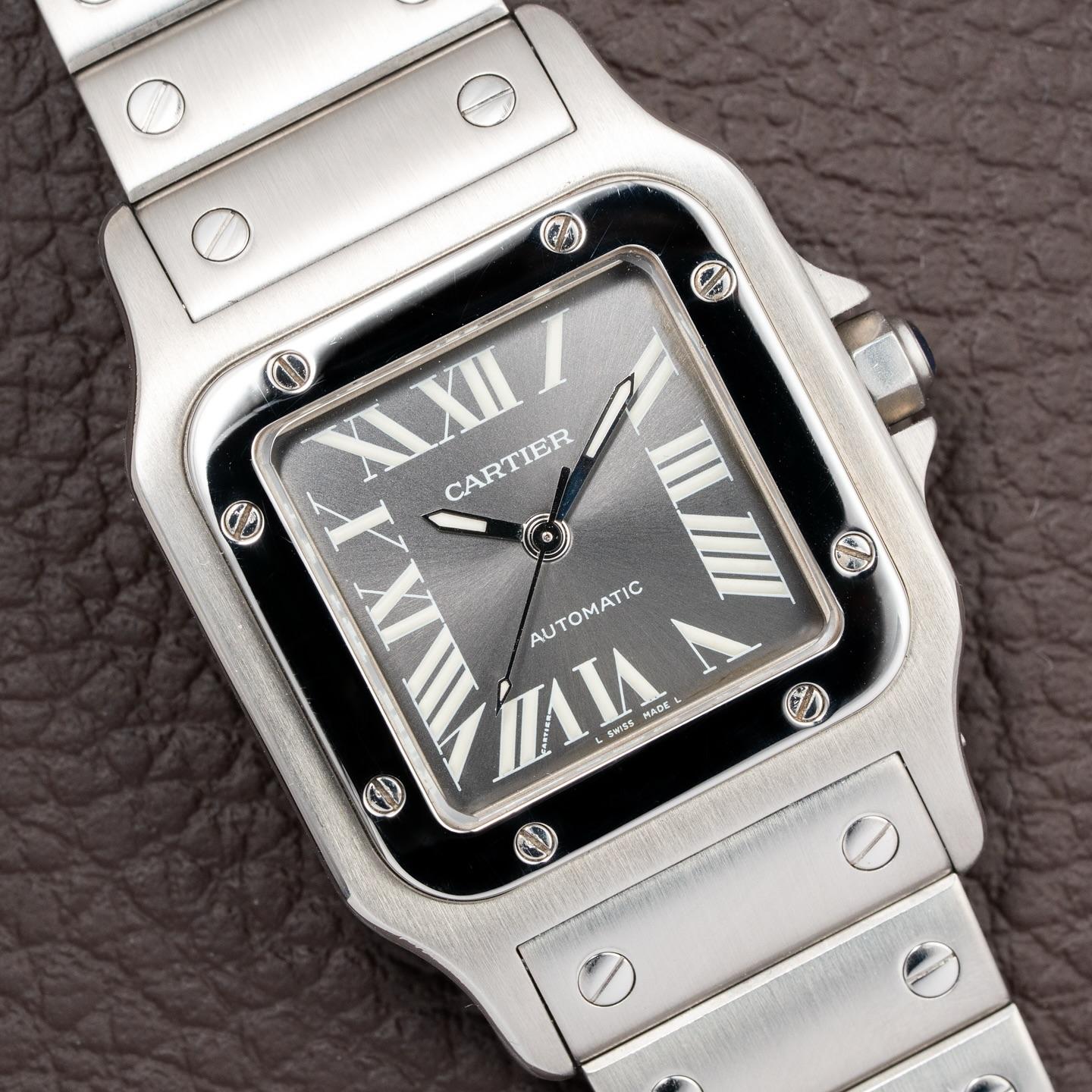
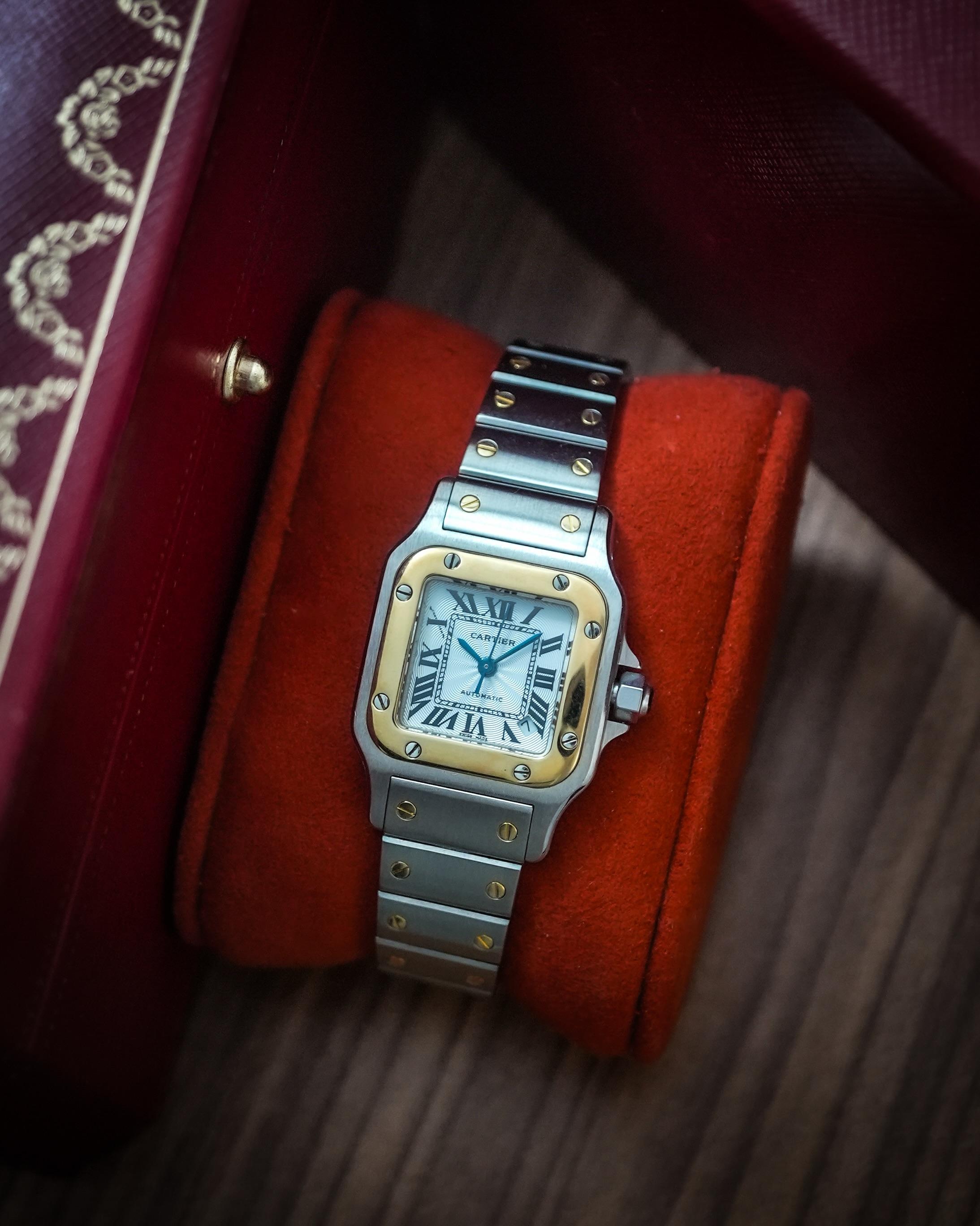
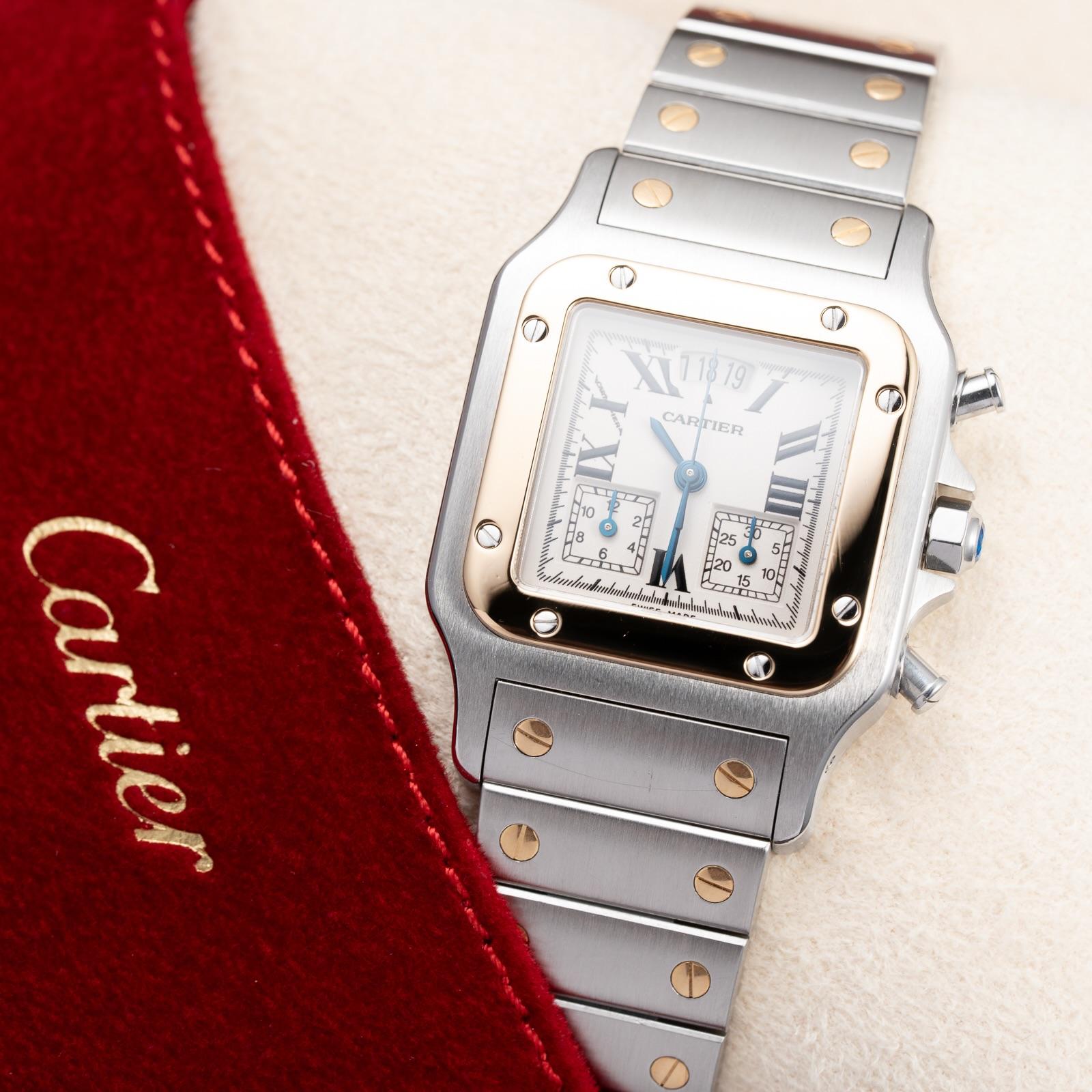
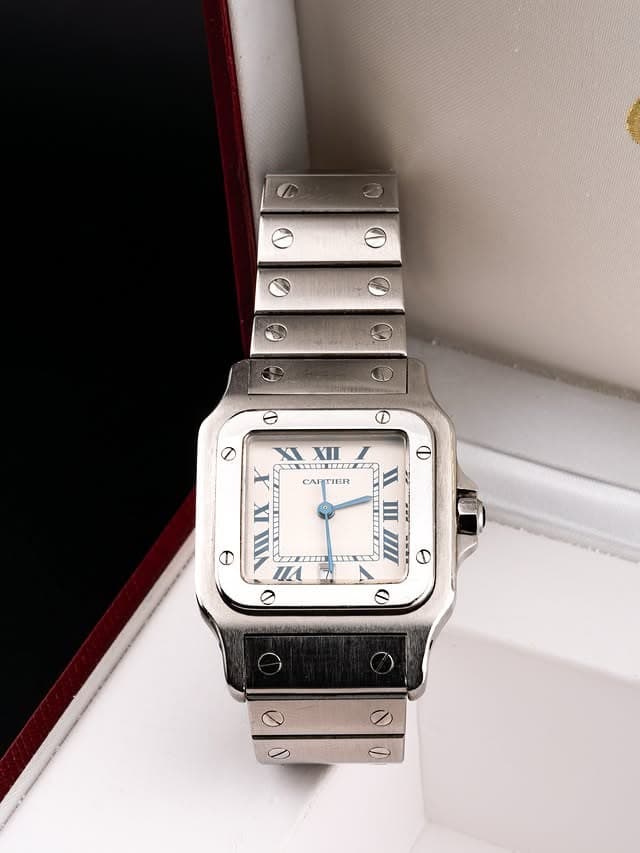
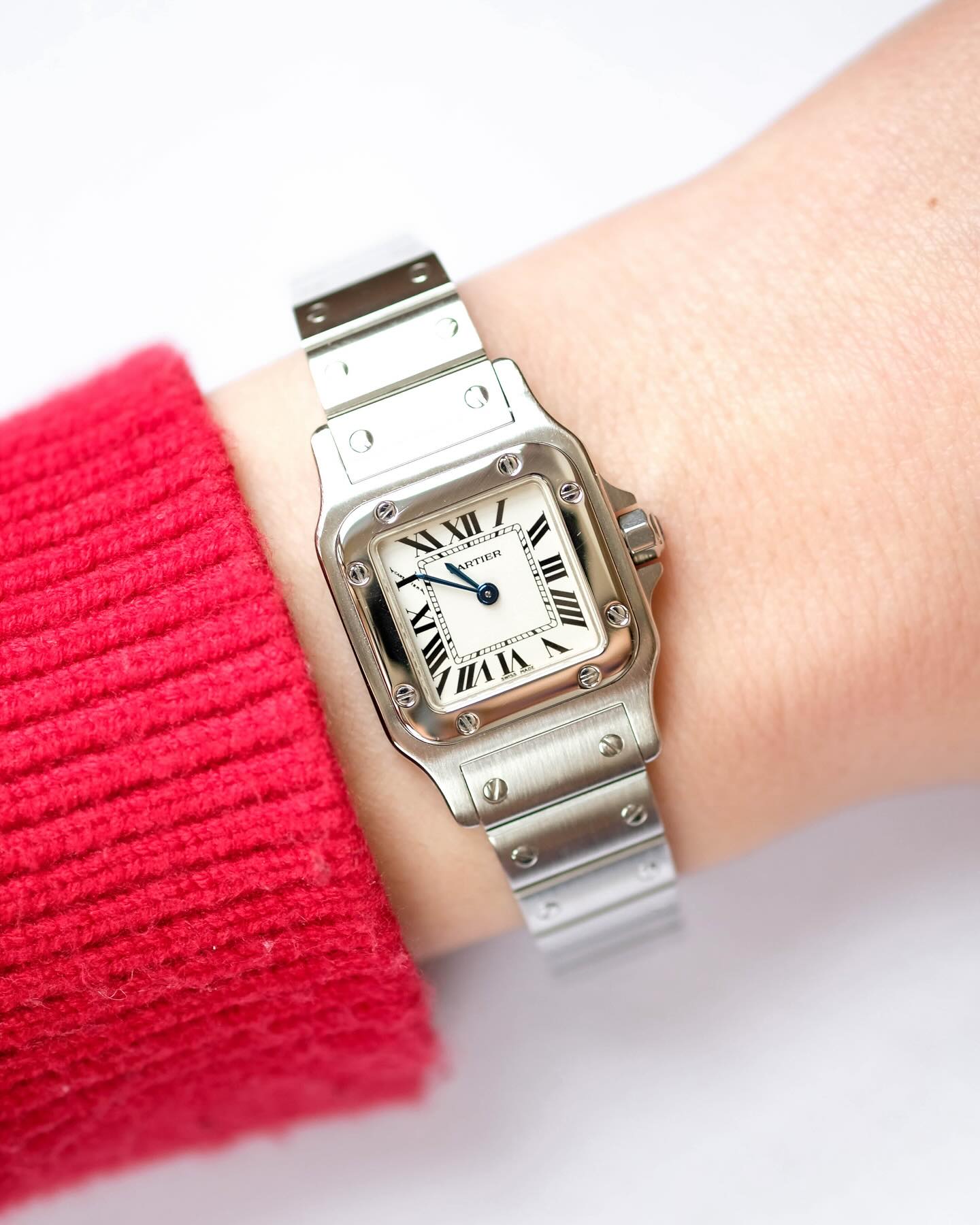
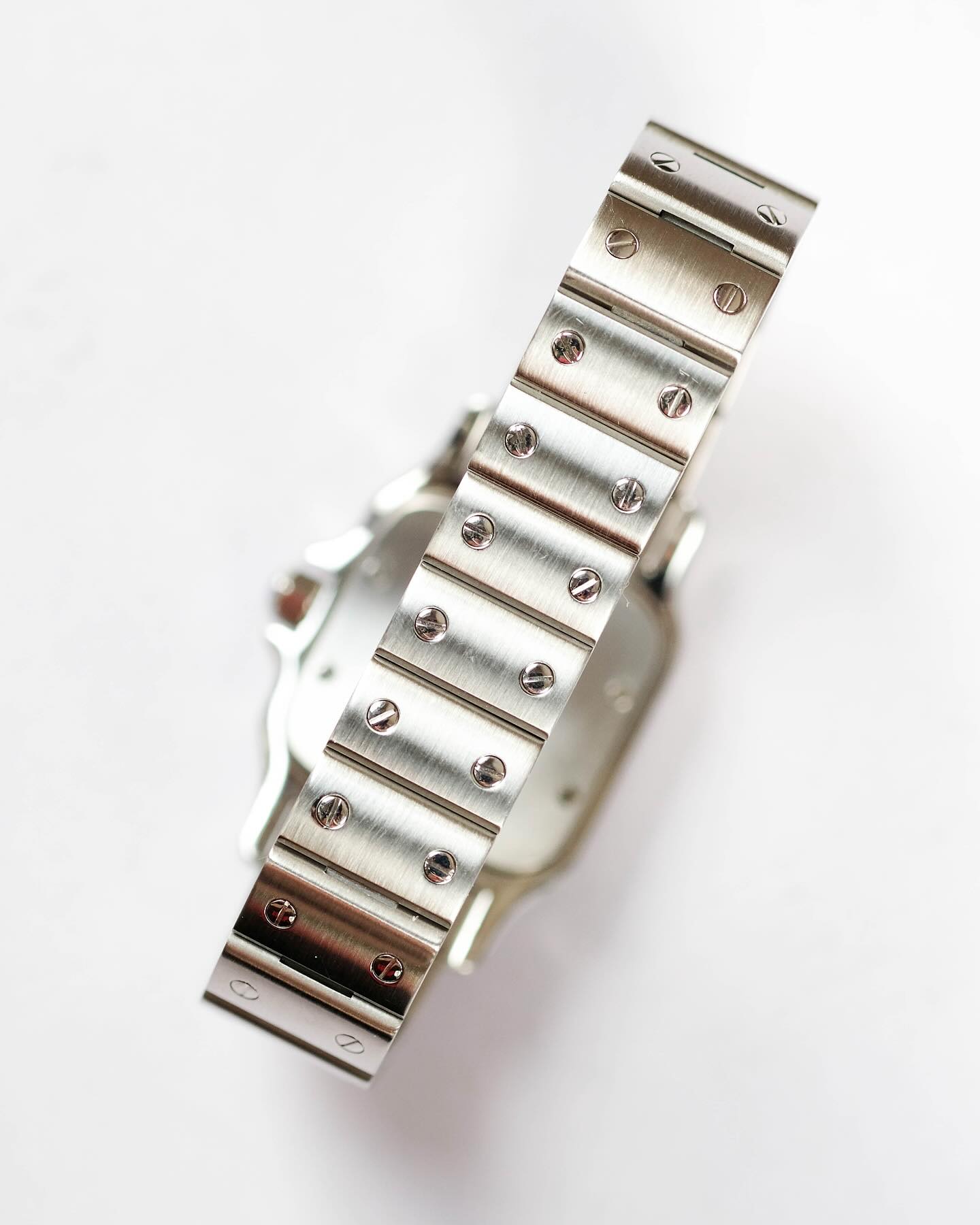
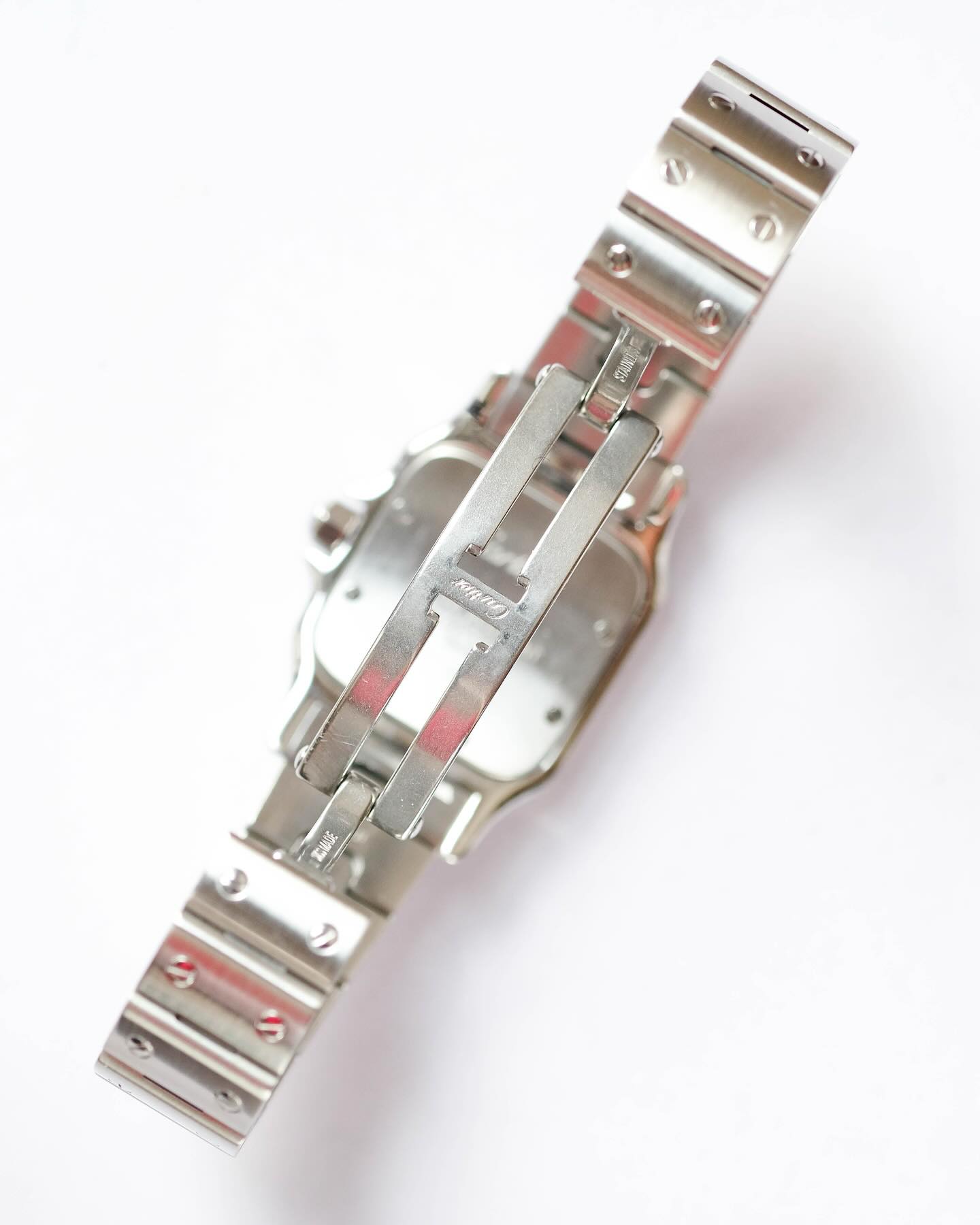
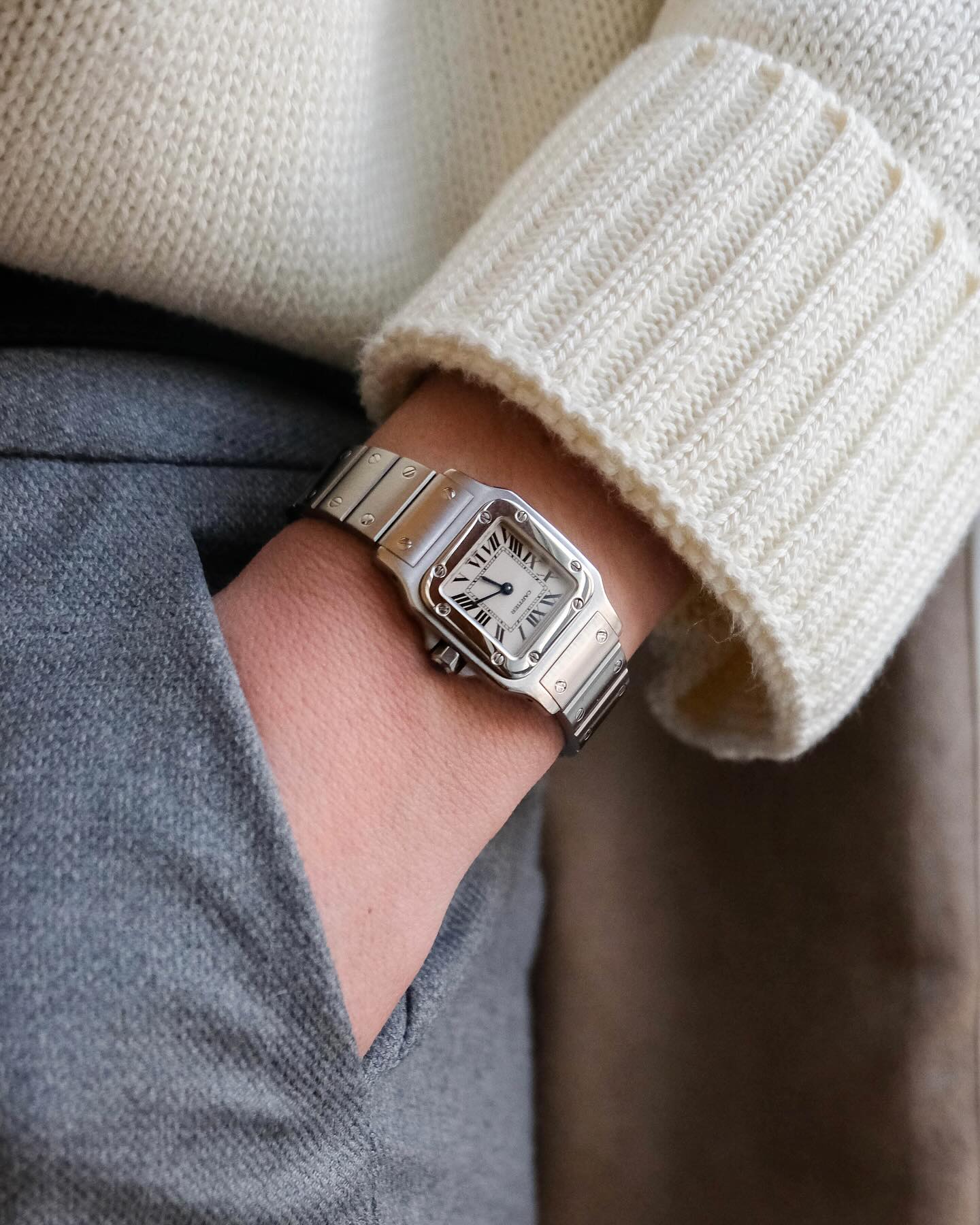
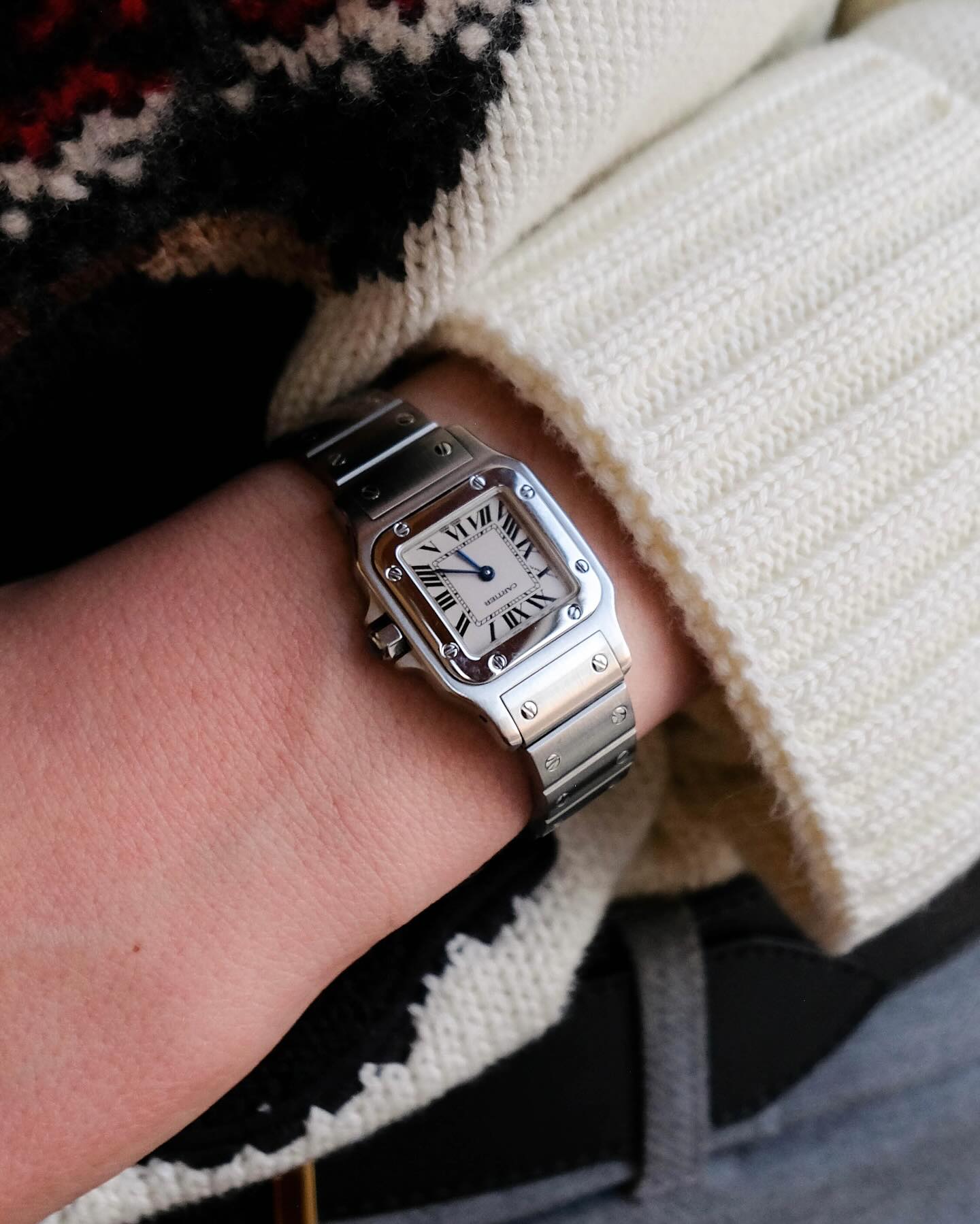
The Ref. 1565 is the Santos Galbée at its small size: a 24 × 35 mm stainless steel case with the curved, or galbée, profile that gives the model its name, eight exposed screws on the bezel and a blue cabochon on the crown. The dial is silvered or white, with Roman numerals, a railroad minute track and the hidden Cartier signature, set off by blued steel sword hands. The steel bracelet runs straight out of the case and closes with a concealed clasp.
Reference Significance
The 1565 is the small all-steel Galbée, the companion to the larger Ref. 1564 and the two-tone Ref. 1567. It carries the Santos design, from the screws to the integrated bracelet, at a size that suits smaller wrists, and its long run, from the late 1990s into the 2010s, makes it one of the most available ways into the Santos family.
Its dial causes more confusion than anything else about it. The same layout of Roman numerals and railroad track is cataloged as silver, white, cream or ivory, and some listings describe the numerals as applied. Sotheby's and Susannah Lovis name silver; Susannah Lovis and WannaBuyAWatch name white for other examples. The records we found do not settle whether silver and white are one finish or two.
Historical Context
The Santos Galbée arrived in 1987 as a softer, curved version of the Santos, and the steel quartz models carried it into everyday wear. Antiquorum dates a 1565 with a bracelet marked 03/96 to the 1990s and Susannah Lovis dates one to circa 1998, while dealers date others through the 2000s; a Phillips catalog says the Santos line as a whole was discontinued in 2016. Fellows catalogs two 1565s with a signed Cartier quartz Cal. 157; Sotheby's describes its example only as quartz. The 1565 is listed under more than one catalog number: Antiquorum cataloged an example as 1565/W20017D6, and Susannah Lovis lists one from about 1998 as 1565/W20024D6.
What to Look For
The case and bracelet should show even brushing and polishing, with crisp edges around the screws and no sign of heavy refinishing; some fine wear is normal. Links should be tight, and the concealed clasp should close firmly.
The dial should be clean, with crisp printing. A gentle warming of a pale dial toward cream is common and acceptable. A dial with gilt or applied numerals is unusual enough to check against the case back and the movement before buying.
The sapphire crystal resists scratches, so deep marks suggest hard wear. The quartz movement should keep good time; a stopped watch usually needs a battery or a service rather than a repair.