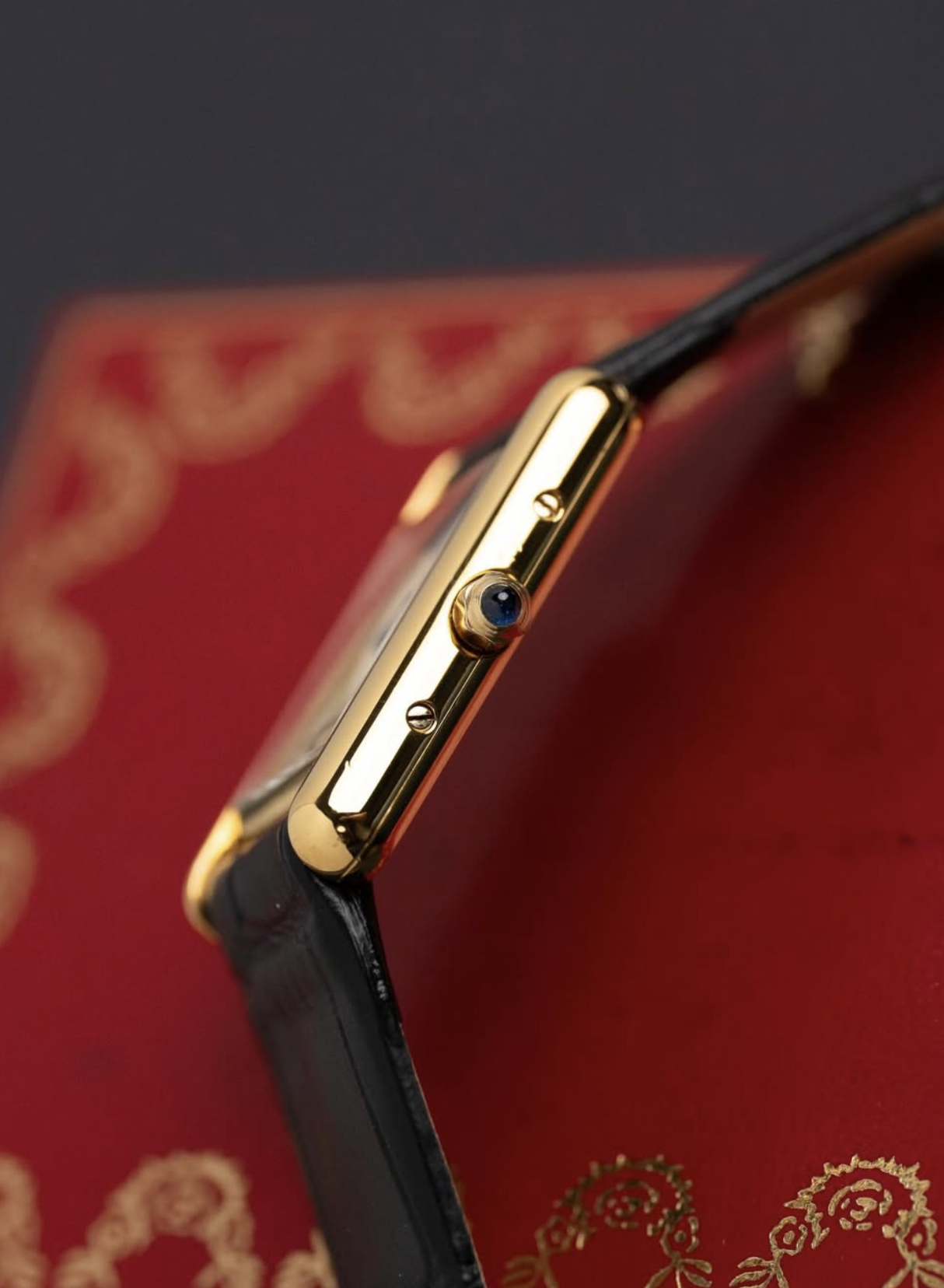
Visual Description
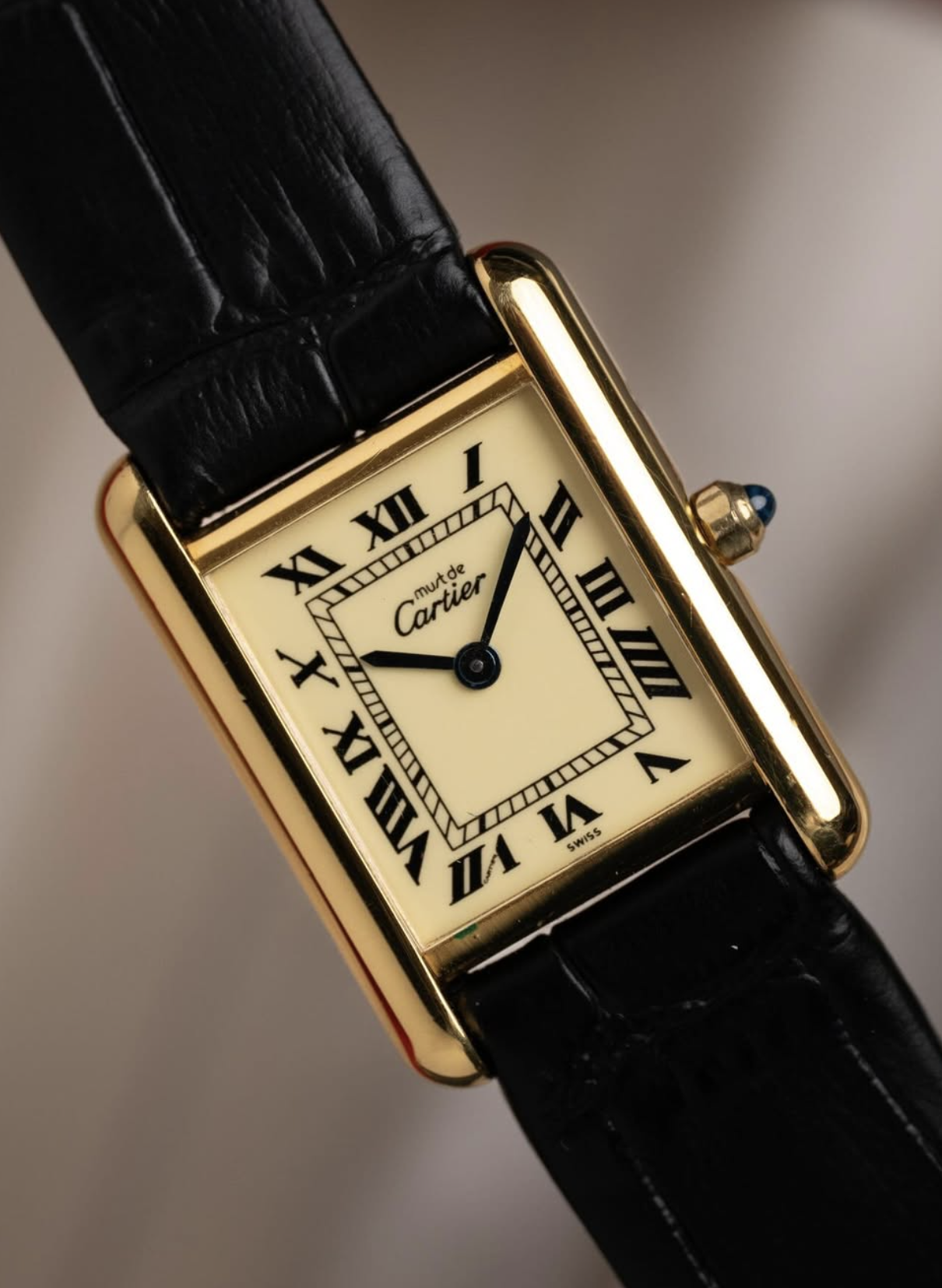
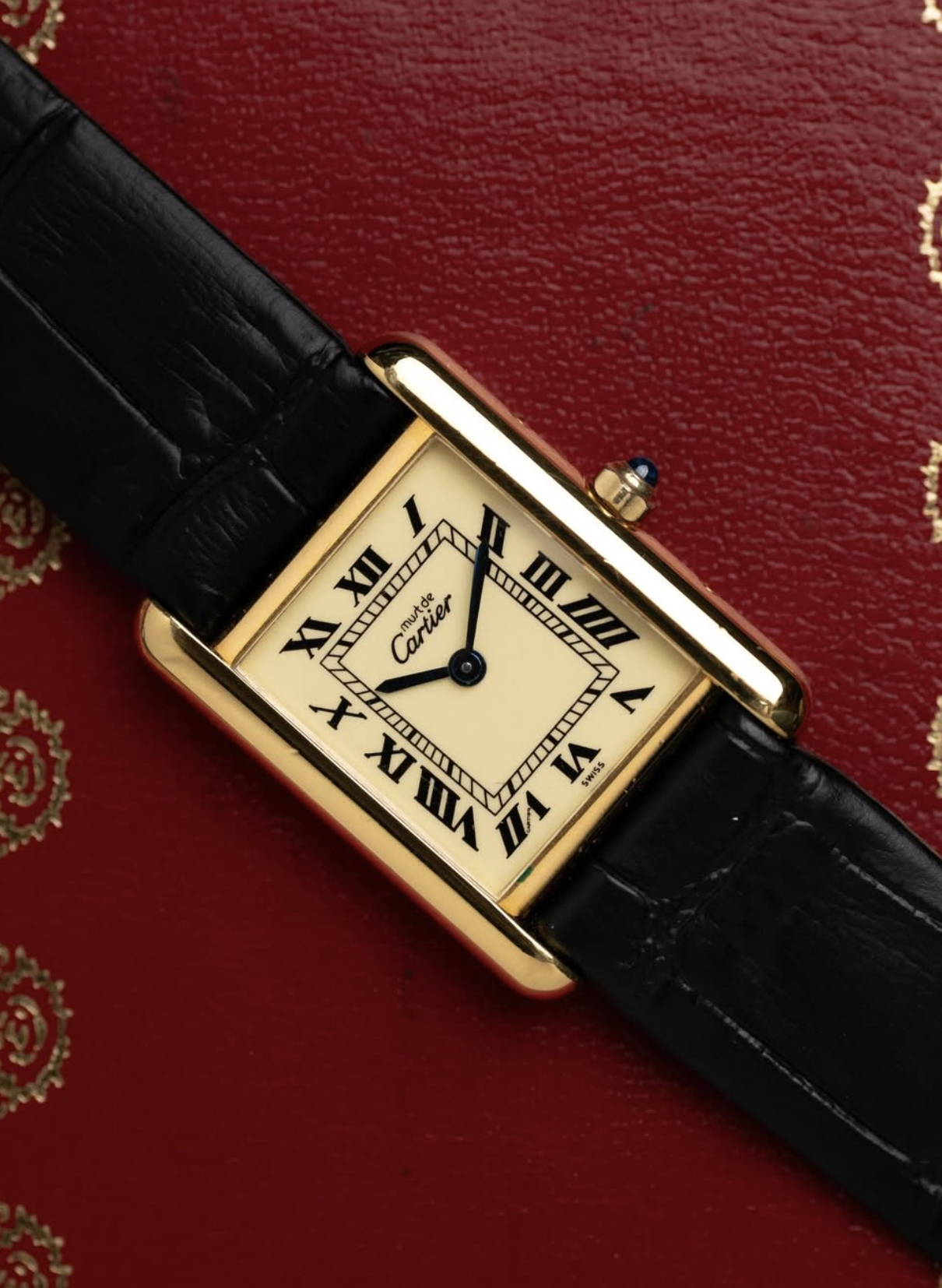
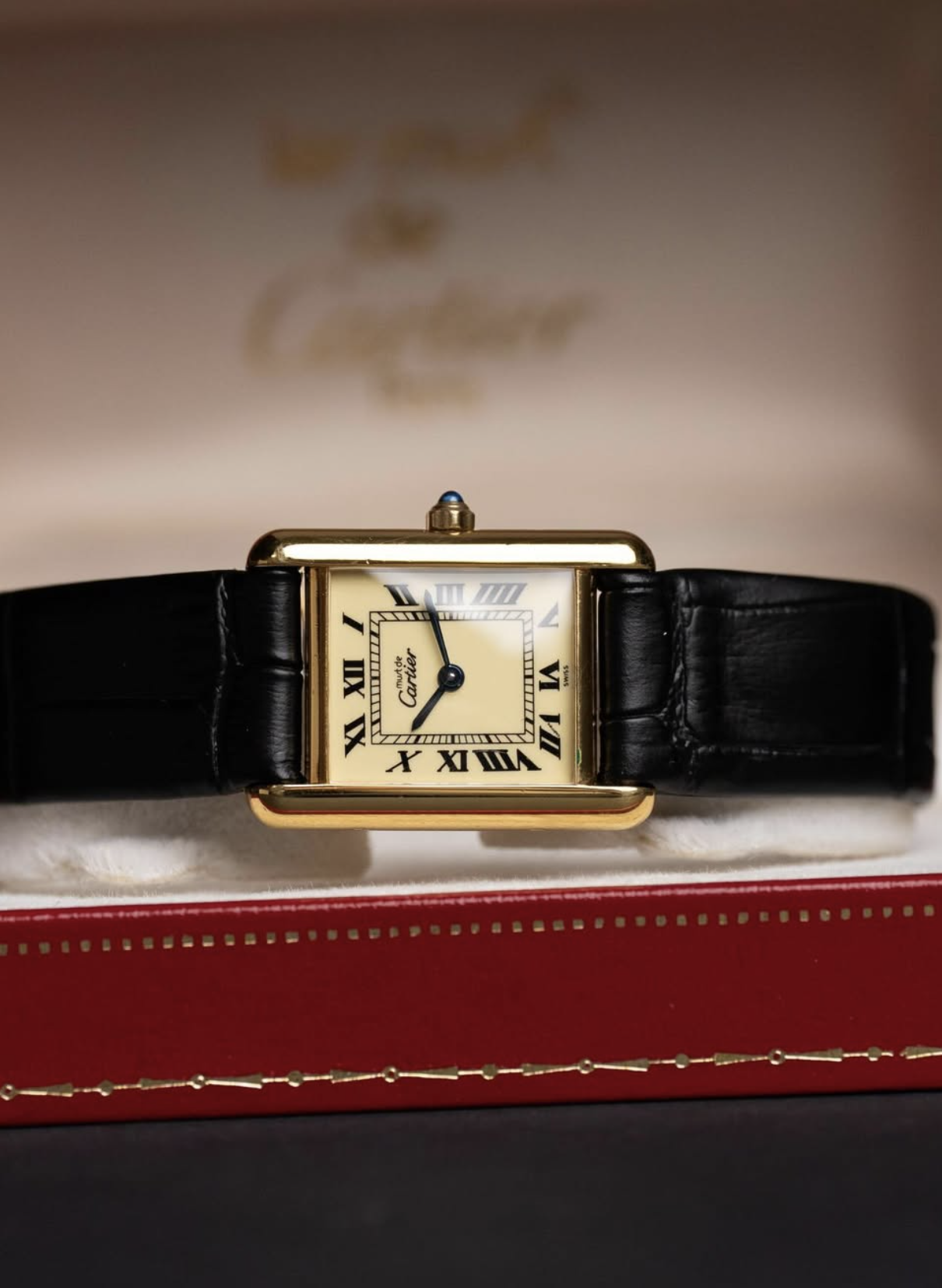
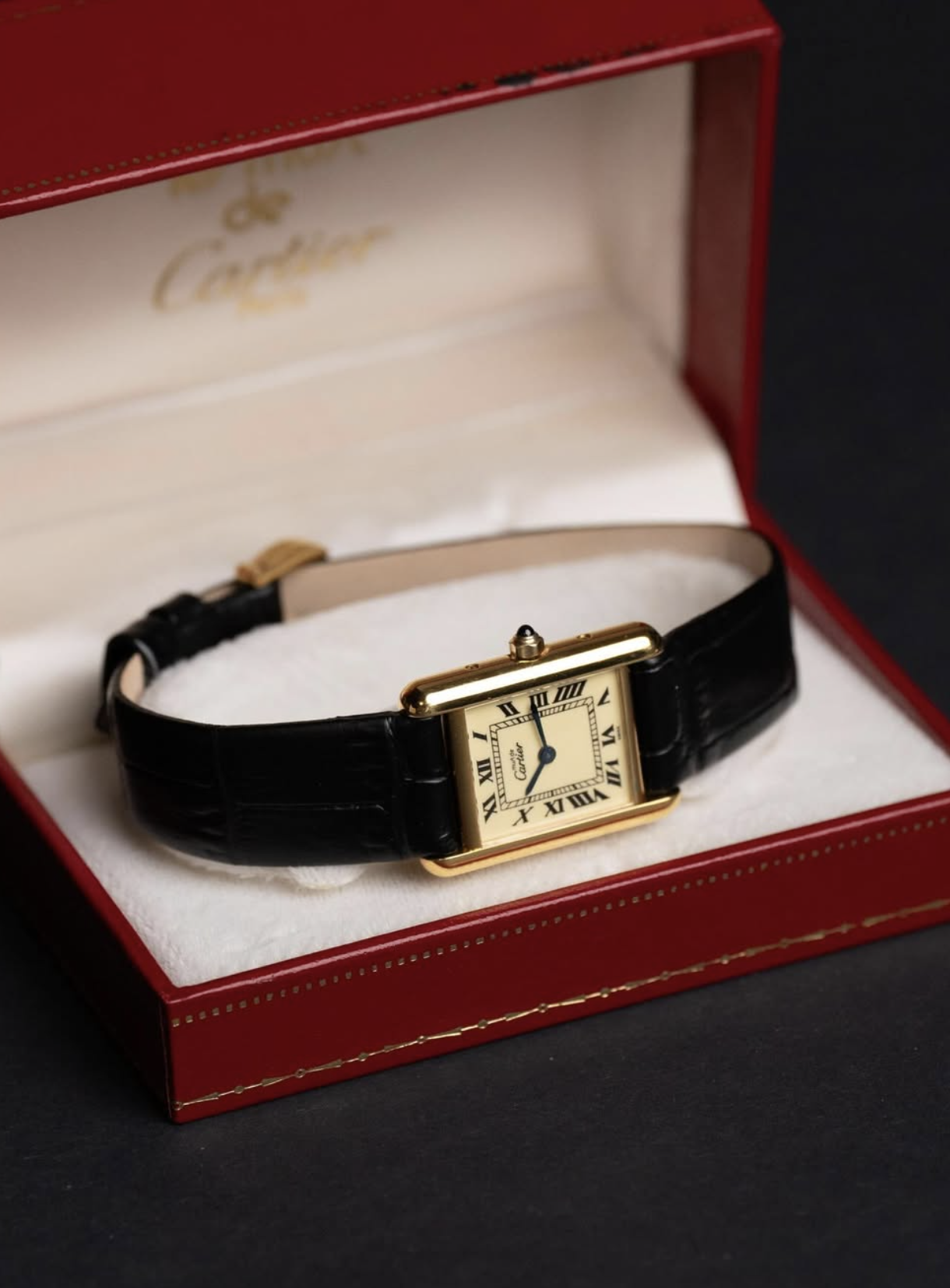
The Ref. 366001 presents the Tank Must's most iconic dial: three horizontal lacquer bands in ivory, burgundy, and black that divide the dial surface into a geometric composition instantly recognizable as Les Must de Cartier. Painted black Roman numerals and a railroad minute track overlay the lacquer, with blued steel sword hands providing legibility against the multi-toned background. The vermeil case — sterling silver beneath a layer of gold — carries the Tank's signature parallel brancards in proportions that echo the Tank Louis at roughly 60% of the price. A blue sapphire cabochon crowns the winding stem. The mineral glass crystal is period-correct and sits flush with the case, contributing to the clean, graphic profile.
Reference Significance
The Ref. 366001 is the single most recognizable Must watch and the design that came to symbolize the Les Must de Cartier brand identity. The tri-color dial was not merely a watch design — it was the visual DNA of an entire product line. The same burgundy-ivory-black color blocking appeared on Must lighters, pens, wallets, and leather goods, creating a unified aesthetic system that made Cartier one of the first luxury houses to think in terms of brand identity rather than individual products.
For collectors, the 366001 represents the point where commercial strategy and design excellence converged. The tri-color dial is objectively striking, and its cultural associations with 1970s and 1980s French luxury make it a period piece with genuine aesthetic conviction.
Historical Context
The Les Must de Cartier line launched in 1977 as Alain-Dominique Perrin's strategy to expand Cartier's customer base beyond the ultra-wealthy. The vermeil construction — gold over silver — was the material innovation, but the colored and tri-color lacquer dials were the design innovation that gave the line its visual identity. The tri-color scheme was developed as a unifying motif across all Must product categories, and the Tank was its highest-profile application.
The 366001 was produced across a broad window from the late 1970s through approximately 1990. Early examples used manual-wind movements before the line transitioned to quartz (Cal. 81). The quartz transition broadened the watch's audience further — lower maintenance, thinner profile, and a price point that invited impulse purchases at the Must boutiques opening worldwide.
Production volumes were high by Cartier standards, which means the 366001 is well-represented in the secondary market. However, examples with perfect tri-color lacquer dials — no cracking between the color bands, no moisture damage, no fading — are becoming scarce and command premiums that reflect their condition rarity rather than their production rarity.
What to Look For
The lacquer dial is the critical inspection point. Examine each color band for hairline cracks, especially at the boundaries between colors where the lacquer layers meet. Hold the watch at an angle under strong light to reveal crazing that may not be visible face-on. Moisture damage appears as clouding or bubbling beneath the lacquer surface and is irreversible without a full dial replacement — which destroys originality.
The vermeil case requires careful assessment. Check the edges of the brancards, the area around the crown, and the case back rim for gold wear-through exposing the silver beneath. Minor wear-through at high-contact points is expected on 40-year-old vermeil and does not necessarily disqualify an example, but extensive gold loss significantly reduces value. The case back should carry clear stampings: "MUST DE CARTIER," "ARGENT" or "925," a serial number, and the Cartier logo.
The mineral glass crystal is period-correct — a sapphire crystal indicates a later service replacement. This is a minor point but relevant to collectors who prioritize full originality. The leather strap is a consumable, but the buckle should be original Cartier-signed gilt metal.