01DIAL
The Secret Signature
Introduced 1977
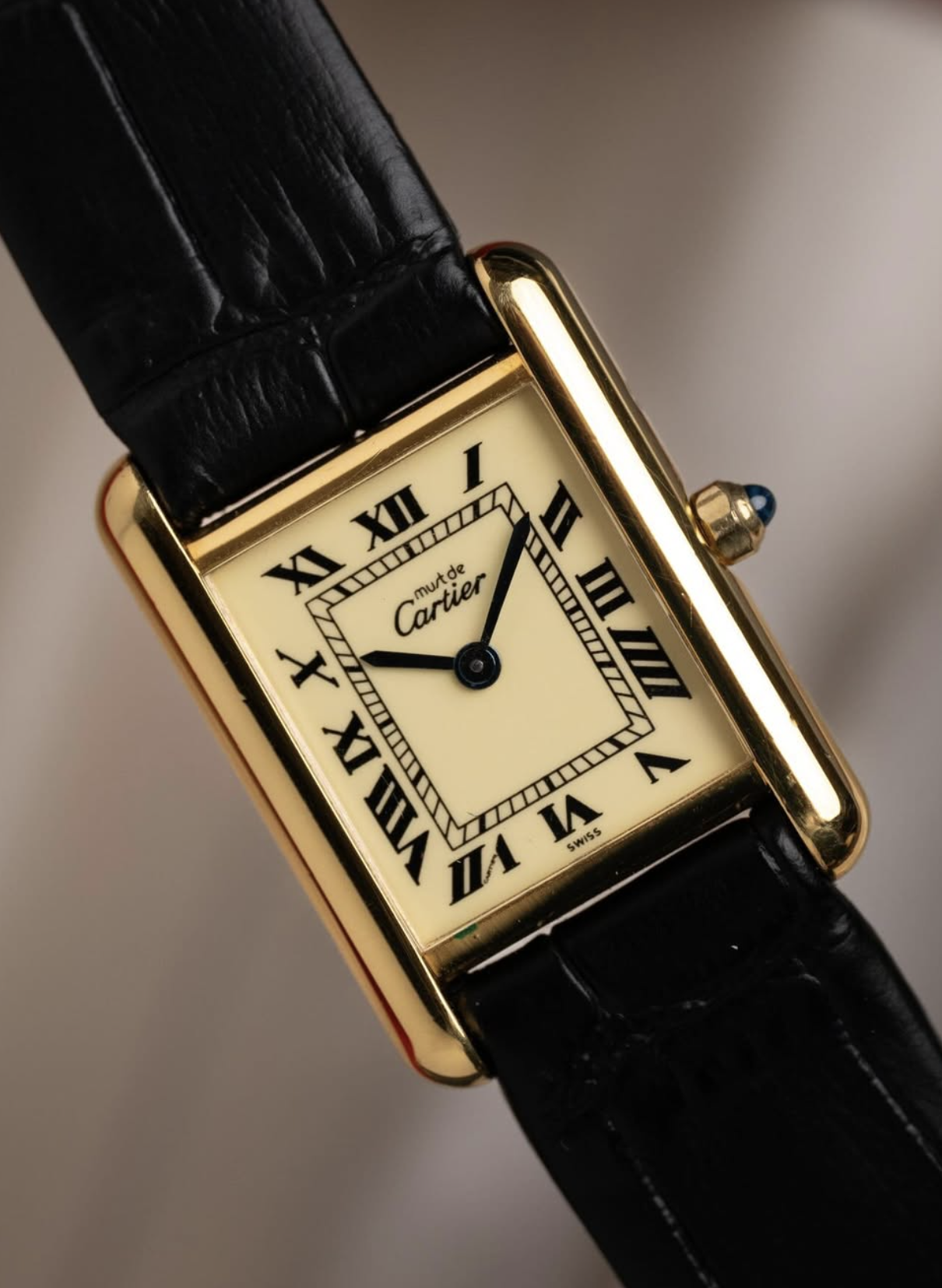
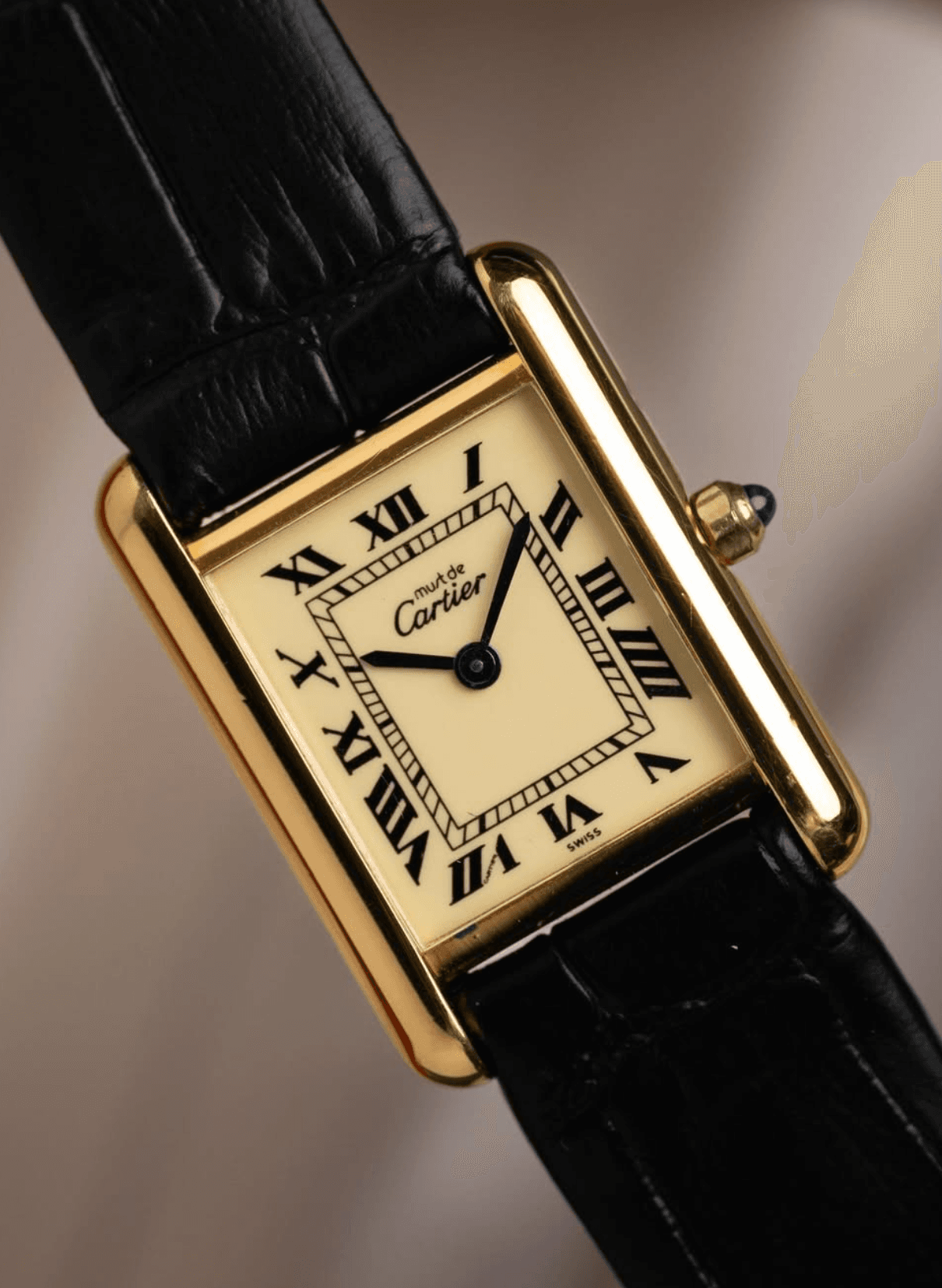
A microscopic 'CARTIER' hidden within the Roman numerals — present on every genuine post-1977 dial.
Cartier
The watch that turned Cartier from a jeweler for the few into a luxury house for the world.
The Tank Must is not the most expensive Cartier, not the rarest, and not the most technically accomplished. It is, however, arguably the most consequential. When Alain-Dominique Perrin launched the Les Must de Cartier line in 1977, he solved a problem that had constrained luxury goods companies for decades: how to grow the customer base without cheapening the brand. The answer was vermeil — gold-plated sterling silver that looked and felt like a Cartier but cost a fraction of an 18k gold Tank Louis.
The commercial impact was immediate and transformative. Before Must, Cartier's watches were objects for the wealthy. After Must, Cartier was a brand that aspirational buyers could access — and did, in enormous numbers. The Les Must de Cartier boutiques that opened worldwide through the late 1970s and 1980s were built on the Tank Must's commercial success.
The Must's case construction was the key innovation. Vermeil — sterling silver coated with a layer of gold at least 2.5 microns thick — gave the watch the visual warmth and weight of gold at a dramatically lower material cost. The technique was not new (vermeil has existed for centuries in French decorative arts), but applying it to a luxury watch and selling it under the Cartier name was a radical commercial decision.
The early Must watches (1977–early 1980s) used manual-wind movements, maintaining a connection to traditional watchmaking. As the line matured, Cartier transitioned to quartz movements — a practical decision that kept the watches thin and low-maintenance for the non-collector audience the Must was designed to serve. Collectors today tend to prize the earlier manual-wind examples for their mechanical character, but the quartz models are the ones that drove the line's commercial success.
The Must's most distinctive feature — and the one that drives the majority of collector interest today — is the colored lacquer dial. While standard silver or white dials were available, the colored variants became the Must's signature: deep burgundy, midnight blue, emerald green, and classic black, each achieved through layers of hand-applied lacquer over the dial surface.
These colored dials have proven to be both the Must's greatest aesthetic asset and its most fragile component. The lacquer is organic and reacts to moisture, temperature, and UV exposure over decades. Perfect examples with no cracking, flaking, or fading are becoming increasingly scarce as the surviving population ages — which is precisely why they command the strongest premiums in the secondary market.
A distinct variant from the solid-color lacquer models, the tri-color (or tricolor) dial divides the dial surface into three horizontal bands — typically ivory, burgundy, and black or dark blue — creating a striking geometric effect. This design reference appeared across the broader Les Must de Cartier product line (lighters, pens, leather goods) and became an immediately recognizable visual signature of the brand's 1970s and 1980s identity.
The vintage Tank Must occupies a unique position in the market: it is the most affordable entry point to genuine vintage Cartier, with good examples available well under $2,000. This accessibility has made it a gateway watch for new collectors discovering vintage Cartier, and a favorite of the fashion-aware buyer who values the colored lacquer dials as wearable design objects. The 2021 reissue of the Must (with modern specs and pricing) has only increased interest in the originals — vintage buyers can get the authentic 1970s/80s article for less than the new version costs.
Ref. 366001 · c. 1977–1990
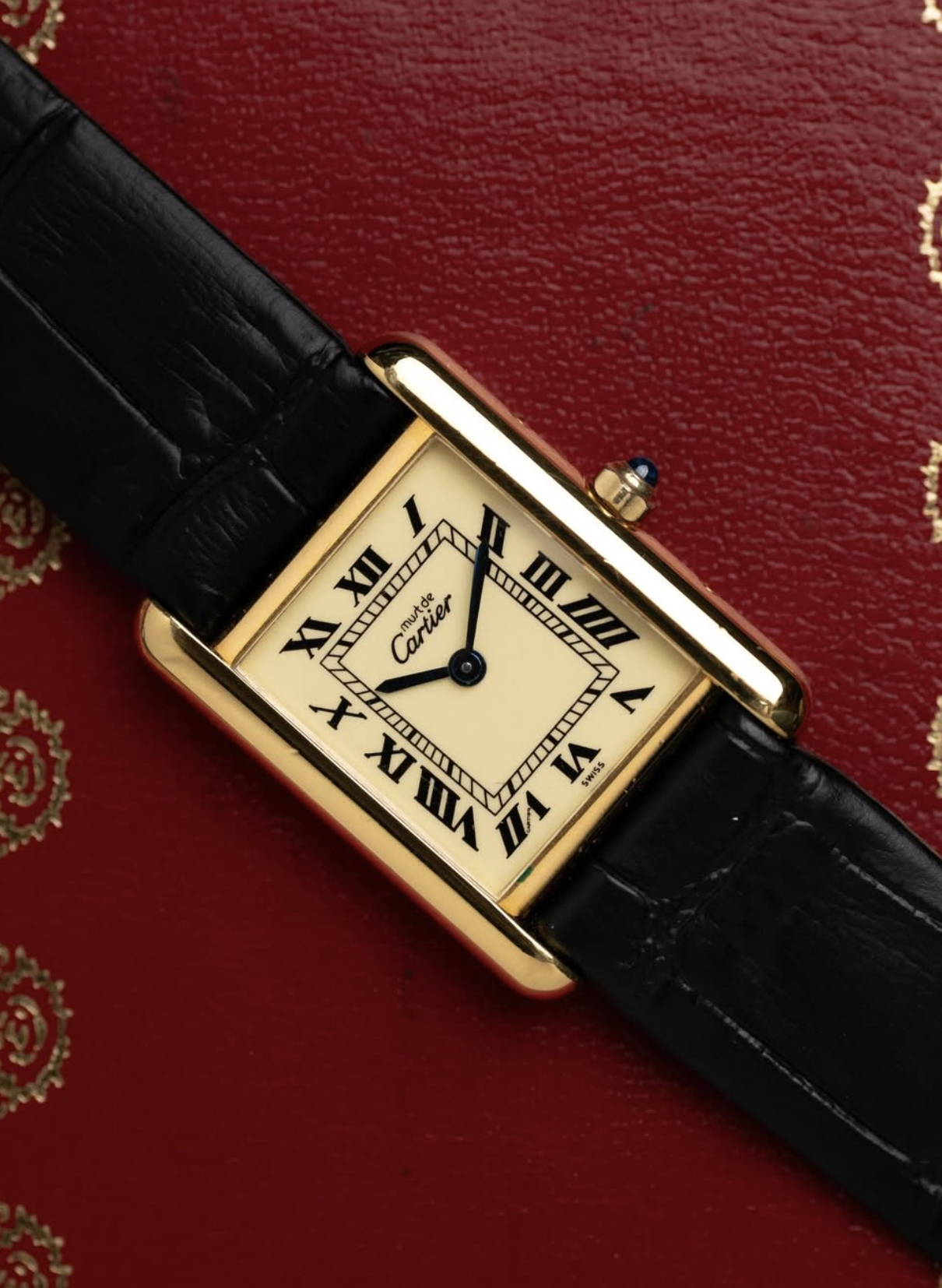
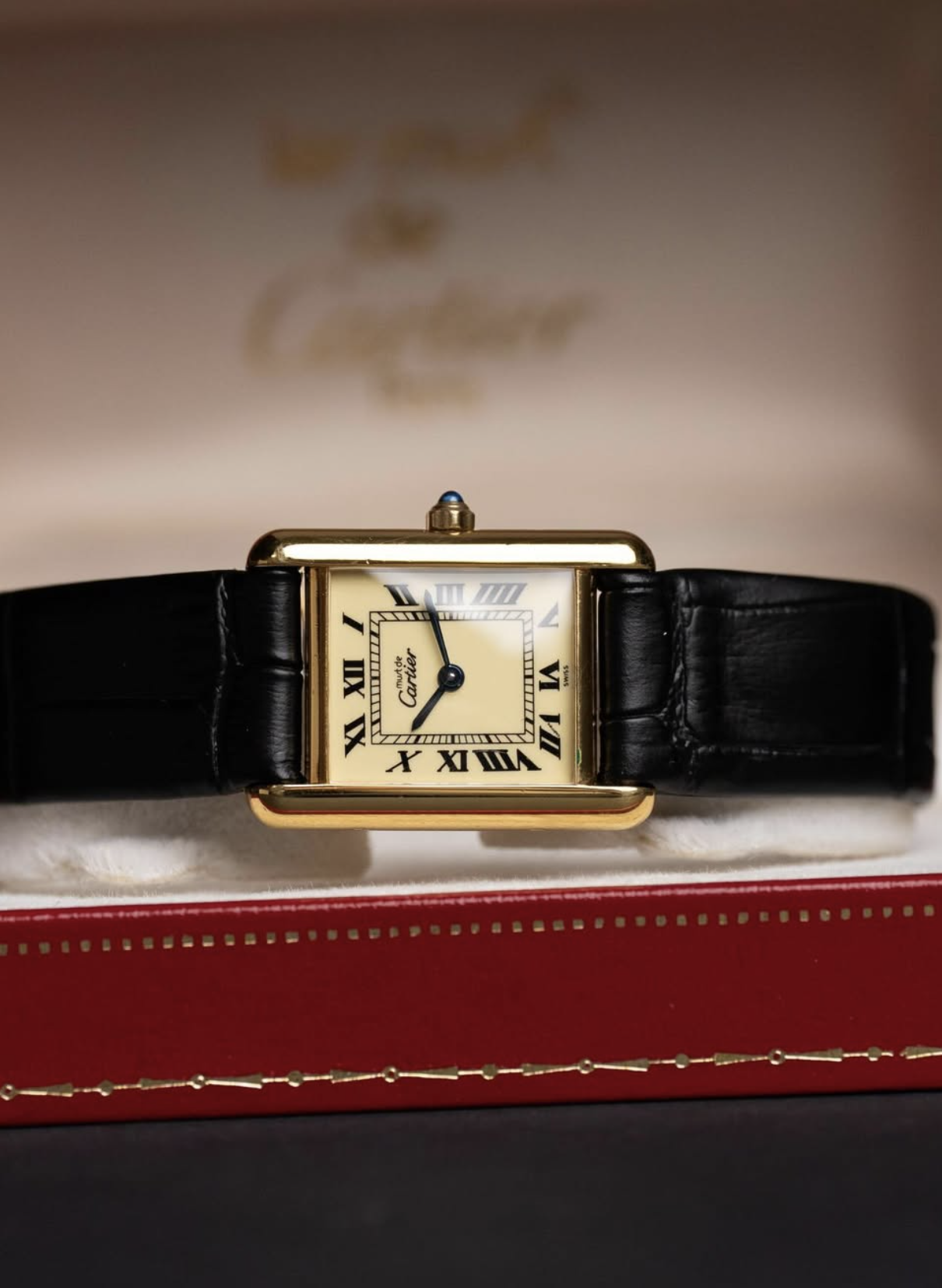
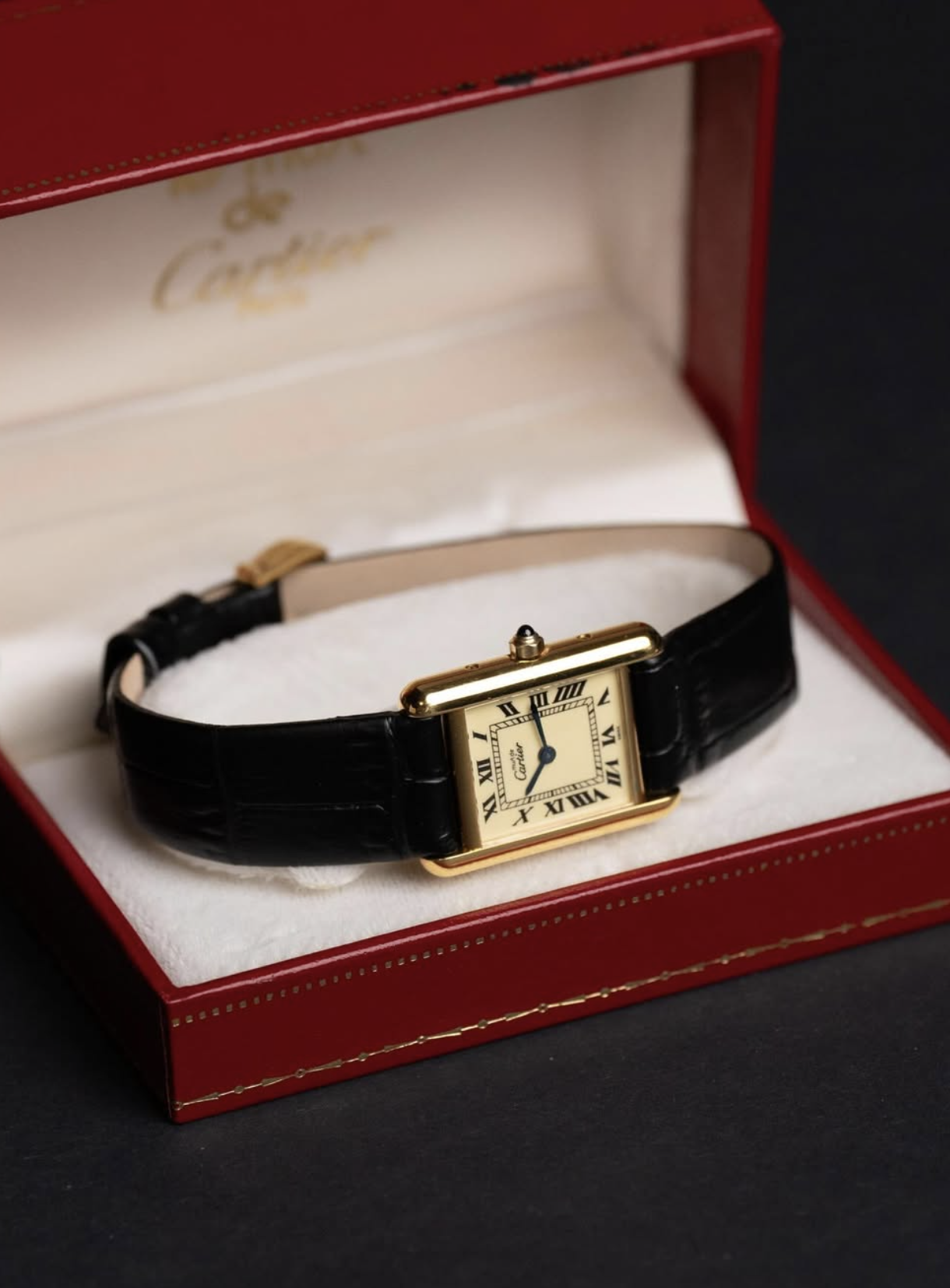
The Ref. 366001 tri-color vermeil Tank Must from the late 1970s — the watch that launched Alain-Dominique Perrin's Les Must de Cartier line and proved luxury could be democratized without dilution. With its distinctive three-band lacquer dial in ivory, burgundy, and black or blue, vermeil case, and manual-wind movement, it represented a radical commercial decision that transformed Cartier from a jeweler for the wealthy into a luxury house for aspirational buyers. Mint examples with perfect lacquer dials remain affordably priced yet capture the distinctive design language of Cartier's most important 1970s innovation.
3 documented references across 1 era
| Reference | |
|---|---|
 | Ref. 366001 |
| Ref. 590005 | |
| Ref. 81006 |
What every buyer, inheritor, and first-time collector should know.
Coming soon — vetted dealer listings for Tank Must.
Introduced 1977
A microscopic 'CARTIER' hidden within the Roman numerals — present on every genuine post-1977 dial.
Varies by era
Genuine Cartier cases bear specific hallmarks including the Cartier name, reference number, serial number, and precious metal assay marks. Placement and style varies by era, with earlier pieces showing different hallmark configurations than modern examples.
Varies by era and model
Cartier sourced movements from various Swiss manufacturers throughout history, including Jaeger-LeCoultre, Frédéric Piguet, ETA, and in-house production. Knowing the correct caliber for a specific reference is essential for authentication and establishing provenance.
A Cartier hallmark since the early 20th century
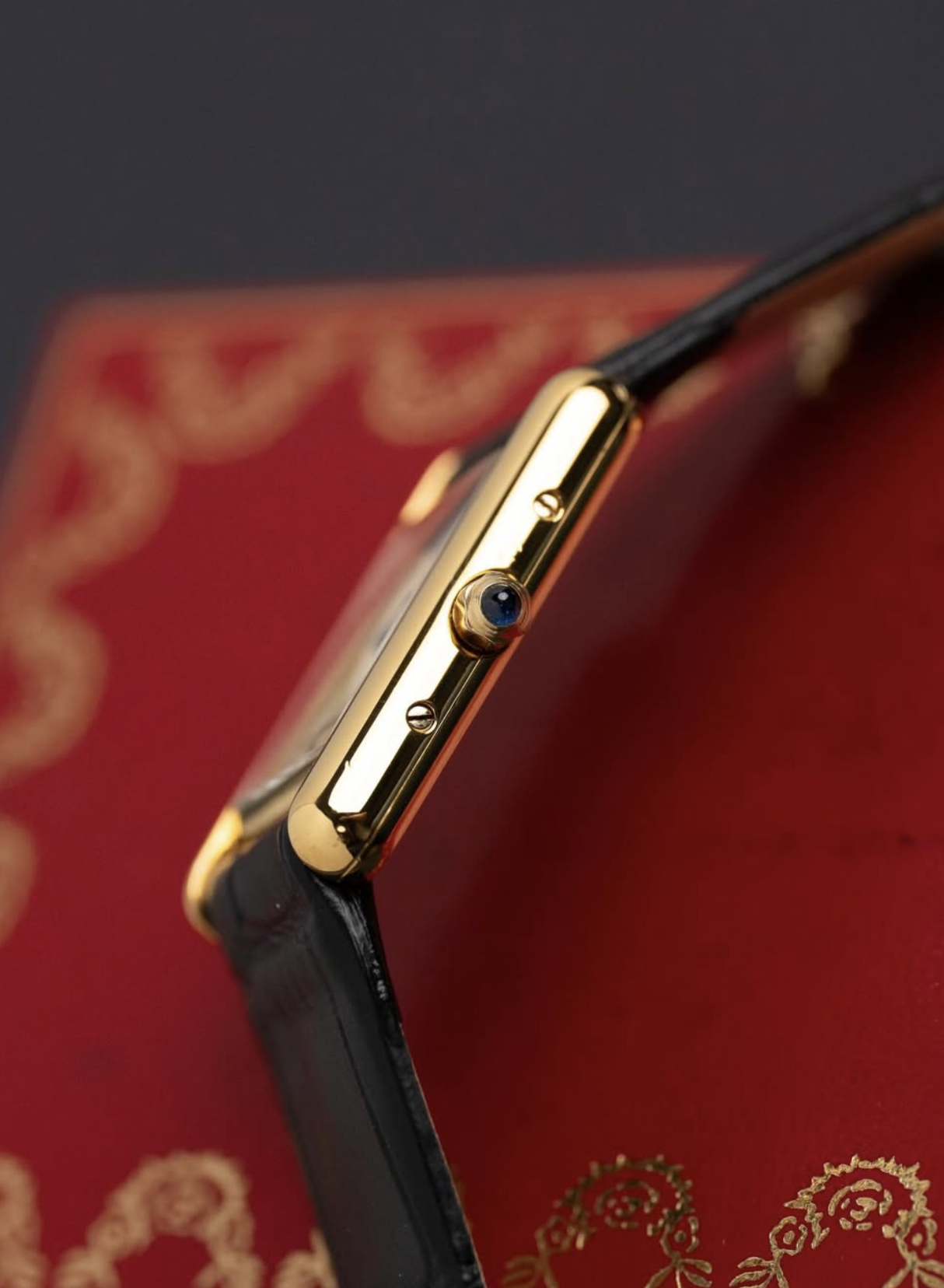
The blue sapphire (or spinel on less precious models) cabochon crown is a Cartier signature. Original crowns show consistent color saturation and are set flush with the crown body. Replacements often show misalignment or incorrect stone dimensions that reveal themselves under magnification.
Check the clasp first
Cartier bracelets carry their own reference markings and the deployment clasp should bear the Cartier name and logo. Aftermarket bracelets are extremely common on vintage pieces, so verifying clasp authenticity and matching reference numbers is crucial to overall authentication.
Patina tells the story
Vintage Cartier dials develop characteristic aging—cream dials warm to ivory, lacquer dials may develop fine crazing, and applied indices can show legible wear patterns. Understanding acceptable versus concerning dial aging is key to valuing a vintage piece authentically.
Coming soon — price trends and comparable sales for Tank Must.
Identify your Must reference, understand the vermeil construction, and assess whether the lacquer dial and case plating are in collectible condition.
START HERE →BUYERKnow which colored dials are original to which production years, what separates a manual-wind from a quartz Must, and how to spot replating or dial refinishing.
CHECK BEFORE YOU BUY →SELLERColored lacquer dials in excellent condition are the primary value driver. Price your Must with current comparable sales and honest condition grading.
PRICE MY WATCH →