01DIAL
The Secret Signature
Introduced 1977
A microscopic 'CARTIER' hidden within the Roman numerals — present on every genuine post-1977 dial.
Cartier
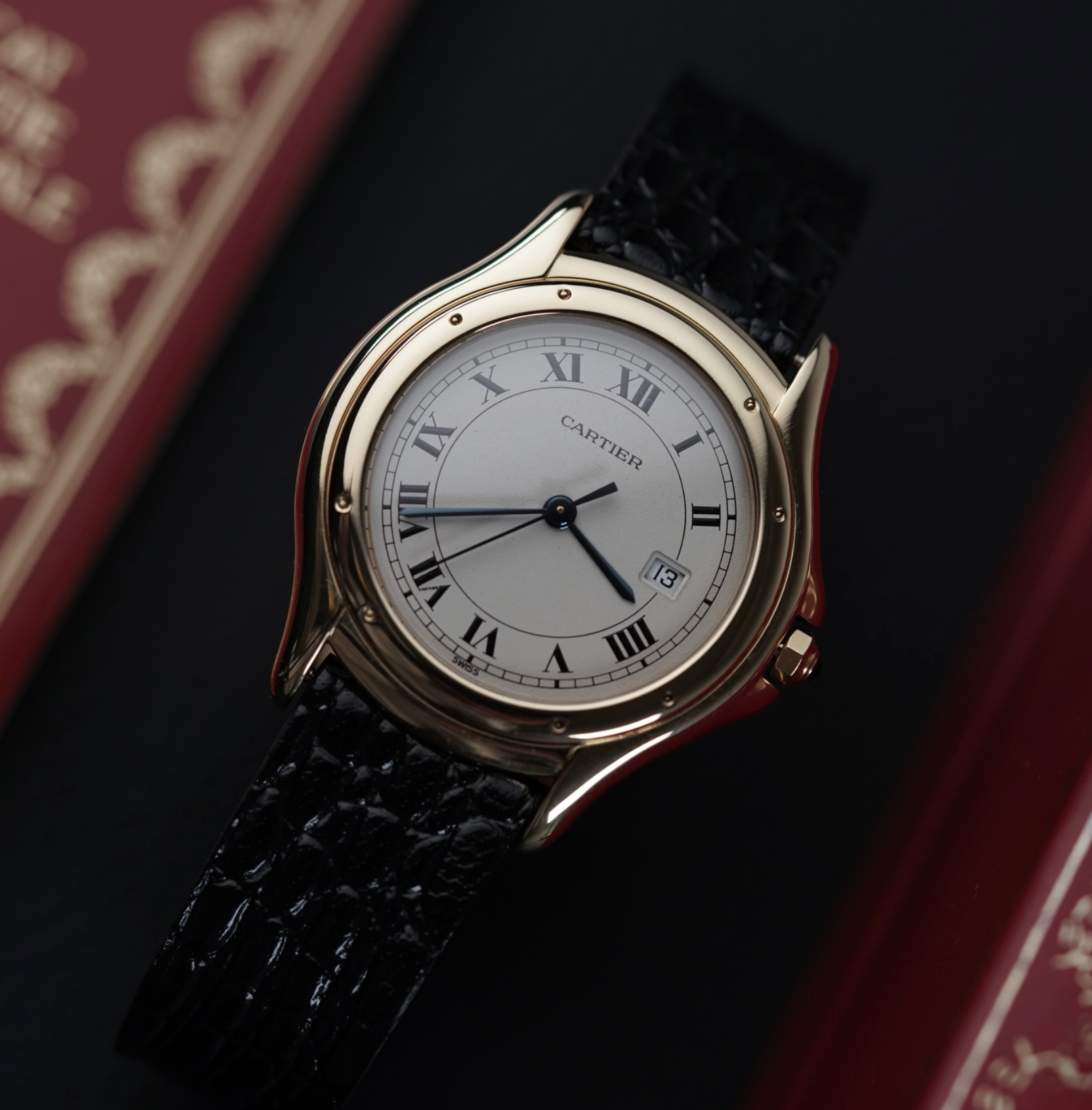
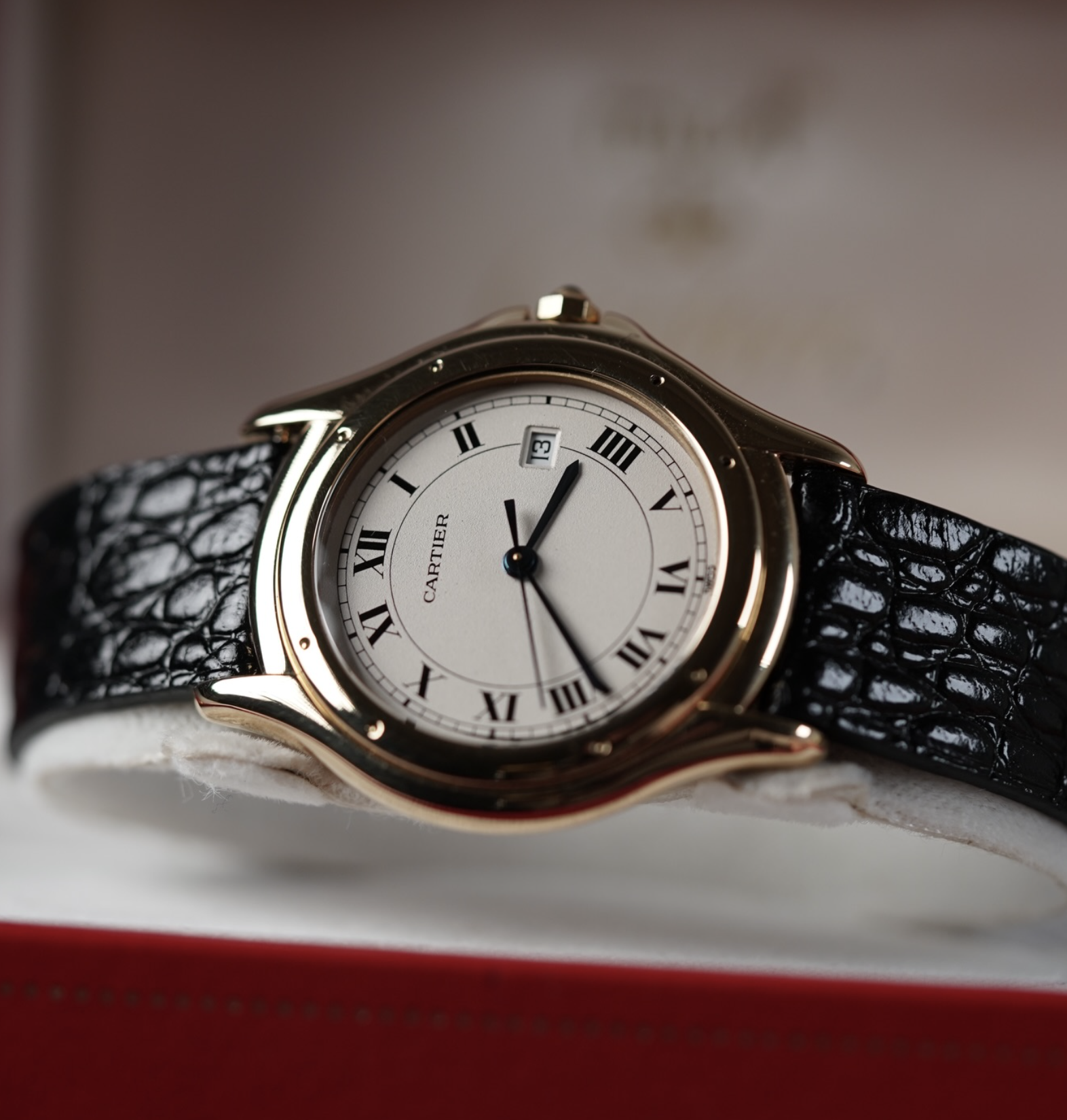
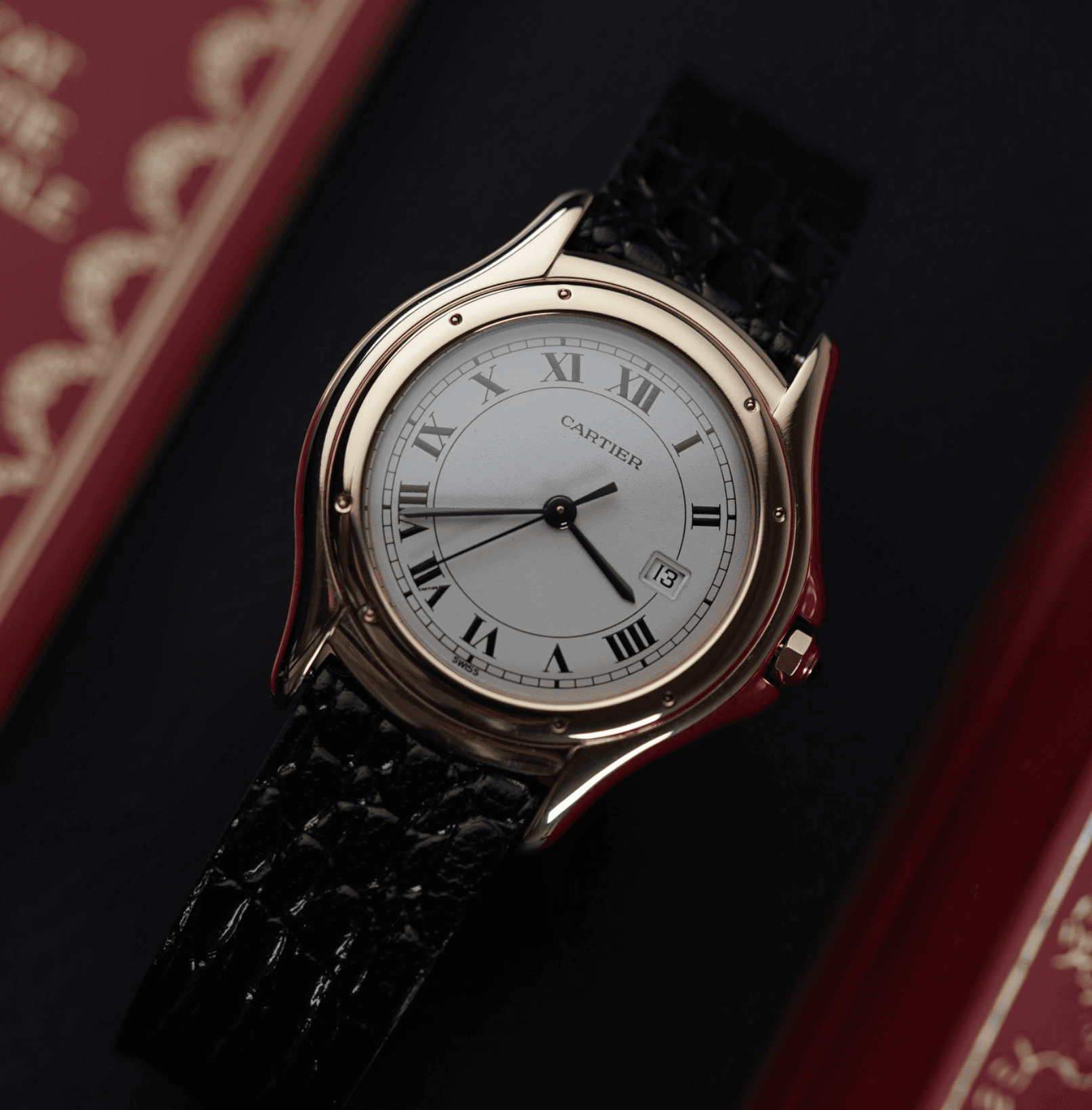
The round Panthère — Cartier's 1989 luxury sports watch that translated the Panthère's integrated bracelet and riveted bezel into a circular case.
The Cougar arrived in 1989 as a direct riff on the Panthère de Cartier — taking the Panthère's most successful design elements (integrated five-link bracelet, riveted bezel, slim profile) and housing them in a round case instead of a square cushion. The name continued Cartier's feline theme, and the watch shared enough DNA with the Panthère to be unmistakably from the same family while offering a fundamentally different wrist presence.
The round case was the key difference, but not the only one. The Cougar's proportions — 33mm for the standard men's/unisex size, 26mm for ladies' — were compact by any era's standards, giving the watch a jewelry-like quality that the larger Santos and Pasha didn't attempt. This was a sports watch that leaned toward elegance rather than athleticism.
The Cougar was produced from 1989 through the early 2000s in three primary configurations: stainless steel with gold bezel (two-tone), full 18k yellow gold, and — less commonly — stainless steel. All versions shared the same fundamental design: round case, eight-rivet bezel, integrated five-link bracelet with hidden fold-over clasp, and octagonal crown with sapphire cabochon.
Movements were predominantly quartz (Cal. 8706 and related calibers), reflecting the Cougar's positioning as a luxury daily-wear watch rather than a mechanical collector's piece. This quartz heritage has kept Cougar prices well below comparable Cartier sports watches with automatic movements, creating what many collectors consider an undervaluation relative to the build quality and design pedigree.
The Cougar is sometimes cataloged as "Panthère Cougar" in dealer listings — a designation that reflects the model's unclear boundary with its parent line. Structurally, the bracelet construction is identical to the Panthère's, and the bezel treatment carries the same eight-rivet signature. The distinction is purely the case shape: square cushion for the Panthère, round for the Cougar.
When Cartier discontinued the Panthère line in 2004, the Cougar went with it. Unlike the Panthère, which was revived in 2017 to considerable commercial success, the Cougar has not returned. This makes vintage Cougar references the only way to experience the round-Panthère concept — a fact that is beginning to register with collectors as Panthère awareness grows.
The Cougar occupies an unusual position: a well-made Cartier sports watch from a respected design family, available at prices that reflect its quartz movements and lower name recognition rather than its build quality or design merit. For collectors who value the Panthère aesthetic but prefer a round case — or who want an entry point into vintage Cartier gold watches — the Cougar offers exceptional value relative to what it actually is.
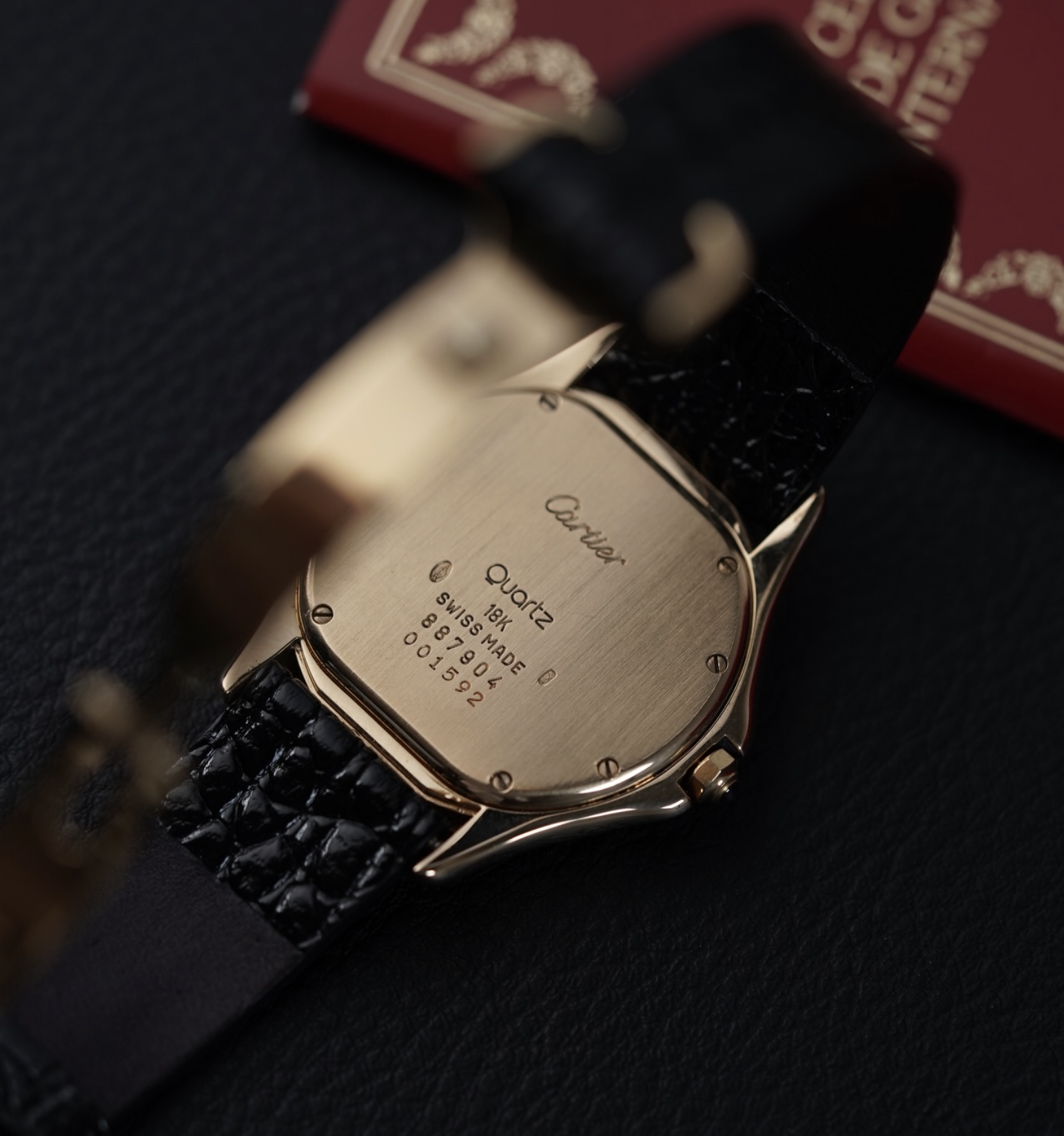
Ref. 887904 · c. 1990s
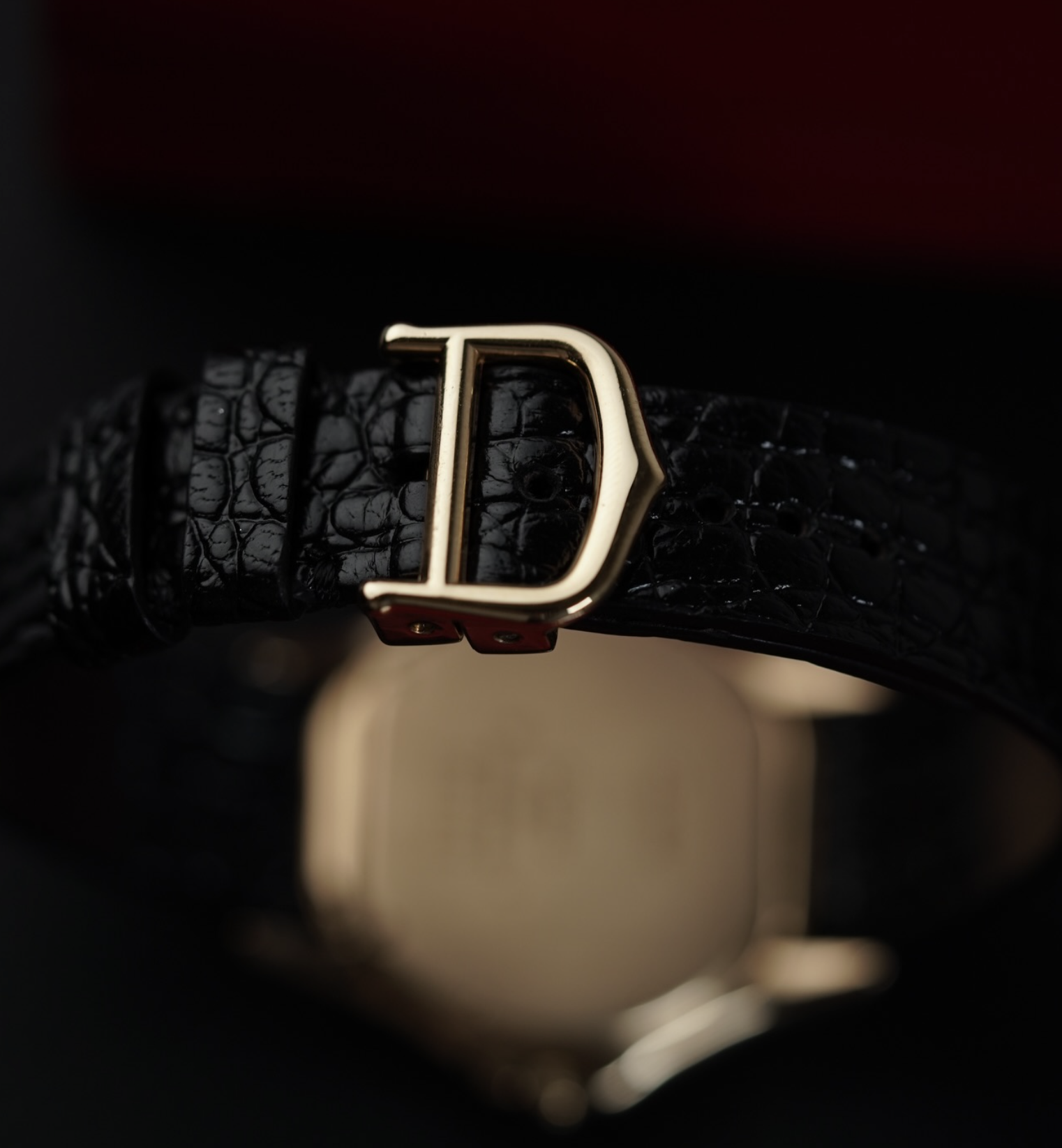
The Cougar Ref. 887904 in 18k yellow gold — a 33mm round sports watch with the Panthère's signature five-link integrated bracelet, eight-rivet bezel, and sapphire cabochon crown. The all-gold Cougar represents the model at its most refined: warm metal, clean dial, and a bracelet that sits flush against the wrist with the same suppleness that made the Panthère famous.
3 documented references across 1 era
| Reference | |
|---|---|
| Ref. 187904 | |
 | Ref. 887904 |
| Ref. 887906 |
What every buyer, inheritor, and first-time collector should know.
Coming soon — vetted dealer listings for Cougar.
Introduced 1977
A microscopic 'CARTIER' hidden within the Roman numerals — present on every genuine post-1977 dial.
Varies by era
Genuine Cartier cases bear specific hallmarks including the Cartier name, reference number, serial number, and precious metal assay marks. Placement and style varies by era, with earlier pieces showing different hallmark configurations than modern examples.
Varies by era and model
Cartier sourced movements from various Swiss manufacturers throughout history, including Jaeger-LeCoultre, Frédéric Piguet, ETA, and in-house production. Knowing the correct caliber for a specific reference is essential for authentication and establishing provenance.
A Cartier hallmark since the early 20th century
The blue sapphire (or spinel on less precious models) cabochon crown is a Cartier signature. Original crowns show consistent color saturation and are set flush with the crown body. Replacements often show misalignment or incorrect stone dimensions that reveal themselves under magnification.
Check the clasp first
Cartier bracelets carry their own reference markings and the deployment clasp should bear the Cartier name and logo. Aftermarket bracelets are extremely common on vintage pieces, so verifying clasp authenticity and matching reference numbers is crucial to overall authentication.
Patina tells the story
Vintage Cartier dials develop characteristic aging—cream dials warm to ivory, lacquer dials may develop fine crazing, and applied indices can show legible wear patterns. Understanding acceptable versus concerning dial aging is key to valuing a vintage piece authentically.
Coming soon — price trends and comparable sales for Cougar.
Identify whether your Cougar is steel, gold, or two-tone, and confirm the reference number to understand its position in the model's production.
START HERE →BUYERThe Cougar is an underappreciated Cartier sports watch. Know what separates a good example from a worn one.
CHECK BEFORE YOU BUY →SELLERCougar values are climbing as collectors rediscover the Panthère's round sibling. Bracelet condition is the primary value driver.
PRICE MY WATCH →