01DIAL
The Secret Signature
Introduced 1977
A microscopic 'CARTIER' hidden within the Roman numerals — present on every genuine post-1977 dial.
Cartier
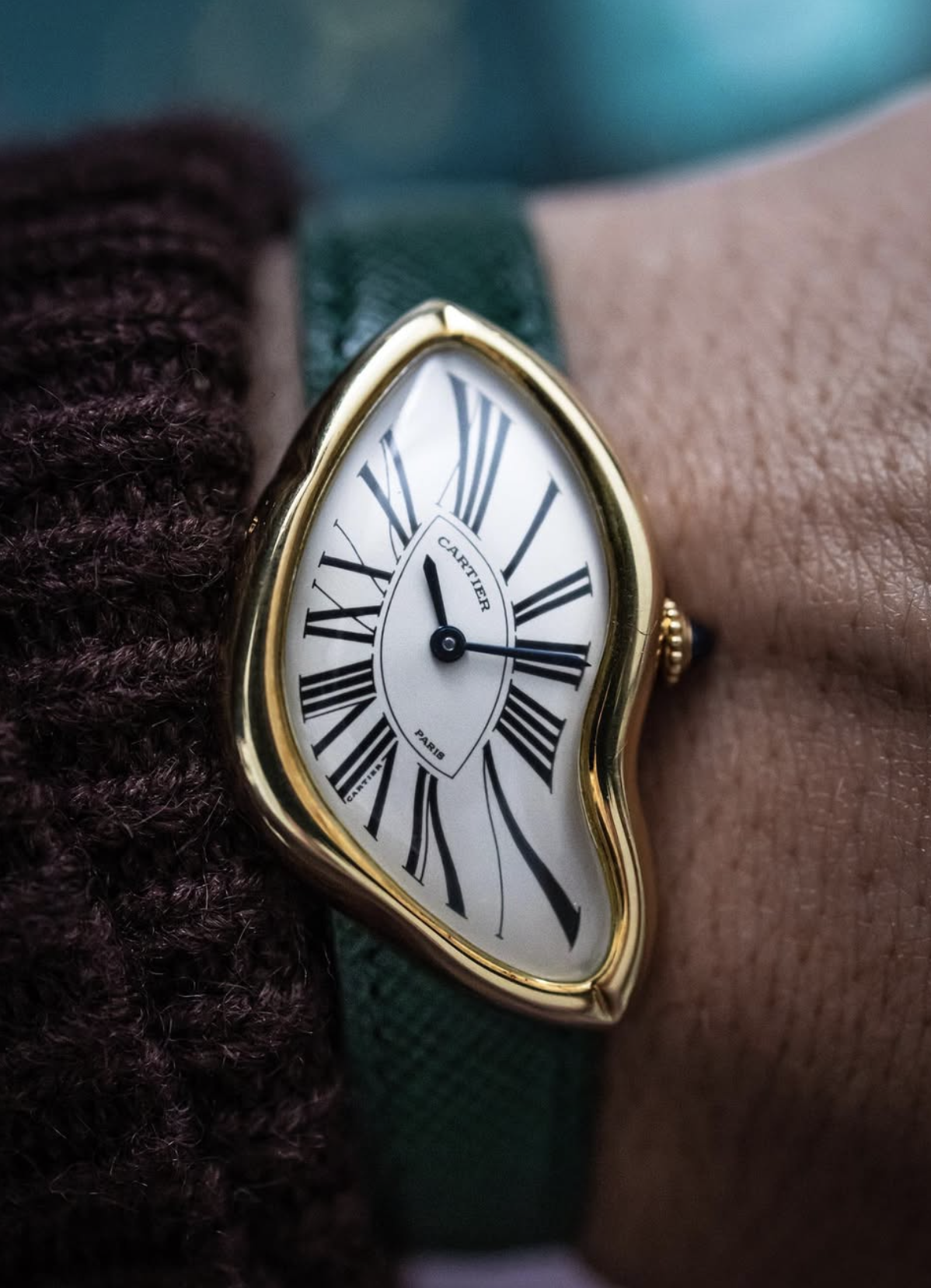
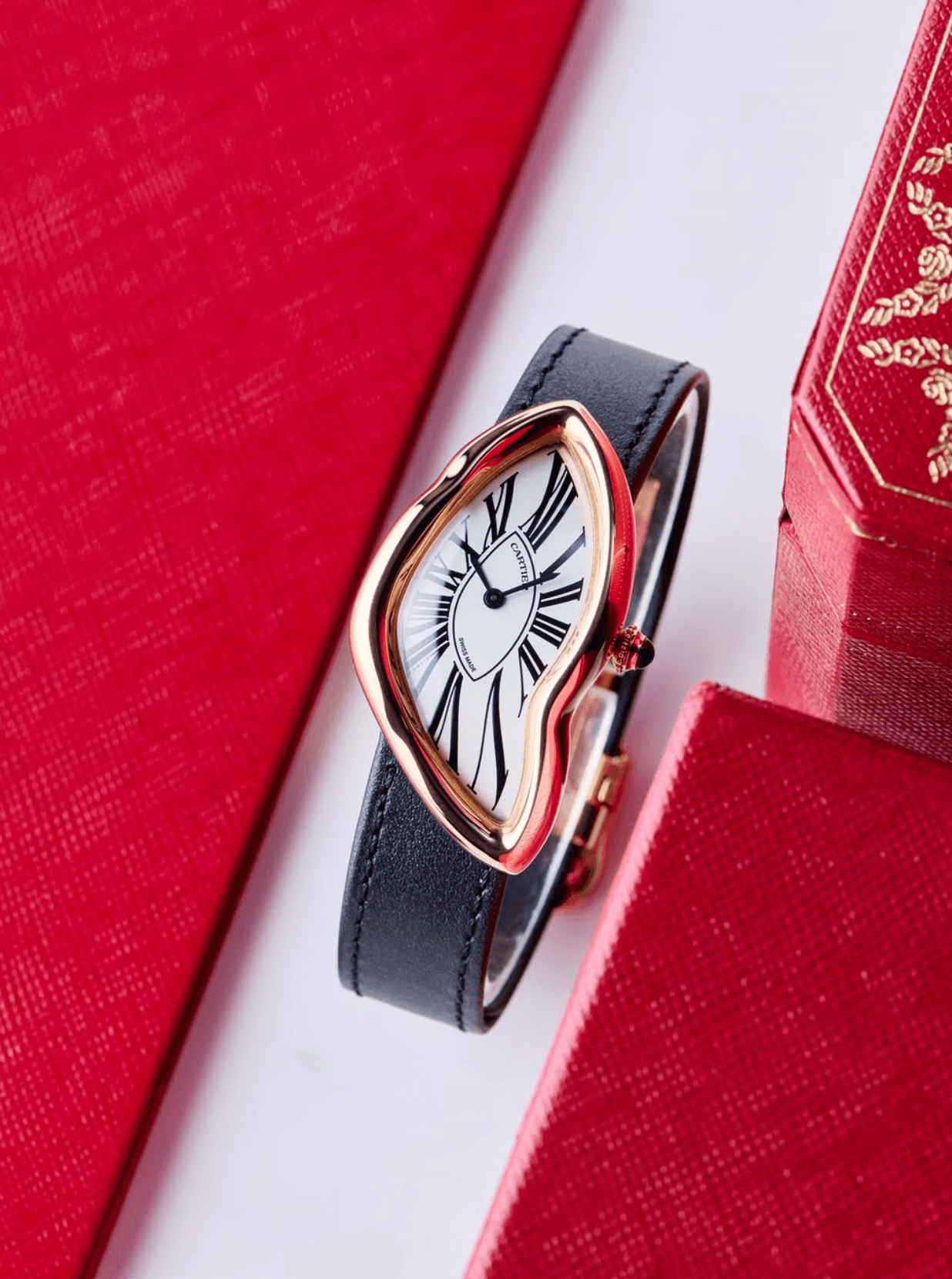
The most radical shape in Cartier's history — a molten surrealist form that became the most coveted watch in the collector market.
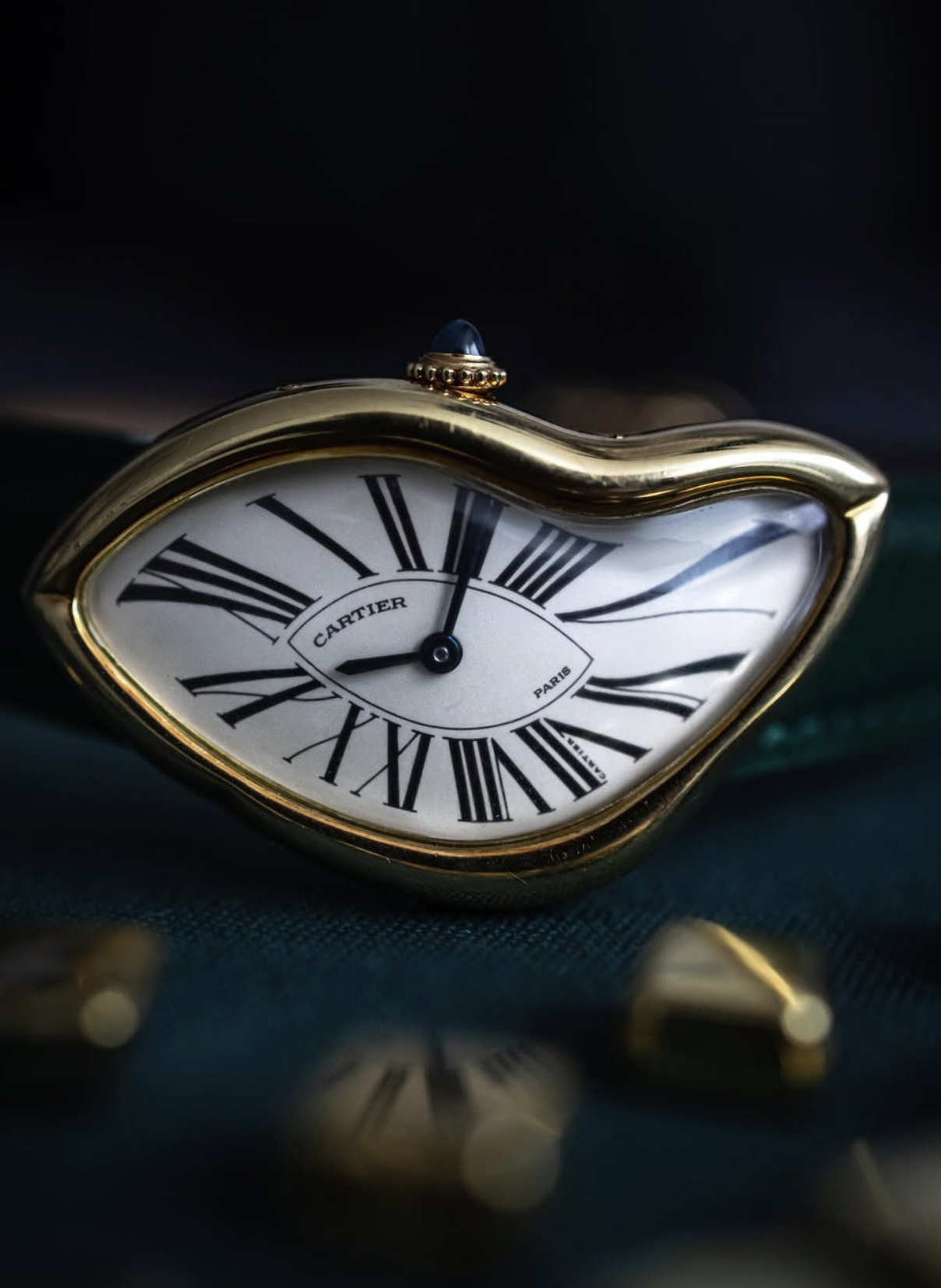
The Cartier Crash was not born from a car accident. Despite the persistent legend — that a Cartier Baignoire Allongée was recovered from a burning vehicle, its case melted into a surreal new form — the documented history is more deliberate and no less extraordinary. The Crash was designed by Rupert Emmerson, head of the Cartier London workshop in the late 1960s, for Jean-Jacques Cartier. Emmerson took the elongated oval of the Baignoire Allongée and stretched, compressed, and distorted it into something unprecedented: a wristwatch that looked like a Salvador Dalí painting come to life.
The design emerged from the cultural moment. London in 1967 was the epicenter of the avant-garde — the Summer of Love, Carnaby Street, a creative explosion that reached even the most traditional luxury houses. The Crash was Cartier London's most radical response to that moment: a watch that rejected symmetry, proportion, and every established convention of case design. The numerals on the dial are themselves distorted, as if the watch's melting form has warped the indices along with the case.
The Crash exists in three vintages, each with its own character and collector significance.
The London originals (c. 1967–early 1970s) are the rarest and most valuable. Approximately 12 pieces were produced in Cartier London's workshop, each in 18k yellow gold with a Jaeger-LeCoultre Cal. 841 manual-wind movement. These are identified by the "LONDON" marking on the dial and represent the closest expression of Emmerson's original design intent. At auction, London Crashes have reached nearly $900,000 — and the handful that exist rarely come to market.
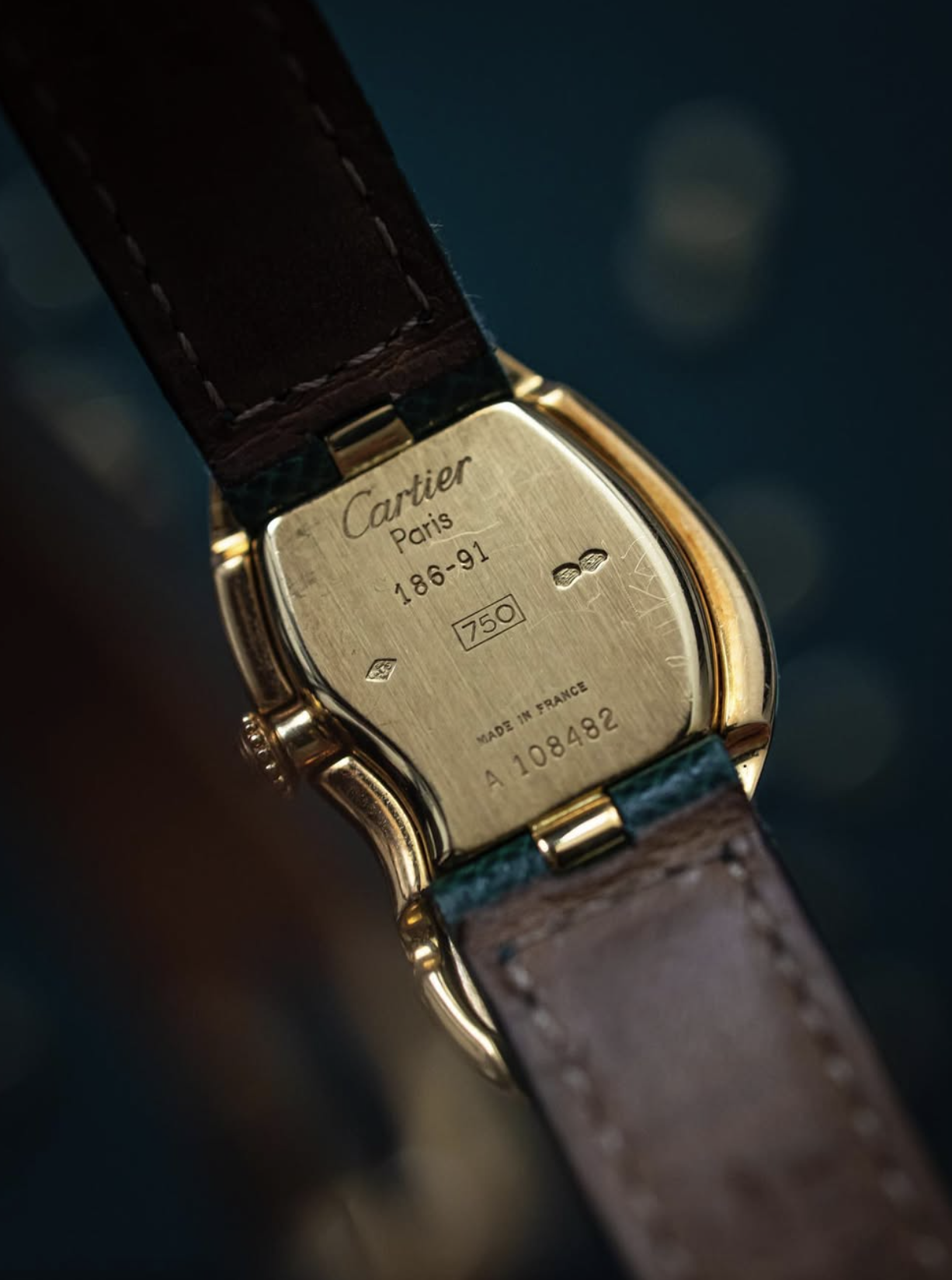
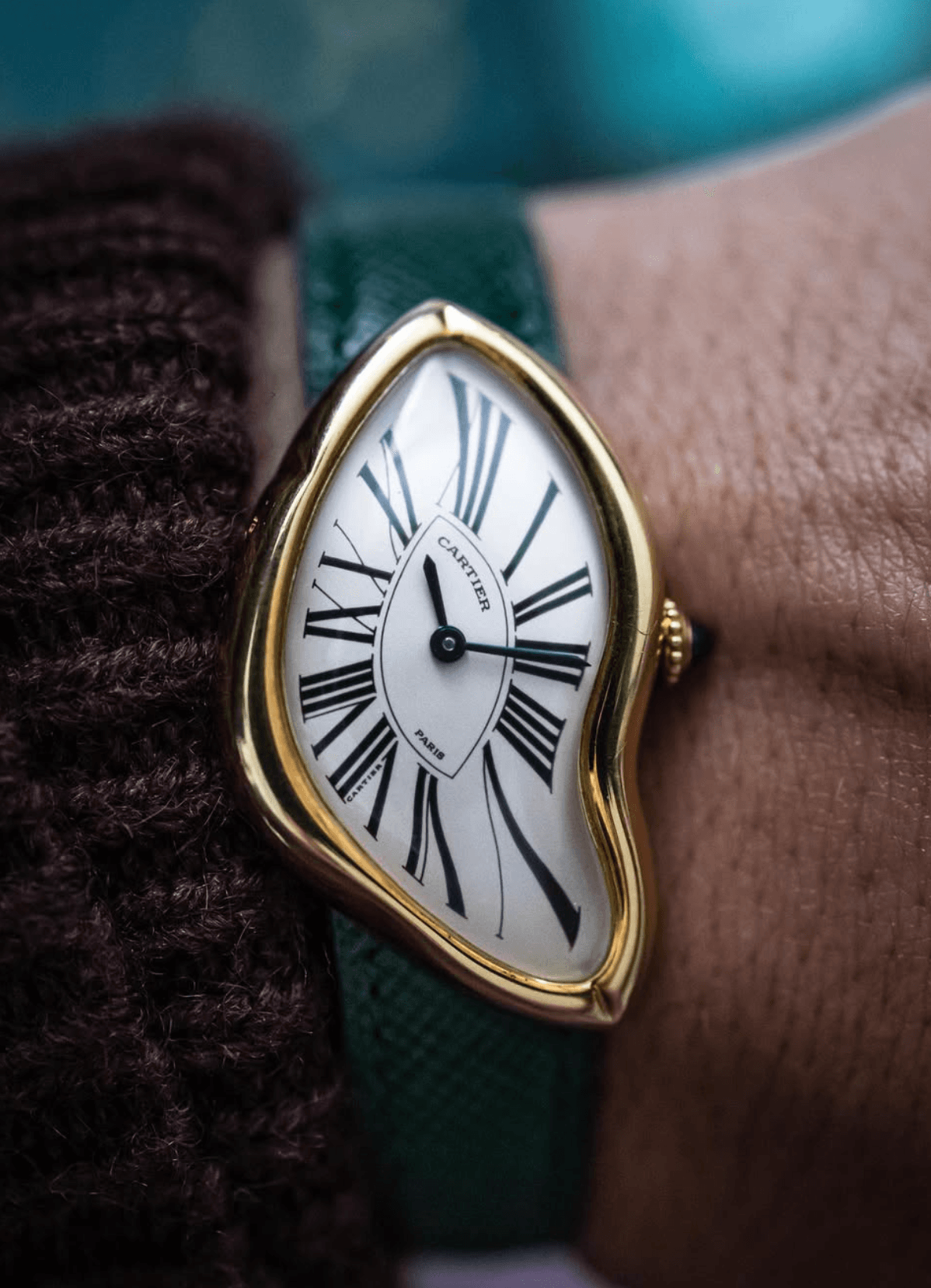
The Paris 1991 limited edition reintroduced the Crash after two decades, with a run of 400 individually numbered pieces. Produced in 18k gold (yellow, white, and rose variants), these use the Cartier Cal. 160 manual-wind movement and are slightly smaller than the London originals. The "PARIS" marking at 6 o'clock and the individual numbering on the case back distinguish them. The 1991 edition made the Crash accessible — relatively speaking — to a broader collector audience while maintaining the hand-finished case work that the design demands.
A small Rue de la Paix edition of 13 pieces was also produced in 1997, further adding to the Crash's limited production mythology.
The modern production references (Ref. 2463 and variants, c. 2000–2001) represent the Crash's entry into Cartier's standardized catalog. Produced primarily in 18k rose gold, these pieces use the same Cal. 160 movement as the Paris edition and introduced the Crash to markets beyond London and Paris. They are the most accessible vintage-eligible Crash references, though "accessible" is relative — production remained deliberately limited.
The Crash occupies a singular position in the watch market. It is not a "best at" watch — not the thinnest, most complicated, most accurate, or most expensive in absolute terms. It is the most distinctive. No other luxury watch from any maison looks like the Crash. In a market where Nautiluses, Submariners, and Royal Oaks define the mainstream of high-end collecting, the Crash represents the polar opposite: pure design provocation with no concession to convention.
The collector dynamic is driven by scarcity. Across all vintages, the total number of vintage-eligible Crashes produced is likely fewer than 500 pieces. The London originals are effectively uncollectable for most collectors — they appear at auction perhaps once every few years. The Paris 1991 edition is the practical entry point for serious Crash collecting, and even these have appreciated sharply as the broader vintage Cartier market has expanded.
For Archiva's purposes, the Crash is the model that generates the most immediate recognition and engagement. A collector who has never heard of a Tank Cintrée knows the Crash by sight.
Ref. Crash Paris 1991 · c. 1991
The London Crash in 18k yellow gold — Cartier's most audacious design, born from Rupert Emmerson's radical 1967 reinterpretation of the Baignoire Allongée and produced in quantities so limited that every surviving example is historically significant. Hand-wound by a tiny Jaeger-LeCoultre Cal. 841 movement fitted into its asymmetric case, the original London Crash represents the closest expression of Emmerson's design intent. Rarely appearing at auction, these pieces command extraordinary prices from collectors seeking one of the rarest watches in Cartier's catalog.
3 documented references across 2 eras
| Reference | |
|---|---|
| Ref. Crash London | |
 | Ref. Crash Paris 1991 |
| Reference | |
|---|---|
 | Ref. 2463 |
What every buyer, inheritor, and first-time collector should know.
Coming soon — vetted dealer listings for Cartier Crash.
Introduced 1977
A microscopic 'CARTIER' hidden within the Roman numerals — present on every genuine post-1977 dial.
Varies by era
Genuine Cartier cases bear specific hallmarks including the Cartier name, reference number, serial number, and precious metal assay marks. Placement and style varies by era, with earlier pieces showing different hallmark configurations than modern examples.
Varies by era and model
Cartier sourced movements from various Swiss manufacturers throughout history, including Jaeger-LeCoultre, Frédéric Piguet, ETA, and in-house production. Knowing the correct caliber for a specific reference is essential for authentication and establishing provenance.
A Cartier hallmark since the early 20th century
The blue sapphire (or spinel on less precious models) cabochon crown is a Cartier signature. Original crowns show consistent color saturation and are set flush with the crown body. Replacements often show misalignment or incorrect stone dimensions that reveal themselves under magnification.
Check the clasp first
Cartier bracelets carry their own reference markings and the deployment clasp should bear the Cartier name and logo. Aftermarket bracelets are extremely common on vintage pieces, so verifying clasp authenticity and matching reference numbers is crucial to overall authentication.
Patina tells the story
Vintage Cartier dials develop characteristic aging—cream dials warm to ivory, lacquer dials may develop fine crazing, and applied indices can show legible wear patterns. Understanding acceptable versus concerning dial aging is key to valuing a vintage piece authentically.
Coming soon — price trends and comparable sales for Cartier Crash.
If you've inherited a Crash, you may be holding one of the most valuable watches in the vintage Cartier market. Start with authentication.
START HERE →BUYERThe Crash market is small, high-stakes, and rife with reproductions. Know exactly what to verify before committing.
CHECK BEFORE YOU BUY →SELLERCrash values vary enormously by era and provenance. Get an accurate picture before approaching auction houses or dealers.
PRICE MY WATCH →