01DIAL
The Secret Signature
Introduced 1977
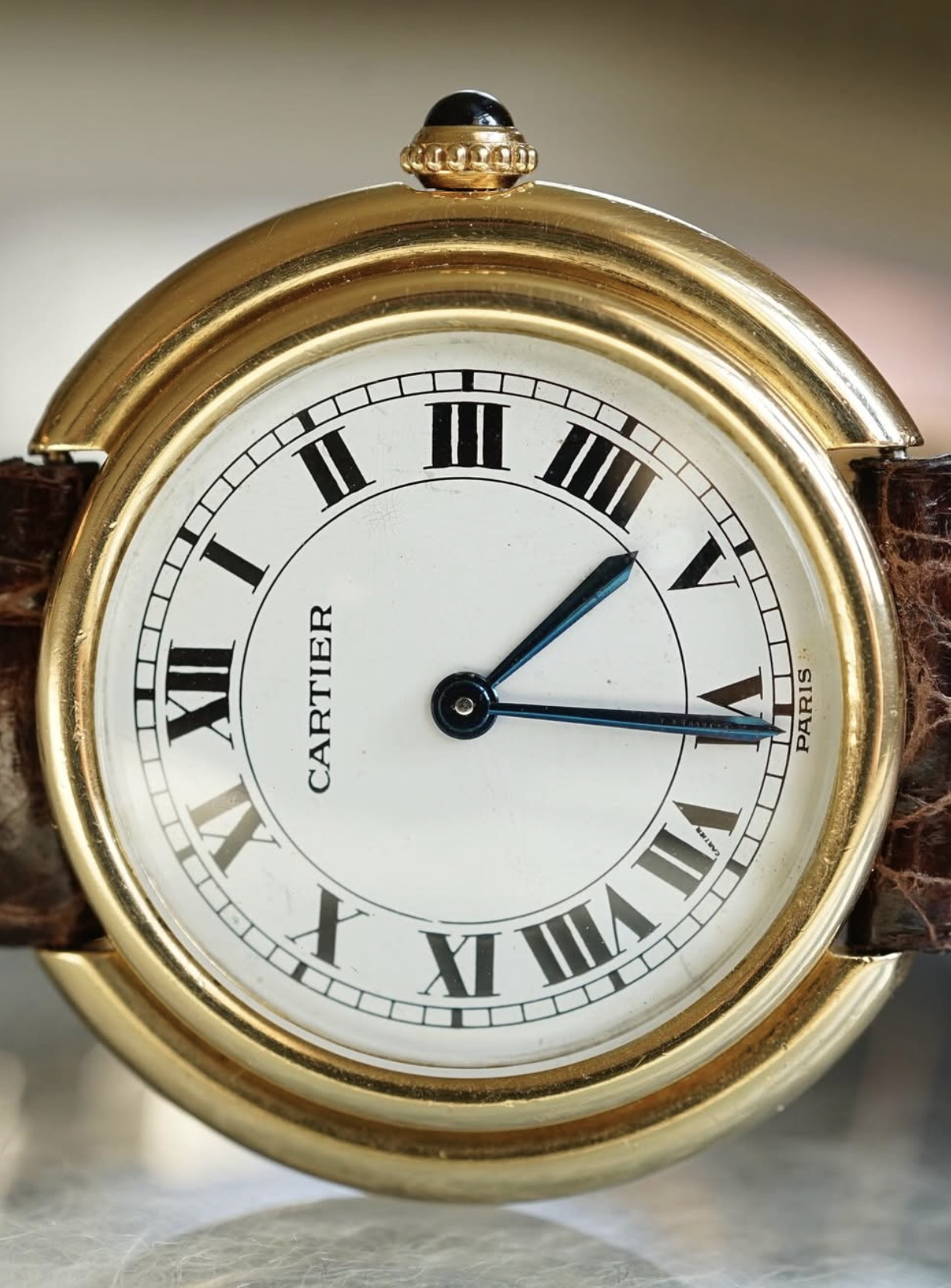
A microscopic 'CARTIER' hidden within the Roman numerals — present on every genuine post-1977 dial.
Cartier
Cartier's round-cased classic — the watch that carried the Must de Cartier revolution from vermeil to gold, named for the most famous square in Paris.
In a maison defined by shaped cases — the rectangle of the Tank, the square of the Santos, the barrel of the Tonneau — the Vendôme was a deliberate counterpoint: a round watch named for the Place Vendôme, the Parisian square where Cartier's flagship has stood since 1899.
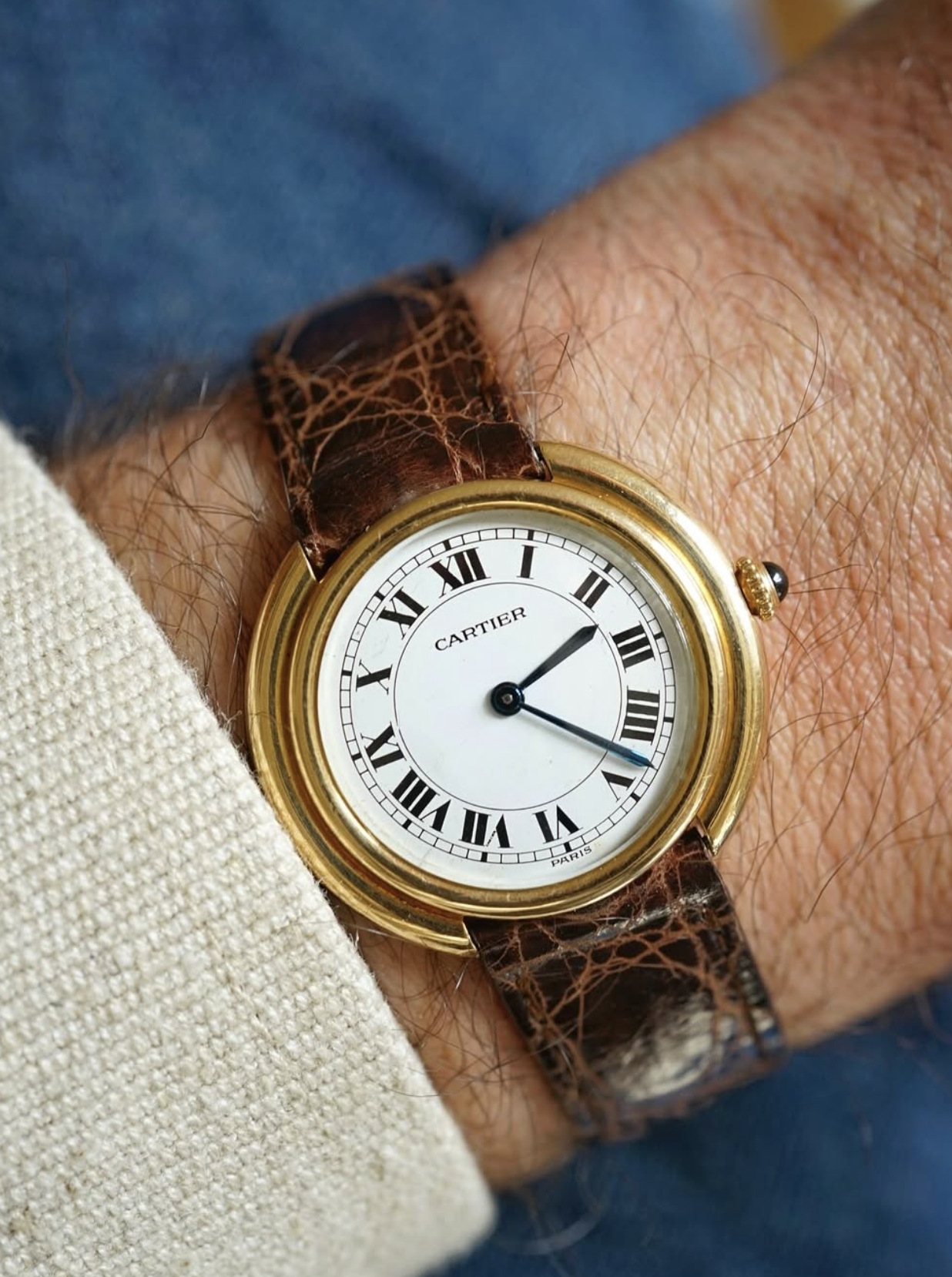
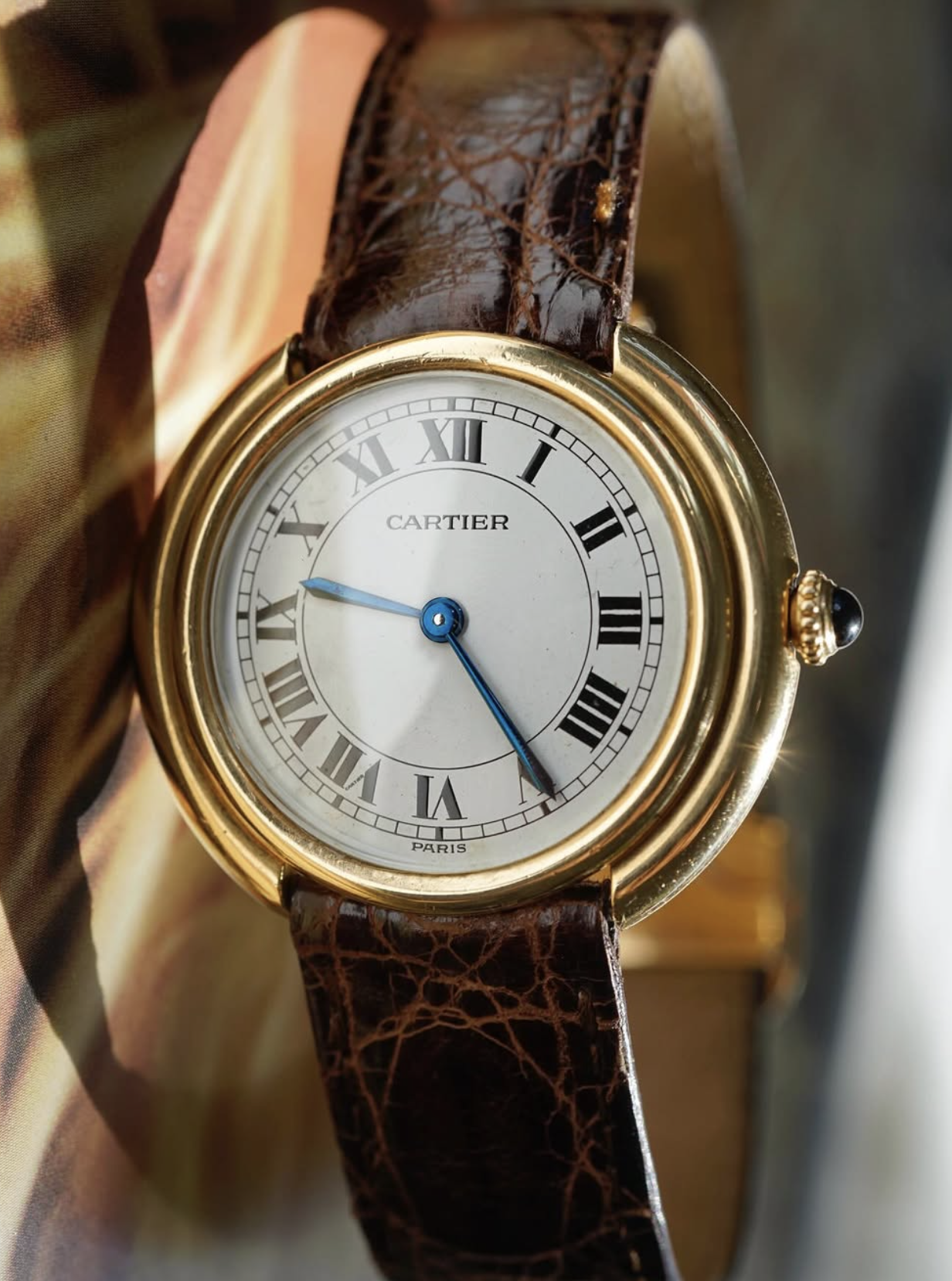
The Vendôme was introduced in 1973 as part of the Louis Cartier Collection, produced in 18k yellow gold with the manually wound Cal. 78-1. It was a proper Cartier dress watch — round case, Roman numerals, blued steel hands, sapphire cabochon crown — designed for the collector who wanted Cartier's design language in a form that the Tank and Santos didn't offer.
The Vendôme's trajectory changed when it became part of the Must de Cartier line, the democratic luxury initiative led by Alain-Dominique Perrin in the late 1970s. Must de Cartier reimagined Cartier's classic designs in vermeil — sterling silver with gold plating — and offered them at a fraction of the gold originals' price. The Vendôme in vermeil, powered by quartz movements, became one of the line's most successful models.
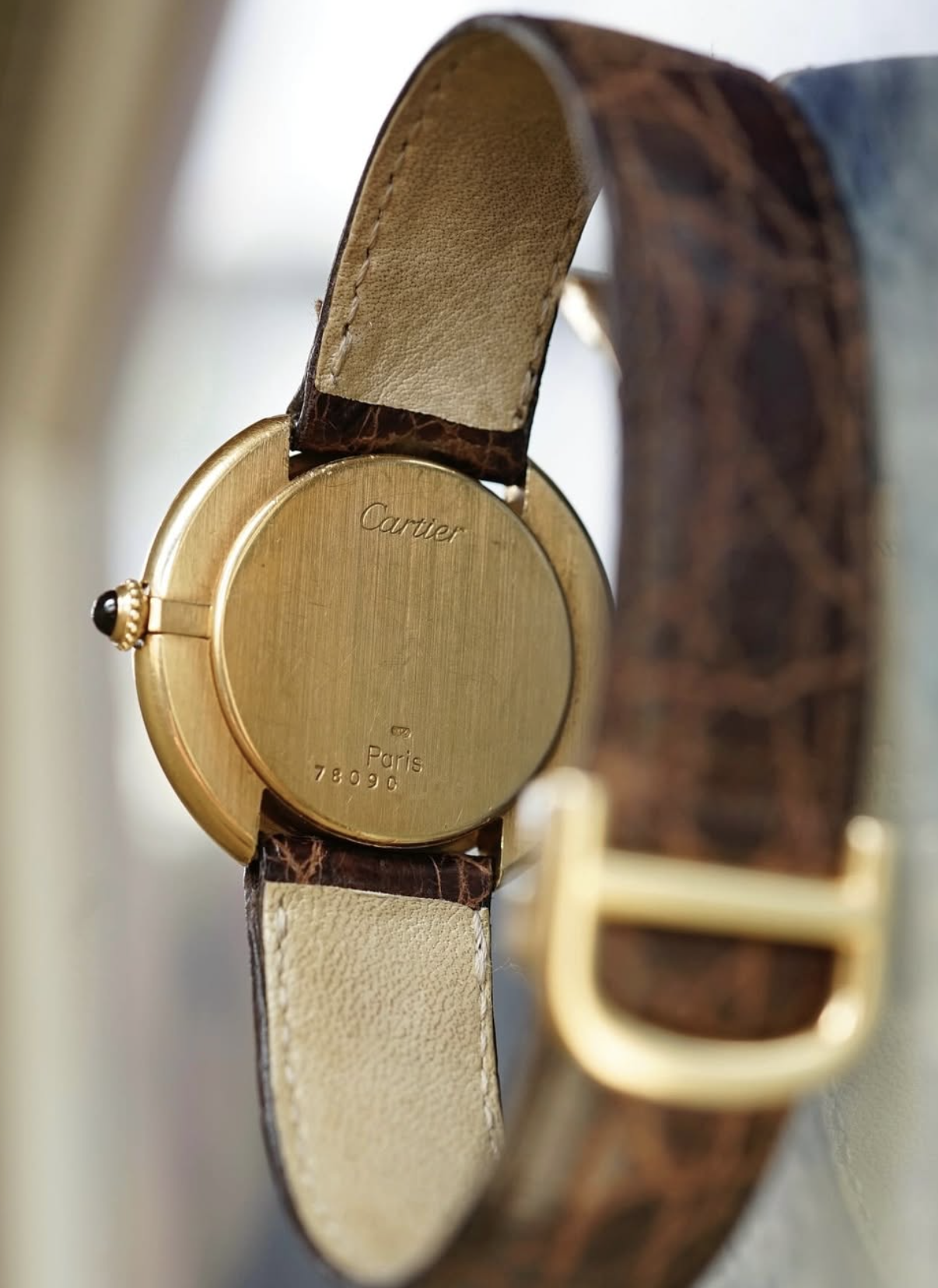
This dual existence — gold original and vermeil Must — created a production spectrum that the Vendôme occupied for nearly three decades. The gold Ref. 78090 with its "Cartier Paris" signature and manual-wind movement remained the collector's piece. The Must de Cartier versions, with their quartz calibers and bold lacquer dials (tri-color, burgundy, black), became cultural objects of the 1980s and 1990s.
The Vendôme's distinguishing details are subtle but important. The straight-bar lugs — which do not follow the full curve of the case side — give the watch a distinctive attachment point for the strap. The round case is clean and unadorned, with a slim profile enabled by the thin Cal. 78-1 (in gold references) or flat quartz calibers (in Must versions). The Roman numeral dial with a railroad minute track follows Cartier convention, while the cabochon sapphire crown anchors the Cartier identity.
The Vendôme market splits cleanly between two audiences. Gold manual-wind references (Ref. 78090 and variants) attract Cartier collectors who value mechanical movements, precious metal construction, and the "Cartier Paris" provenance. Must de Cartier vermeil references attract a different buyer — often younger, drawn to the bold lacquer dials and the cultural cachet of 1980s Cartier at an accessible price point. Both markets are active; they rarely overlap.
Ref. 78090 · c. 1973–1980s
The Vendôme Ref. 78090 in 18k yellow gold — the manually wound original from the 1973 Louis Cartier Collection. With its 33mm round case, 'Cartier Paris' dial signature, Cal. 78-1 movement, and distinctive straight-bar lugs, the 78090 represents the Vendôme before the Must de Cartier line democratized the design in vermeil. This is the gold standard — literally — of the model.
3 documented references across 2 eras
| Reference | |
|---|---|
| Ref. 590004 | |
 | Ref. 78090 |
| Reference | |
|---|---|
| Ref. 881002 |
What every buyer, inheritor, and first-time collector should know.
Introduced 1977
A microscopic 'CARTIER' hidden within the Roman numerals — present on every genuine post-1977 dial.
Varies by era
Genuine Cartier cases bear specific hallmarks including the Cartier name, reference number, serial number, and precious metal assay marks. Placement and style varies by era, with earlier pieces showing different hallmark configurations than modern examples.
Varies by era and model
Cartier sourced movements from various Swiss manufacturers throughout history, including Jaeger-LeCoultre, Frédéric Piguet, ETA, and in-house production. Knowing the correct caliber for a specific reference is essential for authentication and establishing provenance.
A Cartier hallmark since the early 20th century
The blue sapphire (or spinel on less precious models) cabochon crown is a Cartier signature. Original crowns show consistent color saturation and are set flush with the crown body. Replacements often show misalignment or incorrect stone dimensions that reveal themselves under magnification.
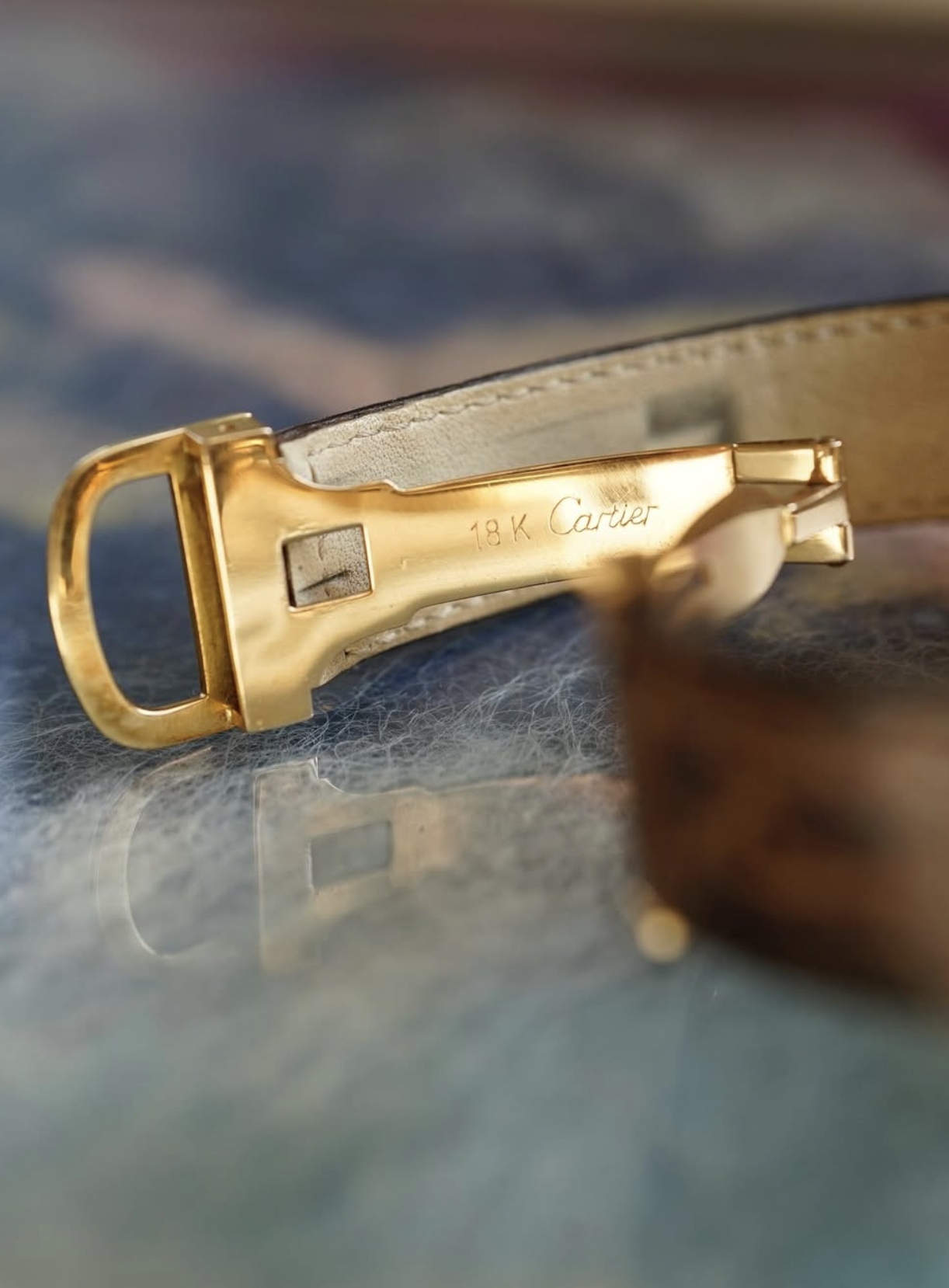
Check the clasp first
Cartier bracelets carry their own reference markings and the deployment clasp should bear the Cartier name and logo. Aftermarket bracelets are extremely common on vintage pieces, so verifying clasp authenticity and matching reference numbers is crucial to overall authentication.
Patina tells the story
Vintage Cartier dials develop characteristic aging—cream dials warm to ivory, lacquer dials may develop fine crazing, and applied indices can show legible wear patterns. Understanding acceptable versus concerning dial aging is key to valuing a vintage piece authentically.
Direct answers about the Cartier Vendôme, drawn from the reference records below.
Identify whether your Vendôme is a gold reference or a Must de Cartier vermeil — the distinction affects value significantly.
START HERE →BUYERThe Vendôme spans a wide range from accessible vermeil to collectible gold. Know which tier you're buying and what to verify.
CHECK BEFORE YOU BUY →SELLERVendôme values are driven by case material, dial signature, and movement type. Gold manual-wind references outperform vermeil quartz by multiples.
PRICE MY WATCH →

