Visual Description
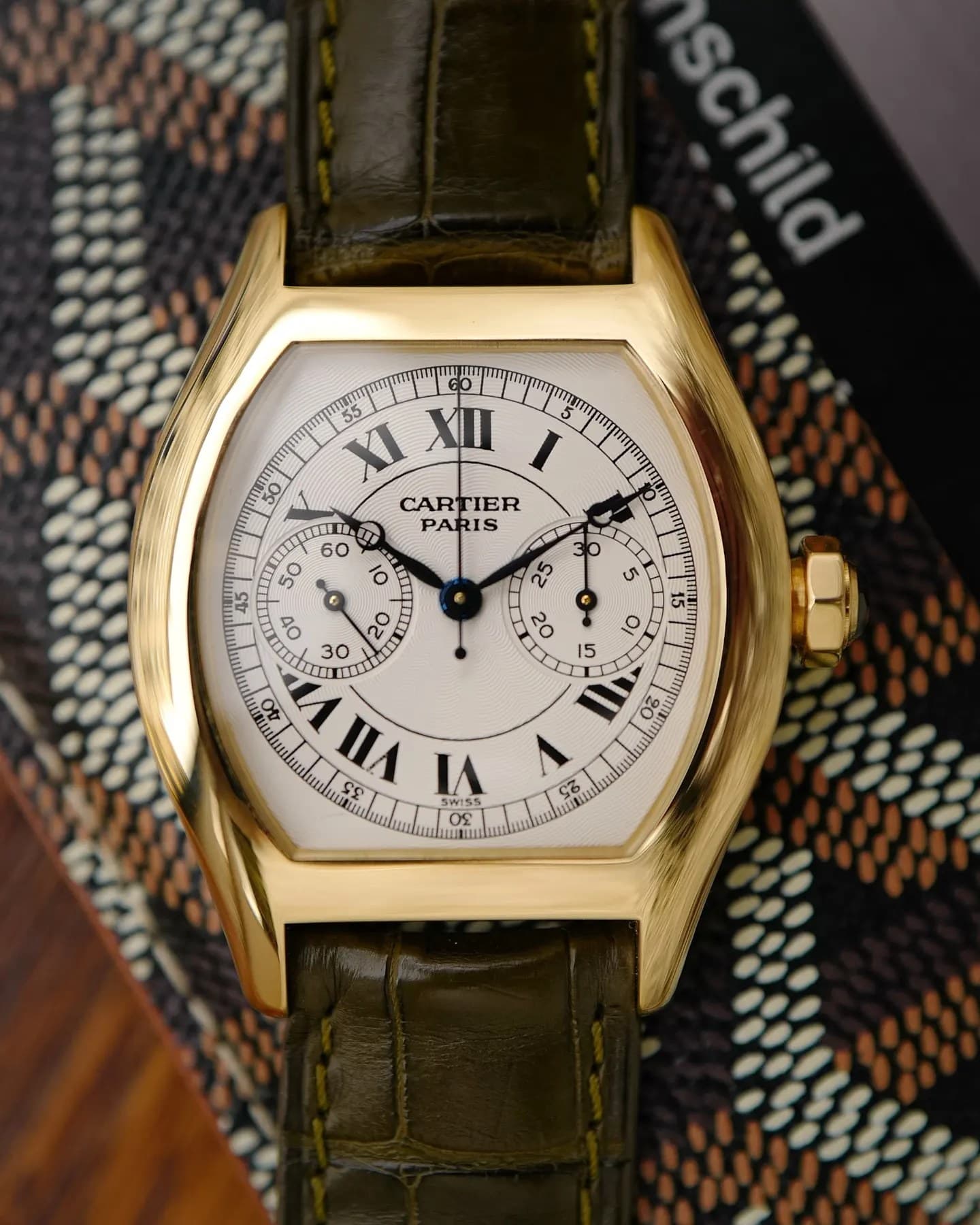
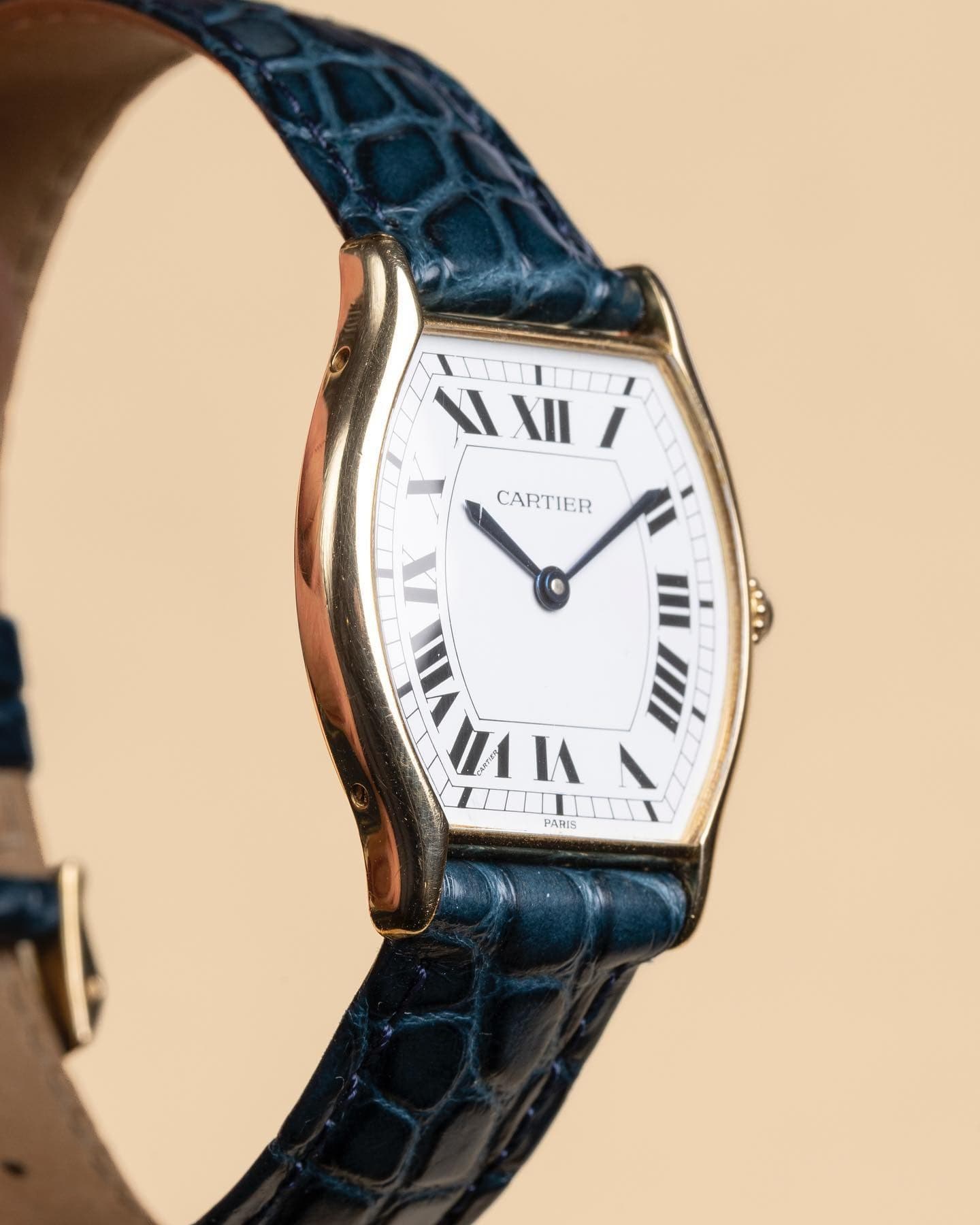
The 2496 is the Collection Privée Tortue in 18k yellow gold: a tonneau case of 34 × 43 mm and 9.5 to 10 mm thick, with a sapphire cabochon in the crown. Antiquorum describes the silvered dial as guilloché around a central rose motif, with painted black radial Roman numerals, an inner minute track and the secret Cartier signature in the VII, under blued steel Breguet hands.
The back is sapphire, secured by eight screws, and shows the hand-wound movement. Examples come on an alligator or crocodile strap with an 18k gold Cartier deployant clasp. Phillips has offered two examples with diamond-set cases.
Reference Significance
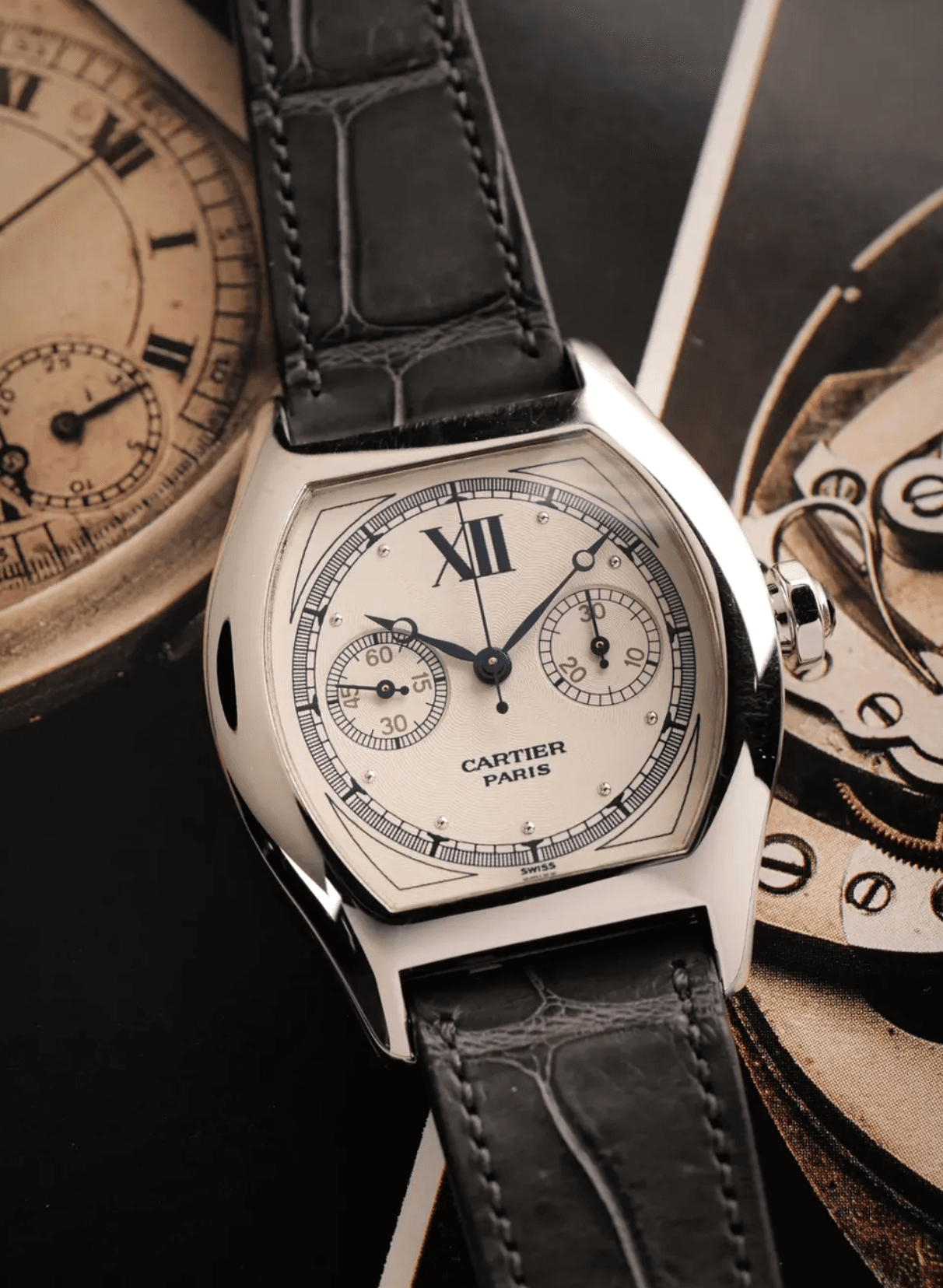
The 2496 is a Collection Privée Tortue without the chronograph. It shares its 34 × 43 mm case size and yellow gold with the Ref. 2356, the single-button chronograph on the Cal. 045MC, but runs on the hand-wound Cartier Cal. 430 MC with 18 jewels. The white gold chronograph of the same line is the Ref. 2396.
Catalogs disagree on the movement's label. Phillips and Antiquorum give the Cal. 430 MC; Sotheby's and European Watch Co. also catalog the Cal. 437 MC on examples of this reference.
Historical Context
Sotheby's writes that the Tortue was introduced in 1912, and that Cartier launched the Collection Privée Cartier Paris in 1998 and produced it until 2008. Phillips dates a diamond-set 2496 circa 1999, its movement numbered 1999-3462. Antiquorum records that its 2496C was first sold on 16 October 2001, and European Watch Co. sold one with papers dated 2001. Sotheby's dates a 2496E circa 2005, the latest dated example found.
What to Look For
Start with the case back: it should read 2496, 2496C or 2496E, with a case number ending MG, behind a sapphire display back held by eight screws. Through the back, confirm a hand-wound Cartier movement, cataloged as the Cal. 430 MC or the Cal. 437 MC. A chronograph button or sub-dials mean a Monopoussoir, the 2356 or 2396, and a pink gold case of this size is cataloged by Monaco Legend and Sotheby's as the Ref. 2498.
Check the tonneau case for over-polishing, which softens its curves, and the guilloché for an even pattern with crisp Roman numerals and the secret signature in the VII. The deployant clasp should be signed Cartier and in 18k gold; Antiquorum has cataloged one example on a pink gold clasp and Sotheby's one on a yellow and pink gold clasp.