Visual Description
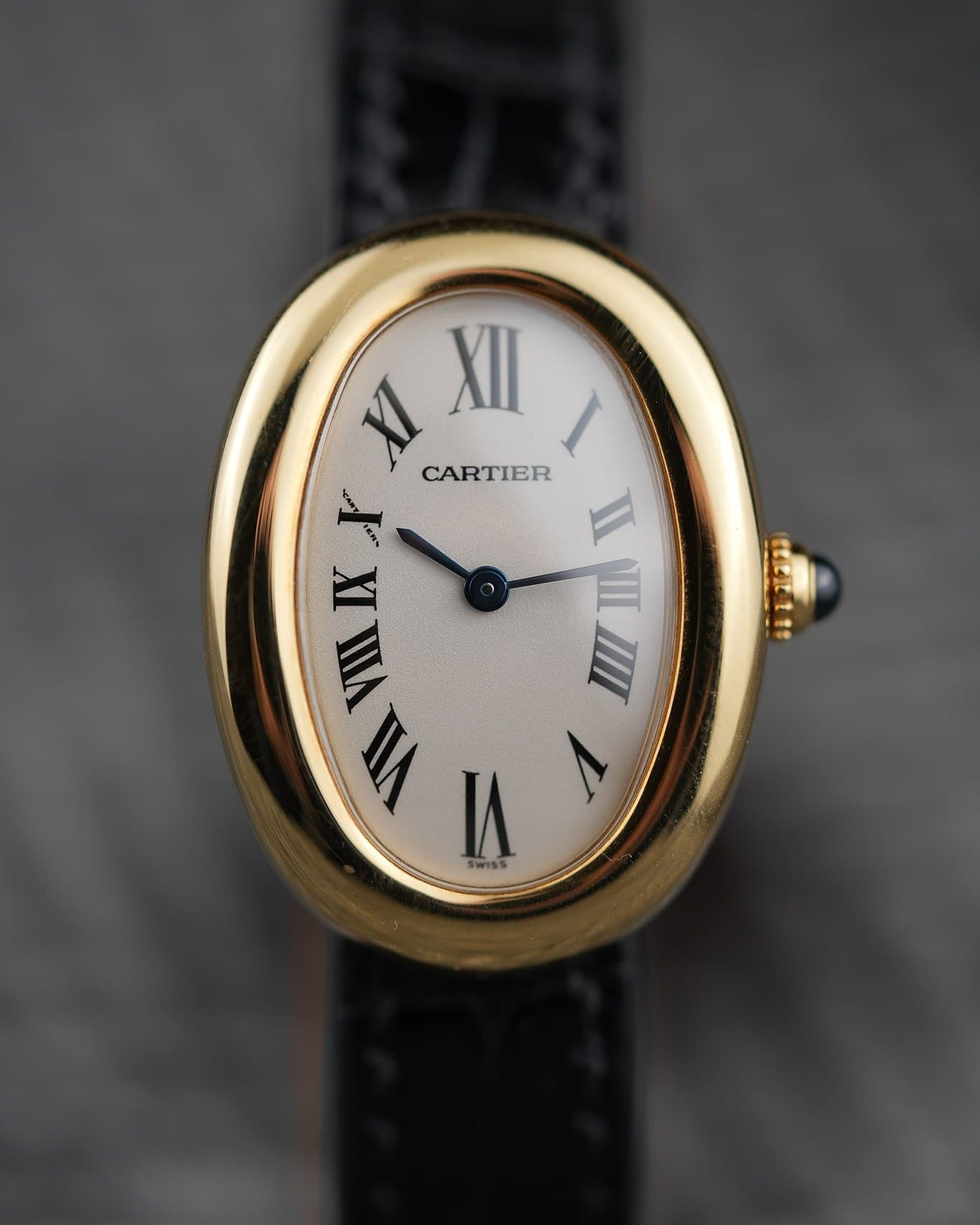
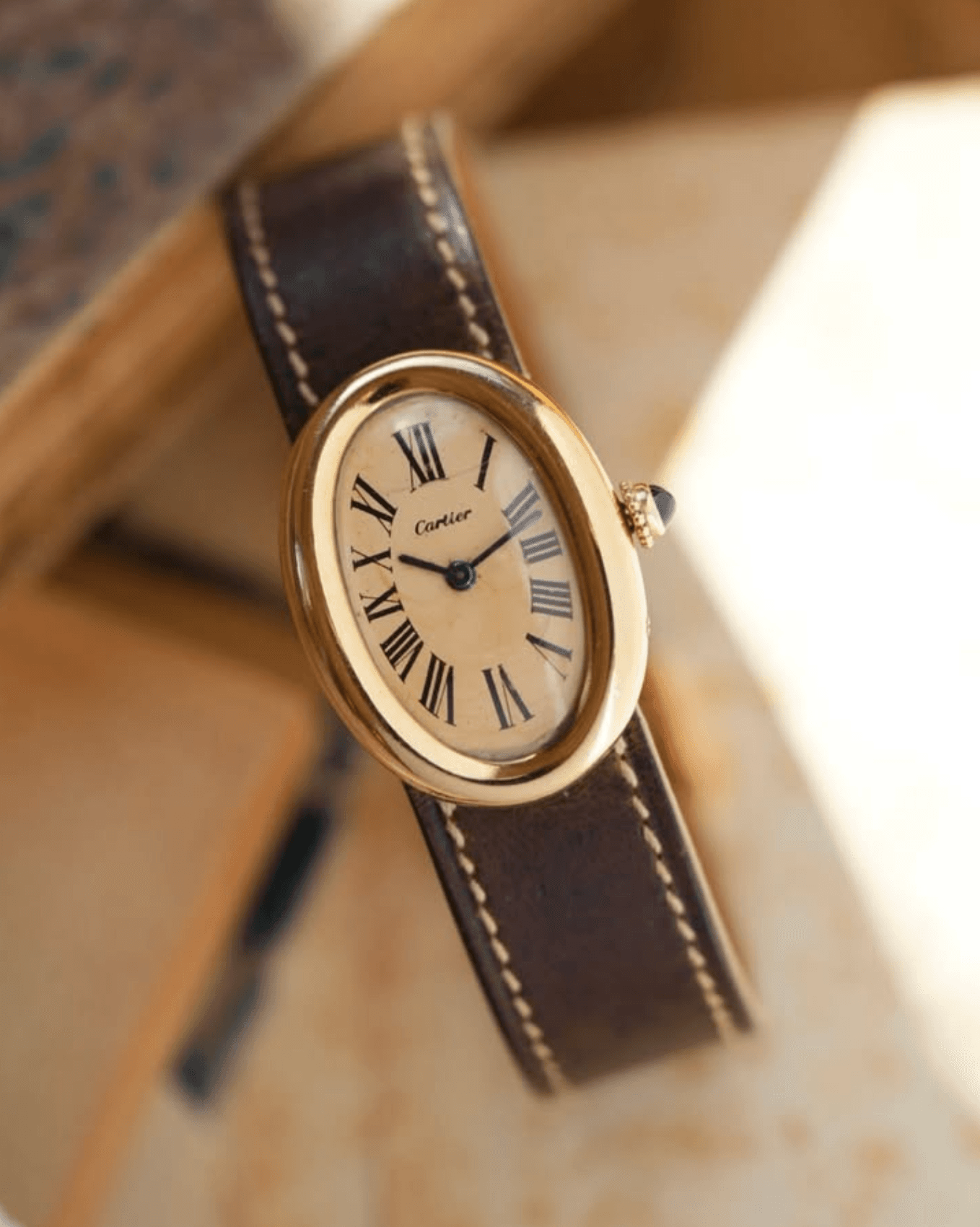
The 2514 is the Baignoire drawn out to an elongated oval in 18k white gold, 47 mm long, 21 mm wide and about 7.7 mm thick, with a blue sapphire cabochon in the crown. Most dials are silvered and engine-turned, printed with black Roman numerals that stretch toward the ends of the oval, under blued steel sword hands; Christie's notes the secret signature at 7 o'clock.
Examples are worn on leather or crocodile straps with a white gold Cartier buckle or folding clasp, or on an integrated white gold grain de riz bracelet.
Reference Significance
The 2514 and the pink gold Ref. 2515 are the same Allongée in two metals: both 47 mm long, hand-wound on the Cartier Cal. 060 MC with 21 jewels, and numbered in one series of case numbers ending AF. Phillips has also cataloged the 2514 under the number W1532336.
Both are smaller and later than the Baignoire Allongée retailed by Cartier London from the late 1960s and its 1991 reissue, the Ref. W1507451, which measure about 23–24 × 52–54 mm. None of the auction or dealer records consulted calls the 2514 a Collection Privée watch.
Historical Context
Dated examples run from about 2000 to about 2005. Phillips sold one with a Cartier certificate dated 31 December 2001 and describes another as produced at the turn of the millennium.
No source consulted gives a production figure or a launch date for this reference.
What to Look For
Read the case first: it should be 18k white gold and numbered 2514 with a six-digit case number ending AF, such as 117596 AF. The pink gold companion is numbered 2515. The movement should be the hand-wound Cartier Cal. 060 MC.
Most cataloged examples have the silvered guilloché dial with black numerals; red and blue numerals, a pavé pink sapphire dial and diamond-set cases are also documented. The long case softens under heavy polishing, so look for crisp edges at the ends of the oval.