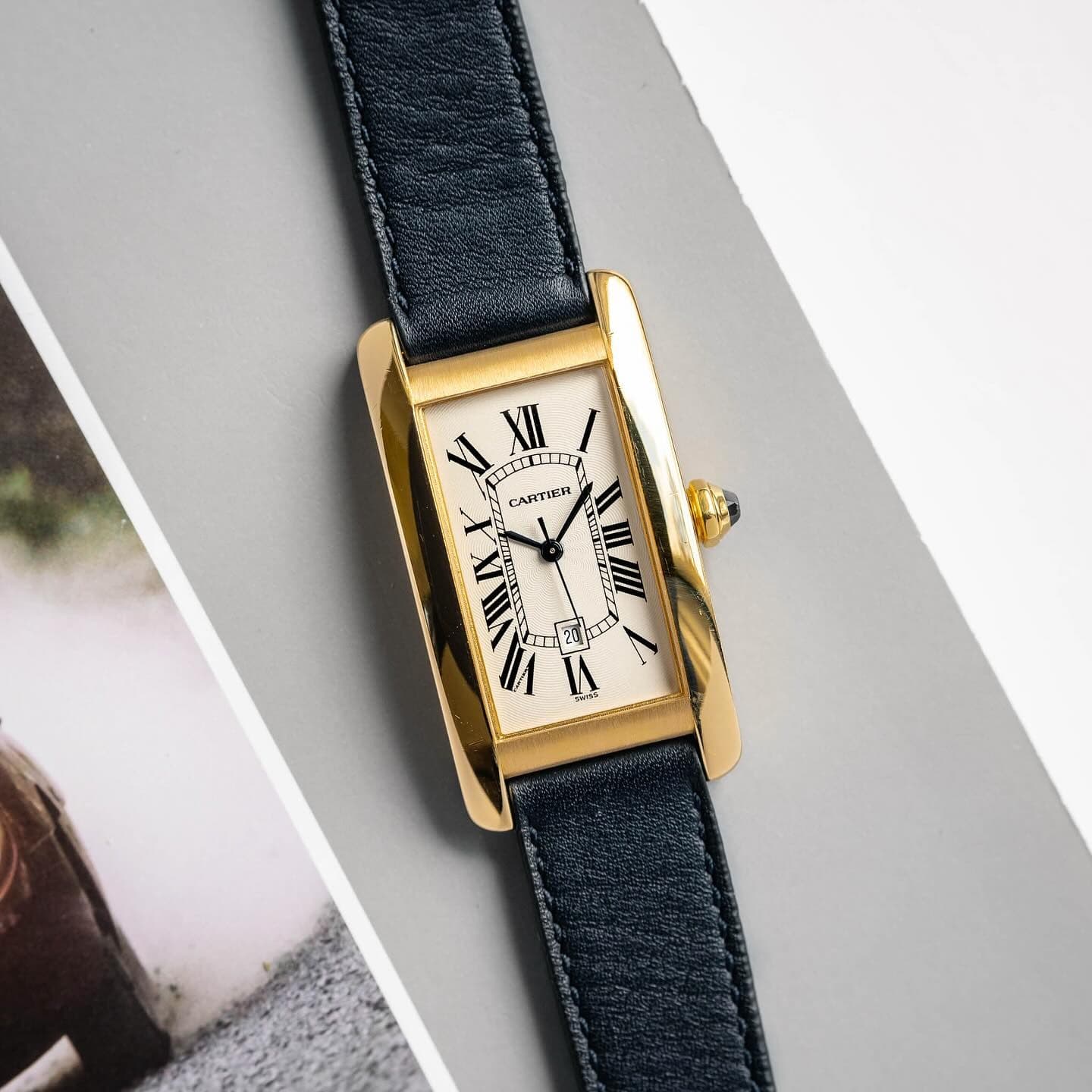
Cartier · Tank Américaine

Tank Américaine Chronoreflex, Yellow Gold, Large

Ref. 1730c. 1998–2010sAlso cataloged as W2601156

The Cartier Tank Américaine Ref. 1730 is the large 26–27 × 44–45 mm 18k yellow gold Chronoreflex, a quartz chronograph on the Cartier Cal. 212 with 12-hour and 30-minute registers and a date subdial, made c. 1998–2010s.

Have this watch?

We’re still gathering public results for Ref. 1730, so there’s no honest number to show yet.

We’re opening a small panel of specialist dealers soon. Leave your email and we’ll write once, when they’re ready to bid on your watch. Nothing else.

Reference photography unavailable.

Want to sponsor this reference with your studio photography? Become a sponsor

Specifications

Reference
1730
Large model, 18k yellow gold, Chronoreflex quartz chronograph with date
Year
c. 1998–2010s
Estimated from dated examples: Sotheby's and Amsterdam Watch Company date one each circa 1998, Antiquorum dates two to the 1990s and others to the 2000s, Bachmann & Scher sold one with papers dated 2000, and Antiquorum dates one circa 2010–2020
Movement
Quartz
Cartier Chronoreflex Cal. 212 (212P), quartz chronograph with date
Case
26–27 × 44–45 mm, 18k Yellow Gold
Dial
Silvered
Painted radial Roman numerals, secret Cartier signature in the X, subsidiary dials for the 12-hour and 30-minute registers and the date
Crystal
Sapphire
Curved
Strap
Leather
Leather strap with an 18k gold Cartier buckle or deployant clasp

Visual Description

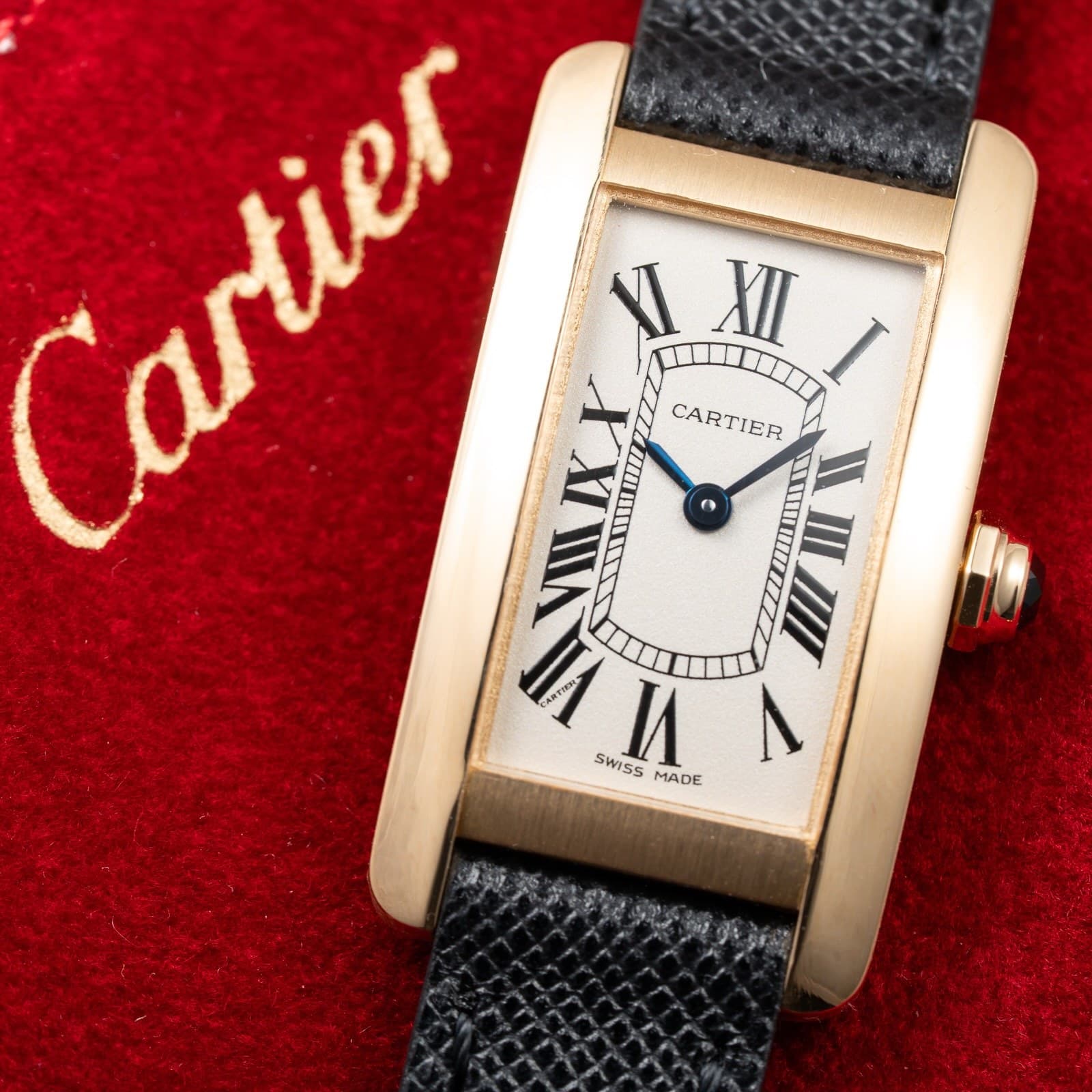
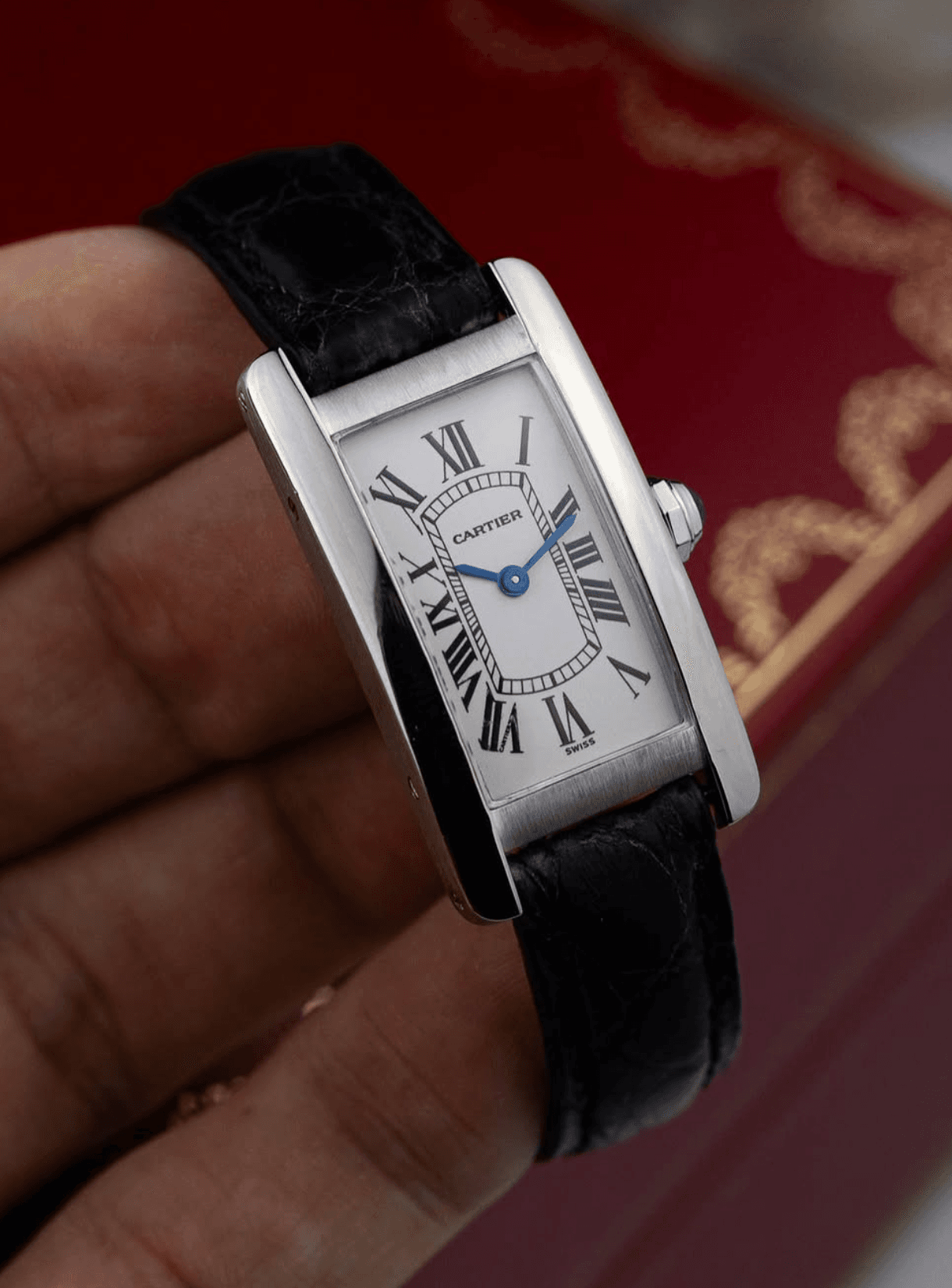
The Ref. 1730 is the Chronoreflex in the large Tank Américaine case, in 18k yellow gold. Antiquorum measures it at 26 × 45 mm and 7 mm thick; Aguttes gives 44 × 26 mm and Bachmann & Scher 27 × 44 mm. Sotheby's and Amsterdam Watch Company give 26 × 36 mm, which looks like a length taken without the curved ends, the way some catalogs measure the small Américaine. The case is two-body, polished and brushed, with a back secured by eight screws, a faceted sapphire-set crown and a curved sapphire crystal.

The dial is silvered, with painted radial Roman numerals and the secret Cartier signature in the X. Subsidiary dials carry the 12-hour and 30-minute chronograph registers and the date, which Antiquorum places at 12. The chronograph is worked by square pushers. The watch comes on a leather strap with an 18k gold Cartier buckle or deployant clasp; Sotheby's and Antiquorum each describe a pink gold deployant on a yellow gold case.

Reference Significance

The 1730 is the yellow gold chronograph of the large Américaine. It shares the case of the large automatic Ref. 1740 and has a white gold twin, the Ref. 2312. Catalogs call it the Chronoreflex, after Cartier's quartz chronograph movement, the Cal. 212, which Antiquorum describes as a Chronoreflex movement with quartz standardization and Bachmann & Scher lists as the Cal. 212P.

Historical Context

Sotheby's dates one example circa 1998, sold with its Cartier certificate of guarantee, and Amsterdam Watch Company dates another to the same year. Antiquorum dates two to the 1990s and several to the 2000s, and Bachmann & Scher sold one with box and warranty papers dated 2000. One Antiquorum lot, case CC876730, is dated circa 2010–2020, so the reference stayed in production after 2001.

What to Look For

Read the case number and any papers. The 1730 is found with case numbers of six digits and CD and with CC-prefixed numbers, and a dated guarantee shows whether a watch falls within Archiva's scope, which runs through about 2001.

Check the secret signature in the X, the three subsidiary dials, and that the chronograph starts, stops and returns to zero from the pushers. A white gold case means the Ref. 2312, and an automatic with a date at 6 and no registers means the Ref. 1740. A buckle or deployant should be signed Cartier.
Known Variants

Documented dial, case, and bracelet variations of Ref. 1730.

Variant documentation for this reference is in progress. Known variants will appear here as they are cataloged, including dial variations, case material options, and bracelet configurations.

How to tell it apart

What separates a Ref. 1730 from its neighbors, and what to check before you buy or sell one.

What is the Tank Américaine Ref. 1730?

The large Américaine Chronoreflex in 18k yellow gold: a curved case of about 26 × 45 mm and 7 mm thick with a quartz chronograph movement, the Cartier Cal. 212. The silvered dial has painted Roman numerals, the secret Cartier signature in the X, and subsidiary dials for the 12-hour and 30-minute registers and the date. The chronograph is worked by square pushers.

How does the 1730 differ from the Ref. 2312?

By metal. Both are large Chronoreflex Américaines of about 26 × 45 mm on the Cal. 212: the 1730 in 18k yellow gold, the 2312 in 18k white gold. They are two references, not a reference and its case number; Antiquorum, Artcurial and Bachmann & Scher catalog the white gold watch as 2312.

How does the 1730 differ from the Ref. 1740?

By movement. The 1740 is the large yellow gold Américaine of about the same size with an automatic movement, center seconds and a date at 6. The 1730 is a quartz chronograph with registers and a date subdial.

What should the case back of a Ref. 1730 read?

Catalogs pair the reference 1730 with a case number, either six digits and the letters CD (267660CD at Antiquorum, 269543CD at Aguttes) or a CC prefix (CC715079 on a watch Sotheby's dates circa 1998, CC115883 and CC455856 at Antiquorum). Antiquorum describes a back secured by eight screws. Bachmann & Scher has listed one under the modern catalog number W2601156.

When was the Ref. 1730 made?

Dated examples run from circa 1998 into the 2000s, and Antiquorum dates one circa 2010–2020. Sotheby's dates one circa 1998 with its Cartier guarantee, and Bachmann & Scher sold one with papers dated 2000. Archiva covers watches made through about 2001, so a dated guarantee shows whether a given watch falls inside that window.